Follow Beinsure
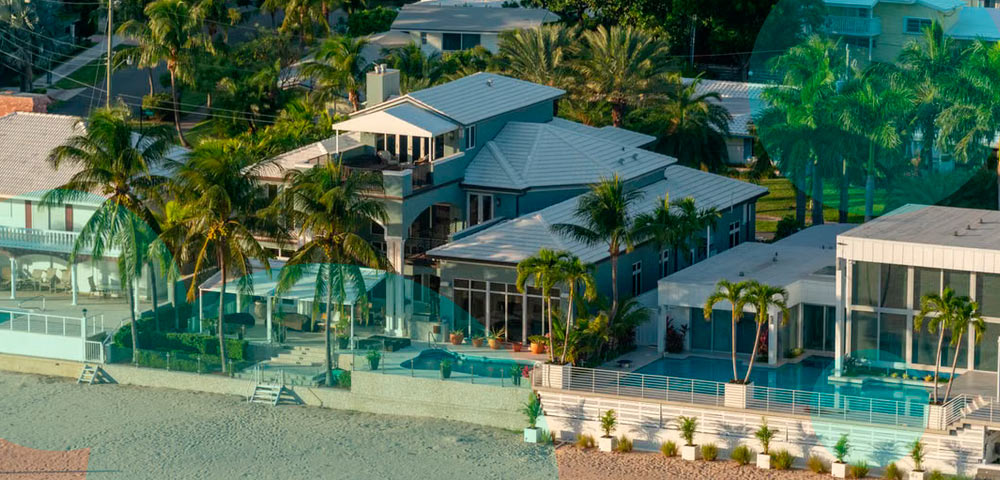
Rising homeowners insurance costs continue to put pressure on retirement budgets in Florida, particularly in hurricane-exposed Gulf Coast communities. For retirees living on fixed incomes, the central question is whether the financial benefits of owning a mortgage-free home in a state without personal income tax still outweigh insurance premiums, property taxes and other recurring expenses.
Although rising hurricane-related insurance costs have prompted repeated predictions of retirees leaving Florida, available migration figures do not indicate a broader population exodus.
- A retired couple living in a paid-off home in Florida’s Sarasota-Bradenton area could face annual expenses of approximately $78,000, including insurance, healthcare, property taxes and living costs, according to 24/7 Wall St.
- Florida homeowners insurance averages $6,060 annually for $300,000 in dwelling coverage, although regulators report rate reductions in 51 counties and an average 8.7% decrease for Citizens policyholders.
- Despite concerns about rising insurance costs, Florida recorded net migration of 111,742 residents and gained $20.65 bn in adjusted gross income, ranking first among US states.
According to the latest available Internal Revenue Service migration data, Florida recorded a net gain of 111,742 residents and approximately $20.65 bn in adjusted gross income, leading all US states in both measures.
Those figures cover population and income movements more broadly, rather than retirees specifically. They nevertheless indicate that Florida continues to attract residents despite concerns about property insurance affordability.
Florida homeowners insurance costs average $6,060 annually
Homeowners insurance remains one of the largest recurring expenses for Florida retirees, particularly those living near the Gulf Coast.
According to Insurify, the average Florida homeowners insurance policy costs $6,060 annually for $300,000 in dwelling coverage.
That represents approximately $505 per month before accounting for separate flood insurance, which can add substantially to annual housing expenses.
Insurance pricing has shown signs of improvement, however. Florida regulators have reported insurance rate reductions in 51 counties this year, while Citizens Property Insurance Corporation is reducing rates by an average of 8.7%.
The reductions provide some relief after years of insurance affordability concerns, although actual premiums depend on property characteristics, location, coverage limits and individual insurer pricing.
For homeowners without mortgage payments, insurance and property taxes remain significant fixed costs even when housing debt has been eliminated.
What retirement costs in Sarasota and Bradenton
An illustrative retirement budget for a couple, both aged 67, living in a paid-off, homesteaded property in the Sarasota-Bradenton area demonstrates how recurring expenses can accumulate.
The example assumes the couple purchased their home before the pandemic-era increase in property prices and therefore does not face today’s purchase prices or mortgage financing costs.
Home values in the Sarasota-Bradenton metropolitan area have increased 37.54% over five years, although prices have declined 0.46% over the past year.
Florida’s absence of a state personal income tax also means retirement account withdrawals are subject to federal income tax without an additional state income tax charge.
The estimated annual household budget is:
| Annual expense | Estimated cost |
|---|---|
| Homeowners insurance, including wind | $6,060 |
| Flood insurance | $1,500 |
| Property taxes, homesteaded and capped | $4,500 |
| Medicare Part B for two people ($202.90 monthly each) | $4,870 |
| Medigap, Part D, dental and out-of-pocket healthcare | $9,000 |
| Food and dining out | $12,000 |
| Utilities, including air conditioning | $5,500 |
| Transportation and vehicle replacement | $8,500 |
| Home maintenance and roof reserve | $7,000 |
| Travel, gifts, personal expenses and emergencies | $15,000 |
| Federal income tax on withdrawals | $4,000 |
| Total annual expenses | $77,930 |
The estimated annual cost is approximately $78,000, or about $6,500 per month, despite the absence of mortgage payments.
Insurance and healthcare account for a major share of retirement spending
In this example, homeowners and flood insurance together cost $7,560 annually, representing nearly 10% of the household’s total expenses.
Adding the estimated $4,500 property tax bill brings recurring property-related costs to $12,060 before maintenance, utilities or other housing expenses.
Healthcare is another substantial expense. Medicare Part B premiums for two people total approximately $4,870 annually, based on the assumed monthly premium of $202.90 per person.
Additional spending on Medigap, Medicare Part D, dental services and out-of-pocket medical expenses adds an estimated $9,000, bringing total annual healthcare costs to approximately $13,870.
Housing insurance, property taxes and healthcare together account for $25,930, roughly one-third of the couple’s annual budget.
The example also allocates $7,000 to property maintenance and roof replacement reserves, acknowledging that a paid-off home still requires ongoing investment.
For retirees considering Florida’s Gulf Coast, the calculation depends heavily on existing homeownership, insurance premiums and available retirement income. A mortgage-free property and capped homestead taxes can limit some expenses, but they do not eliminate exposure to rising insurance and healthcare costs.
Under these assumptions, a couple would require approximately $78,000 in annual resources, including the estimated federal tax expense, to maintain the illustrated standard of living.