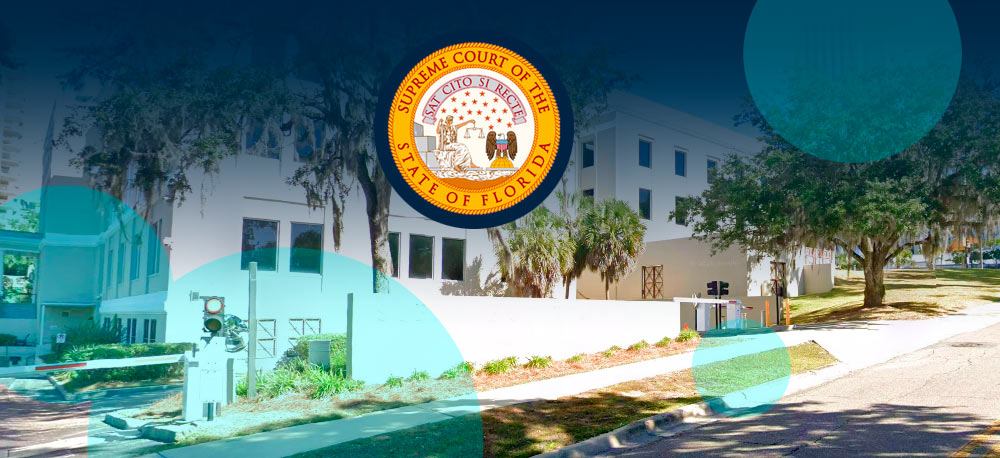
The Florida Supreme Court has agreed to hear a challenge to a state law allowing Citizens Property Insurance Corp., Florida’s nonprofit insurer of last resort, to require policyholders to resolve claims through binding arbitration before the Division of Administrative Hearings.
The court accepted jurisdiction in Citizens Property Insurance Corp. v. Victoria Quintana et al. on Sept. 17. Citizens is seeking to overturn an 11th Judicial Circuit ruling that found the arbitration requirement raised concerns about impartiality because DOAH and Citizens are both state entities.
A 2023 Florida law gave Citizens authority to require policyholders to resolve insurance disputes through binding arbitration before DOAH. Citizens is the only insurer in the state permitted to mandate this process, according to an analysis prepared by the Florida House of Representatives.
Several lawsuits filed since the law took effect have challenged mandatory DOAH arbitration on constitutional grounds. Plaintiffs have argued the system limits due process, access to civil courts and the right to a jury trial, while Citizens maintains that arbitration resolves disputes faster and with less expense.
“The DOAH arbitration process has been transparently settling government and agency disputes in Florida for more than 50 years,” Citizens spokesman Michael Peltier said. He added that Citizens plans to defend the constitutionality of the program before the Florida Supreme Court.
Legislative analysis from an unsuccessful 2026 bill that would have allowed policyholders to reject DOAH arbitration reported an average resolution time of 93 days for claims handled through DOAH. Comparable cases in Florida courts took an average of 618 days.
About eight in 10 DOAH claims were resolved through voluntary settlements, according to the same analysis. Nearly half of those settlements involved policyholders accepting $500 or less.
Miami-Dade Circuit Judge Milton Hirsch ruled for Quintana in May, finding that the relationship between Citizens and DOAH created an appearance of impropriety. He described DOAH as Citizens’ “sister agency” within the executive branch and questioned whether the financial relationship between them could undermine confidence in the process.
In December 2024, Citizens agreed to pay DOAH $19.3 mn to fund arbitration of insurance claims through the end of 2027, according to the legislative analysis. The funding was designed to support administrative law judges reviewing about 320 Citizens claims each month from 2025 through 2027.
Hirsch also indicated that changes to the arbitration structure might address some of the constitutional objections. He pointed to the absence of policyholder participation in selecting arbitrators and the lack of independent arbitrators outside Florida’s executive branch.
“The circumstances of the present case do not allow for participation by the plaintiffs in the choice of arbitrators, which if allowed might ameliorate due-process concerns,” Hirsch wrote.
The Florida Supreme Court said initial briefs will be filed in October and November. Oral arguments will be scheduled later.