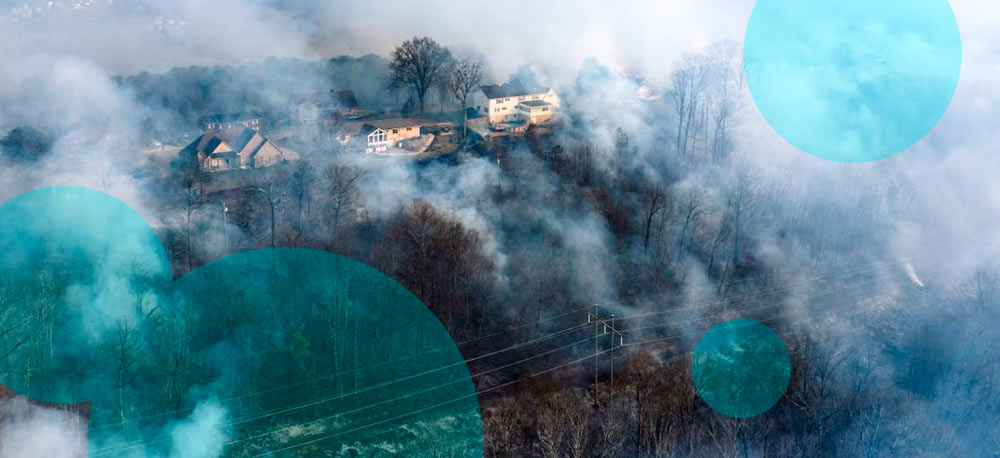
California will introduce statewide standards for testing and cleaning wildfire smoke damage under a package of laws signed by Gov. Gavin Newsom. The rules address insurance responsibilities for homes left standing after major fires but contaminated by smoke, soot, ash or toxic materials.
Newsom signed the measures September 15 in Altadena during a meeting with survivors of the Eaton Fire. The legislation takes effect January 1, with several technical standards scheduled for development over the following years.
The measures follow persistent disputes over smoke claims from the January 2025 Los Angeles County fires. Many residents whose homes avoided direct fire damage have remained displaced while insurers, homeowners and remediation specialists disagreed over contamination testing, cleanup requirements and whether properties were safe to occupy.
California Department of Insurance data show more than 13,000 claims involving standing homes with smoke damage resulted from the Eaton and Palisades fires. More than 40,000 insurance claims were filed in total following those fires, according to the department.
Assembly Bill 1642, written by Assemblymember John Harabedian of Pasadena, directs the Department of Toxic Substances Control to establish statewide standards for testing and addressing wildfire-related contaminants. Lead and asbestos standards are due by the end of 2028.
Standards covering other toxic substances and contaminants are scheduled by the end of 2029. Until those rules arrive, existing federal and California exposure standards for lead and asbestos remain applicable.
The legislation seeks to replace inconsistent approaches used after previous fires with common technical requirements. Smoke contamination isn’t always visible, leaving policyholders and insurers dependent on environmental testing when deciding whether cleanup has restored a property to safe conditions.
Assembly Bill 1795 deals more directly with insurance claims. The Smoke Damage Recovery Act establishes standards governing investigation, testing and restoration of smoke-damaged homes, while assigning insurers specific obligations during the claims process.
The law creates a presumption linking qualifying smoke damage inside a defined fire area to the relevant fire. Insurers will need to follow applicable testing and remediation standards when assessing covered claims, reducing the scope for disputes over where contamination originated.
AB 1795 also addresses living-expense coverage during remediation. California’s insurance department said the framework requires insurers to follow consistent restoration standards before homes return to occupancy and introduces clearer procedures for handling smoke-related claims.
Insurance Commissioner Ricardo Lara sponsored the measure after convening a Smoke Claims and Remediation Task Force in 2025.
The group examined claims practices and technical evidence after complaints from Los Angeles fire survivors over testing standards and insurer responses.
The task force reported substantial disagreement across the market about proper inspection methods, contamination thresholds and remediation procedures. California previously lacked a statewide framework specifically governing residential wildfire smoke contamination, leaving insurers and policyholders to rely on differing technical approaches.
Legal disputes have already emerged around the issue. California regulators, Los Angeles County and fire survivors have pursued litigation or regulatory action involving State Farm and the California FAIR Plan over treatment of smoke-damage claims following the 2025 fires.
Los Angeles County has also opened an investigation involving Farmers Insurance over similar concerns. Those proceedings remain separate from the new legislation and involve allegations specific to claims handling by individual insurers.
Newsom said the new laws are intended to define insurer obligations more clearly while giving homeowners additional financial options during recovery. State officials describe the smoke standards as the first enforceable statewide framework of their type in the US.
The package extends beyond property insurance claims. Two additional measures address mortgage payments for homeowners unable to live in properties after major disasters, an issue facing households carrying housing costs while reconstruction or remediation continues.
AB 1842, also authored by Harabedian, establishes ongoing mortgage forbearance protections for qualifying homeowners after declared disasters. Mortgage servicers must provide specified relief processes for borrowers whose properties become uninhabitable.
The rules restrict penalties and late fees during qualifying forbearance periods. They also require servicers to offer eligible borrowers an option to move missed payments toward the end of a mortgage, subject to restrictions in investor contracts or servicing requirements.
AB 1847 provides additional relief specifically for survivors of the Los Angeles County fires. The law extends available mortgage forbearance from 12 months to 24 months for eligible borrowers affected by those fires.
The measure also moves the latest deadline for eligible borrowers to request relief to January 7, 2029. State officials developed the extension after many households remained unable to return home well beyond the initial recovery period.
California had already introduced mortgage assistance after the Los Angeles fires. Earlier legislation provided eligible homeowners with up to 12 months of forbearance, while the state created separate financial assistance programs for households struggling with mortgage payments during reconstruction.
Smoke damage has become one of the more difficult insurance issues following large urban wildfires because properties often remain structurally intact while contamination persists indoors. Lead, asbestos, heavy metals and other combustion byproducts have appeared among the materials examined following the Eaton and Palisades fires.
The California Department of Insurance task force reported smoke, soot, char and ash contamination across thousands of standing structures. Insurers had paid more than $22 bn toward claims from the January 2025 fires when the task force published its findings in March 2026.
The new laws move California toward a standardized claims process rather than leaving testing methods largely to individual insurers, contractors and policyholders.
For carriers, the change introduces defined obligations around investigation and remediation once the technical standards take effect.
For homeowners, the rules establish a clearer path for proving contamination and seeking payment for qualifying cleanup work. The practical effect will depend partly on standards developed through 2028 and 2029, while the insurance provisions begin operating sooner under the legislation signed in September.