Silk, the purpose-built data platform for agentic AI workloads, has closed a $45 mn growth capital facility to expand its data platform for agentic AI workloads as enterprises move more autonomous systems into production.
Avenue Capital Group led the financing through its Growth Lending Strategy. Sequoia Capital, S Capital VC, Vintage Investment Partners, Ibex Investors and West Coast Equity Partners also participated alongside other investors.
Silk plans to direct the capital toward engineering work on its data platform and wider commercial coverage of neocloud, sovereign and inference cloud providers. The company will also expand its enterprise business across Amazon Web Services, Microsoft Azure and Google Cloud.
Founder and CEO Dani Golan said enterprise AI infrastructure is shifting away from an emphasis on model training toward production systems built around autonomous agents. Those agents need frequent access to live corporate data, placing heavier loads on databases and cloud storage infrastructure beneath the compute layer.
Silk argues that companies already spending heavily on AI compute often encounter performance limits further down the infrastructure stack.
The company positions its software between cloud infrastructure and enterprise databases, aiming to provide faster access to production data without requiring customers to redesign applications.
Agentic workloads create a different access pattern from conventional enterprise software. Instead of waiting for individual human requests, agents issue repeated queries, call several systems and perform multiple steps in parallel, producing sudden spikes in data traffic.
Those workloads increase pressure on latency and capacity when AI systems share infrastructure with transactional applications.
Silk says this creates contention between agent activity and existing production users, while overprovisioning storage or compute raises cloud costs.
The company points to wider internet traffic trends as evidence of the shift toward machine-generated activity. Cloudflare reported in 2026 that machines generated more than half of traffic across its network, while daily AI agent requests rose more than 1,700% year over year.
Those figures don’t measure Silk’s customer workloads directly, but they show how automated software is generating a growing volume of network activity. For infrastructure providers, higher request frequency translates into greater demand for predictable data access rather than GPU capacity alone.
Silk is targeting cloud operators that increasingly sell infrastructure for production AI workloads. Its commercial push includes neocloud providers focused on AI compute, sovereign clouds serving customers with jurisdictional requirements and inference cloud companies built around running deployed models.
The financing follows several infrastructure updates during 2026. Silk expanded support across AWS, Azure and Google Cloud and validated its platform for newer cloud instance families designed for data-intensive and AI workloads.
The company also joined the AWS ISV Accelerate Program in June, giving its sales teams access to a co-selling structure with AWS. Silk has been building similar relationships across cloud providers as enterprises distribute databases and AI workloads across more than one environment.
In April, Silk appointed Aaron Shoffa as Chief Business Development Officer. His remit includes commercial relationships with neocloud and inference cloud providers as the company seeks a larger position in infrastructure supporting production AI.
Avenue Capital said its investment case focused on Silk’s recurring enterprise revenue and the growing need for infrastructure capable of handling agent-driven data traffic.
Tony Pandjiris, Senior Portfolio Manager for Avenue’s Growth Lending Strategy, said the firm examined Silk’s customer base, cloud relationships and the economics produced by its platform.
Avenue’s growth lending business provides financing to venture-backed technology and life sciences companies seeking additional capital without relying entirely on new equity. Its strategy generally provides term loans and other growth financing to companies expanding operations or strengthening their balance sheets.
Silk markets its platform around higher performance and lower infrastructure spending for data-heavy workloads. The company says customer deployments have produced performance improvements of up to 10x and reductions in cloud costs of up to 69%, though results differ by workload and infrastructure configuration.
One customer case study involving healthcare group Sentara reported three times faster performance for electronic health record workloads running on Azure and more than 69% lower cloud storage costs.
Silk attributed those savings to data reduction, infrastructure optimization and the ability to run workloads with fewer cloud resources.
The company is extending the same architecture toward AI inference and autonomous agents. Its software gives inference systems access to live production databases while attempting to keep latency predictable when AI queries operate alongside existing applications.
This approach addresses a growing enterprise problem: moving data into separate AI environments often produces extra copies, synchronization delays and additional infrastructure expense.
Silk instead wants AI applications to work against existing production data without forcing companies to rebuild databases or applications first.
Golan said the new capital gives Silk room to invest ahead of demand from autonomous agents rather than waiting for customer workloads to strain existing infrastructure. The company expects data access to become a larger part of AI infrastructure spending as enterprises move from experiments into production deployments.
Silk will also use the facility to deepen relationships with cloud operators serving AI customers outside the three largest public cloud platforms. Neocloud, sovereign and inference providers are receiving a larger share of AI infrastructure spending as businesses look for specialized GPU capacity and regional deployment options.
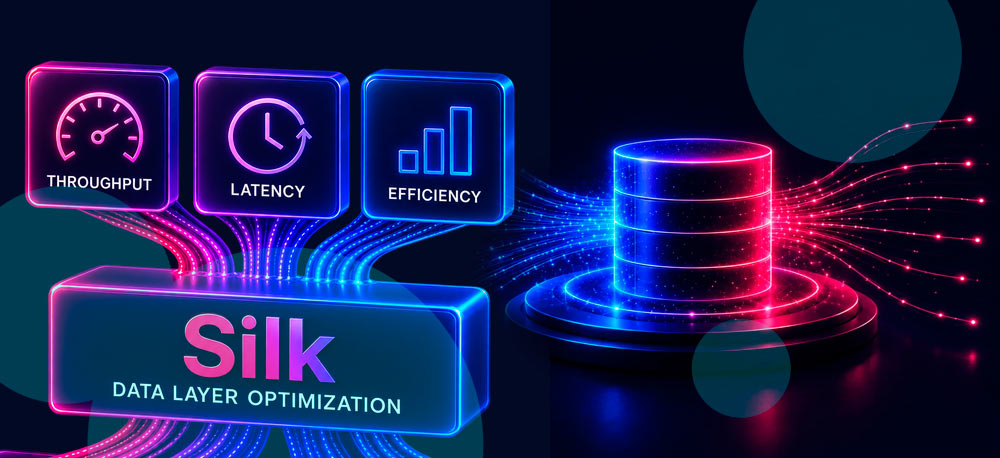
For Silk, those providers offer another distribution route for its data platform. The company is betting that AI infrastructure buyers will increasingly evaluate storage latency, database throughput and live-data access alongside the amount of accelerator compute available.
The $45 mn facility gives Silk additional capital for that expansion without changing its main product strategy. Engineering investment will remain focused on the data layer supporting enterprise applications and AI workloads, while the commercial team expands coverage across public clouds and newer AI infrastructure providers.