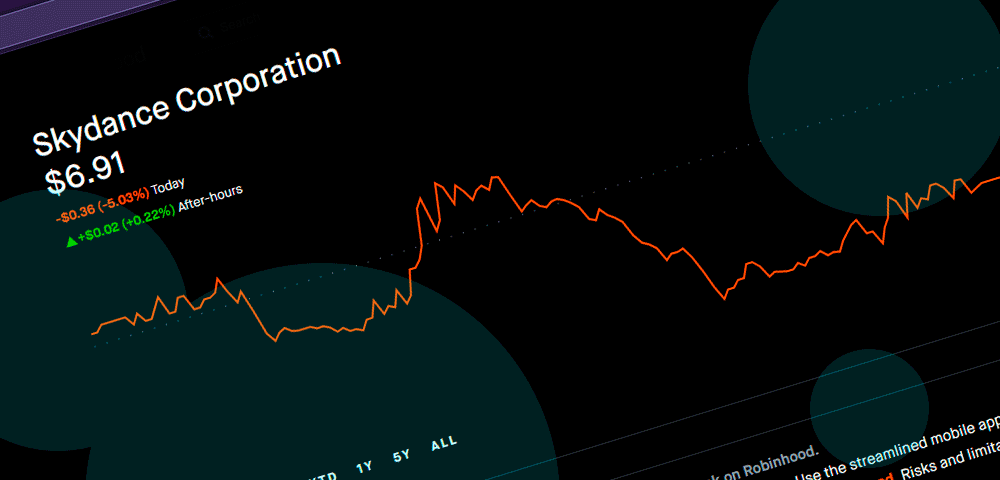
- Skydance shares closed at $6.91 on October 16, down 4.82%, while the average 12-month analyst target of $8.87 suggests 28.4% upside. The consensus rating remains Hold.
- Bernstein cut its price target to $6, while StoneX maintained Buy with an $11 target. Morningstar estimates fair value at $12 following the Warner Bros. Discovery acquisition.
- The combined company faces approximately $80 bn in debt and targets at least $6 bn in annual run-rate synergies within three years, making cash flow and integration costs central to its valuation.
Skydance Corporation (NYSE: SKYD) faces sharply divided Wall Street forecasts following its acquisition of Warner Bros. Discovery, as investors assess the financial risks of combining two major Hollywood businesses under a heavily leveraged capital structure.
Shares closed at $6.91 on October 16, 2026, falling 4.82% during the session. The stock has faced considerable selling pressure since the merger was completed on October 6, although part of the recent decline reflects a technical adjustment related to newly distributed warrants.
According to S&P Global Market Intelligence data covering 22 analysts, Skydance has an average 12-month price target of $8.87, representing potential upside of 28.4%.
The median target stands at $8.35, while forecasts range from $2 to $13.74. The consensus recommendation is Hold, with four positive ratings, nine Hold ratings and nine negative recommendations.
The wide range reflects uncertainty surrounding the newly combined company’s debt burden, expected cost savings and ability to generate sustainable free cash flow.
Skydance stock forecast: Bernstein, Morgan Stanley and Morningstar
Bernstein SocGen analyst Laurent Yoon lowered his price target from $12 to $6 on October 16, maintaining an Underperform rating.
The revised forecast implies approximately 13% downside from the latest closing price. Yoon cited execution risks surrounding merger synergies, leverage, balance sheet strength and free cash flow generation.
- Barclays analyst Kannan Venkateshwar also maintained an Underweight rating, reducing his target to approximately $7 from $8 on October 7.
- StoneX analyst Daniel Kurnos took a more constructive position, maintaining Buy despite reducing his target from $16 to $11 on October 12. The revised forecast represents approximately 59% upside from the October 16 closing price.
- Morgan Stanley maintained an Overweight recommendation following its September assessment, with a target of approximately $11.50, reflecting expectations that the merger could improve Skydance’s competitive position in streaming and content distribution.
- Citizens maintained a Market Outperform rating with a $14 target, while Needham retained Hold without specifying a price objective.
- Morningstar analyst Matthew Dolgin published an updated fair value estimate of $12 on October 14, equivalent to approximately 74% above the latest share price.
Morningstar considers the combination strategically stronger in streaming and film production, but warns that the acquisition price, declining traditional television operations and substantial debt introduce financial risks. Its $12 valuation represents estimated intrinsic value rather than a conventional 12-month trading target.
Warner Bros. merger changes Skydance’s financial position
Skydance completed its acquisition of Warner Bros. Discovery on October 6, creating a media group combining Paramount Pictures, Warner Bros., HBO, CNN, CBS, Paramount+ and HBO Max.
Warner Bros. Discovery shareholders received approximately $31.02 per share in cash. The transaction brought the combined company’s debt burden to approximately $80 bn, making deleveraging and cash generation immediate priorities.
Management targets at least $6 bn in annual run-rate synergies within three years, alongside restructuring initiatives intended to improve operating efficiency.
The company has also committed to releasing at least 30 theatrical films annually and maintaining safeguards for editorial independence at CNN and CBS.
These commitments create additional demands on management as it attempts to reduce costs while maintaining content investment and streaming competitiveness.
Analysts expect the combined business to generate approximately $70 bn in annual revenue and $19 bn in EBITDA by 2030, although achieving those projections depends on successful integration and cost reductions.
Why Skydance shares fell after the merger
The recent share price decline cannot be attributed entirely to deteriorating investor sentiment.
On October 13, Skydance distributed approximately 470.7 mn warrants to eligible Class B shareholders, with separate trading beginning on October 14.
Each warrant allows its holder to purchase one Class B share at an initial exercise price of $12, with a 10-year term.
The distribution transferred part of the economic value previously associated with ordinary shares into separately traded securities. Consequently, the October 14 share price decline partly reflected this adjustment rather than an equivalent reduction in shareholder wealth for investors who received the warrants.
The warrants also introduce potential future dilution if exercised.
Skydance stock outlook for 2027
Skydance’s near-term valuation will depend on the company’s ability to demonstrate progress in three areas: debt reduction, realization of merger synergies and improvement in streaming profitability.
Traditional television revenue remains under structural pressure, while competition from Netflix, Disney and other streaming providers continues to influence content spending and subscriber economics.
The combined group’s film studios, intellectual property and streaming operations provide substantial revenue potential, but the financing burden limits flexibility if earnings fall short of expectations.
The $8.87 analyst consensus indicates possible share price recovery over the next 12 months. Still, the latest reductions from Bernstein, Barclays and StoneX show that financial institutions are reassessing their forecasts following the merger.
Skydance’s investment case now depends less on completing the Warner Bros. acquisition than on demonstrating that the enlarged business can generate sufficient free cash flow to service debt, fund content production and deliver the promised $6 bn in annual cost synergies.