US stock futures traded mixed on November 10, 2026, as investors awaited October inflation data that could determine the Federal Reserve’s next interest rate decision.
Dow Jones Industrial Average futures advanced approximately 0.3%, S&P 500 futures were little changed, and Nasdaq-100 futures declined around 0.3% in early trading.
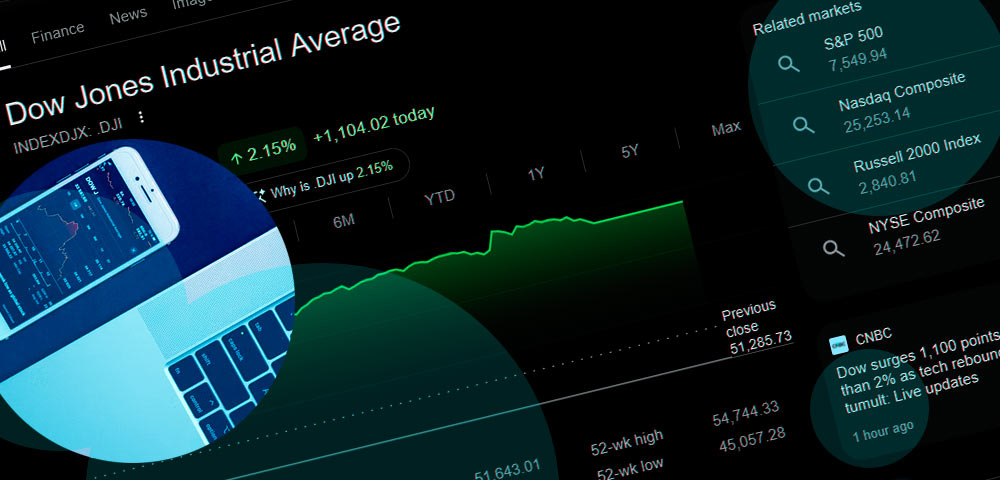
The divergence followed Monday’s recovery, when the Dow gained 1,104 points, or 2.15%, to 52,389.75. The S&P 500 climbed 2.35% to 7,549.94, while the Nasdaq Composite rose 2.74% to 25,253.14.
Lower oil prices supported the recovery, but renewed concerns about AI valuations and the possibility of additional Federal Reserve tightening continued to weigh on technology shares.
US Stock Futures Await October Inflation Data
The October Consumer Price Index, scheduled for release at 8:30 a.m. ET, is expected to show headline inflation rising 0.3% month over month, compared with 0.6% in September.
Core CPI, which excludes food and energy, is forecast to increase 0.2%, down from 0.3% previously.
Investment banks expect some moderation in price pressures, although most do not anticipate a sufficient decline to prevent another interest rate increase.
- Wells Fargo forecasts headline inflation of approximately 0.28% and core inflation of 0.21%. The bank expects the Federal Reserve to raise rates in December even if the report confirms slower monthly price growth.
- Deutsche Bank projects increases of approximately 0.2% for both measures, while JPMorgan expects a 25-basis-point rate increase at the December meeting.
The Federal Reserve’s current target range stands at 3.75-4.00%. Interest rate futures indicate an approximately 85% probability of another increase in December.
A stronger-than-expected October employment report, showing 165,000 additional jobs, has reinforced expectations that monetary policy will remain restrictive.
Goldman Sachs, JPMorgan and Morgan Stanley Stock Market Forecasts
Despite recent volatility, major investment banks continue to project higher US equity markets over the coming months.
Goldman Sachs maintains an S&P 500 target of 8,000 for year-end 2026 and projects 8,700 over a 12-month horizon. Its outlook is supported by corporate earnings growth rather than further expansion in valuation multiples.
JPMorgan also forecasts the S&P 500 at 8,000 by the end of 2026, citing resilient corporate profitability and continued investment in AI infrastructure.
Both forecasts imply approximately 6% upside from the S&P 500’s November 9 closing level.
Morgan Stanley believes the recent correction is approaching its final stages but has identified the 7,100–7,300 range as potential support. The bank considers another test of recent lows possible before the market establishes a sustained recovery.
Oppenheimer remains constructive on the broader market, arguing that economic growth and corporate earnings have not deteriorated sufficiently to justify the scale of last week’s sell-off.
The forecasts suggest that investment banks remain positive on the medium-term equity outlook while acknowledging the possibility of further short-term volatility.
Falling Oil Prices Support Dow Futures
Energy prices declined again on Tuesday as expectations of reduced military tensions between the United States and Iran eased concerns about supply disruptions.
Brent crude futures fell toward $90 per barrel, while WTI traded near $85. Lower energy costs could reduce inflationary pressure on transportation, manufacturing and consumer spending.
The effect is particularly relevant for the Dow Jones, which includes major industrial and consumer businesses.
However, declining oil prices alone may not be enough to offset elevated interest rates. The two-year US Treasury yield climbed toward 4.61% as investors adjusted expectations for Federal Reserve policy.
The combination explains why Dow futures advanced while Nasdaq contracts remained under pressure.
Nasdaq Futures Face Renewed AI Valuation Concerns
Technology stocks recovered sharply on November 9, with Advanced Micro Devices gaining approximately 13% and Broadcom rising nearly 9%.
Oppenheimer upgraded AMD to Outperform, while Bank of America identified AMD, Broadcom and Marvell Technology as potential beneficiaries of competitive uncertainty surrounding NVIDIA.
NVIDIA shares fell more than 4% on Monday following the announcement of an independent board investigation involving CEO Jensen Huang.
The developments have added uncertainty to an AI sector already dealing with questions about data center financing, capital expenditure and future profitability.
CoreWeave‘s third-quarter earnings, scheduled after Tuesday’s closing bell, will provide another assessment of demand for AI computing infrastructure.
Investors will focus on revenue growth, capacity deployment, financing requirements and debt levels.
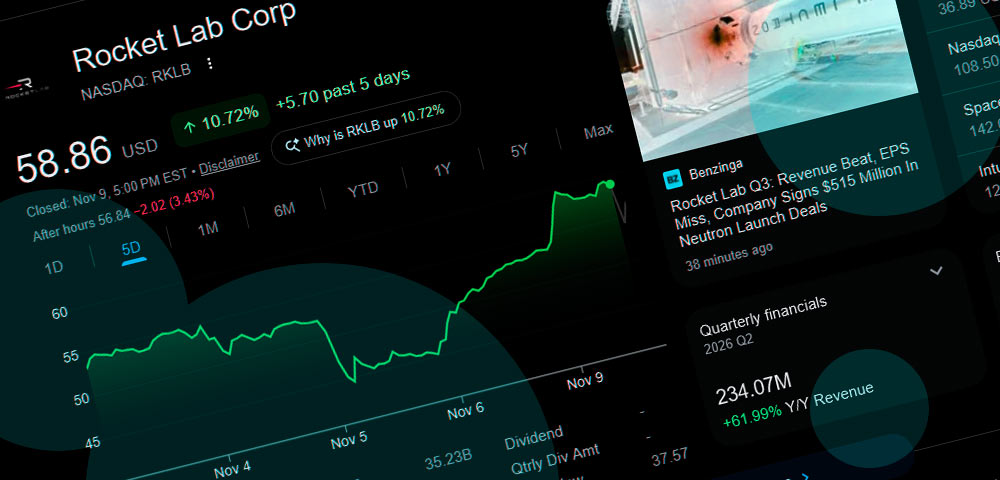
Rocket Lab also remained under pressure in premarket trading after reporting a wider third-quarter net loss, despite record revenue of $267.8 mn and a $3.57 bn backlog.
The contrasting performance of AI, semiconductor and space infrastructure stocks indicates that investors are increasingly distinguishing between revenue growth, profitability and financing risk.
US Stock Futures Forecast: Three Market Scenarios
The near-term outlook depends primarily on the October CPI report and its implications for December monetary policy.
| Scenario | Inflation outcome | Expected market reaction |
|---|---|---|
| Bullish | Core CPI at 0.1%–0.2% | S&P 500 and Nasdaq futures recover as rate concerns ease |
| Base case | Core CPI around 0.2% | Mixed trading continues, with selective gains in industrials and technology |
| Bearish | Core CPI at 0.3% or higher | Treasury yields rise and technology futures face renewed selling |
These scenarios represent conditional market analysis rather than official investment bank forecasts.
S&P 500 Futures Forecast
The S&P 500’s immediate challenge is maintaining the recovery above 7,500.
A moderate inflation reading could support a move toward 7,600-7,700, while a renewed increase in yields would leave the index vulnerable to another test of recent support.
The 8,000 year-end targets maintained by major investment banks remain achievable only if earnings expectations hold and inflation does not force substantially more restrictive monetary policy.
Dow Jones Futures Forecast
Dow futures could outperform technology-heavy benchmarks if lower oil prices support industrial, financial and consumer companies.
The near-term trading outlook centers on 52,000–54,500, with stronger inflation data potentially pushing the index back toward 51,000.
Further gains would depend on improving market breadth and continued resilience in corporate earnings.
Nasdaq-100 Futures Forecast
Nasdaq futures face greater sensitivity to changes in interest rate expectations because technology valuations depend heavily on anticipated future earnings.
A softer CPI report could support another rebound in semiconductor and software stocks.
However, disappointing AI-related earnings or evidence of slower data center investment could renew selling pressure even if inflation moderates.
US Stock Market Outlook for the Rest of 2026
US equity futures remain supported by corporate earnings and the possibility that the recent technology correction is nearing completion.
The principal risk is that persistent inflation forces the Federal Reserve to raise rates more aggressively than currently expected.
Goldman Sachs and JPMorgan continue to forecast an S&P 500 level of 8,000 by year-end, while Morgan Stanley remains cautious about the timing of a sustainable recovery.
The immediate direction of Dow, S&P 500 and Nasdaq futures will depend on whether October inflation confirms moderation in price pressures without undermining expectations for economic growth.
For now, lower oil prices favor industrial and consumer stocks, while technology shares remain more exposed to interest rates, AI investment expectations and upcoming corporate earnings.