Follow Beinsure
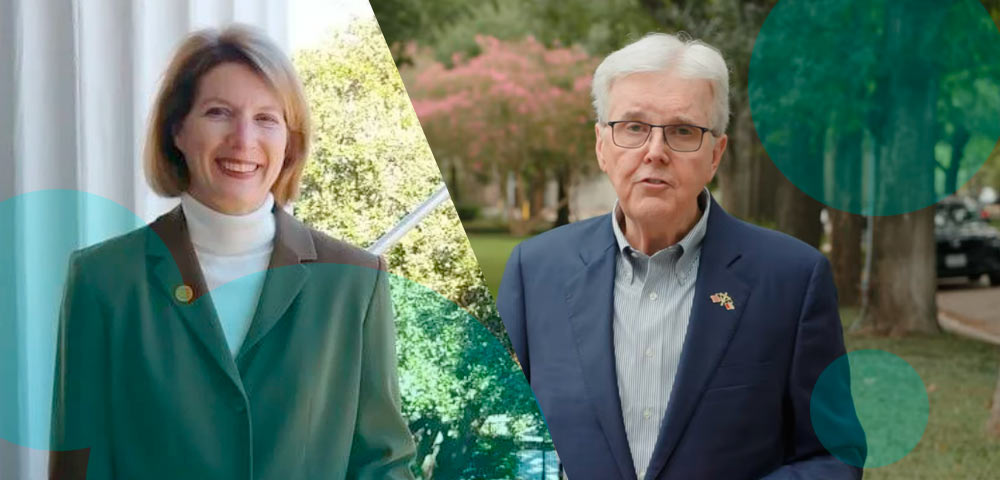
- Democratic candidate Vikki Goodwin is mounting a competitive challenge against Republican Lt. Gov. Dan Patrick, with an October poll showing her narrowly ahead despite a substantial fundraising disadvantage.
- Patrick reported approximately $24 mn in campaign cash against Goodwin’s $643,000, while his political advertising spending reached nearly $14.5 mn compared with her $25,983.
- Goodwin proposes a state-administered health insurance system funded partly through cannabis taxation, alongside increased public education spending and opposition to school vouchers.
Democratic state Rep. Vikki Goodwin is mounting a challenge to Texas Lt. Gov. Dan Patrick in the 2026 election, with recent polling suggesting a closer contest than expected despite a substantial gap in campaign resources and public recognition.
Goodwin, 59, faces a Republican incumbent who has spent nearly 12 years in statewide office and remains one of the most influential figures in Texas politics. Patrick, 76, has significantly greater financial resources and an established political organization, yet his campaign has increasingly addressed Goodwin directly in speeches and advertisements.
The shift represents a departure from previous elections, when Patrick rarely acknowledged Democratic challengers publicly. His campaign has also emphasized Republican turnout, particularly in rural areas, as competition for statewide offices attracts greater attention.
Goodwin has maintained an intensive campaign schedule, combining legislative responsibilities with fundraising, media appearances and grassroots events.
On one recent day, she attended a five-hour Texas House insurance committee hearing, called campaign donors, discussed Patrick’s proposed restrictions on THC products during a cannabis podcast interview and traveled to a reception supporting a Democratic congressional candidate.
Her campaign draws on the experience of winning a Republican-held Texas House district in 2018, when Democrats made gains during President Donald Trump’s first midterm election.
The political arithmetic remains difficult for Democrats. Trump carried Texas by 14 percentage points in the 2024 presidential election, and Patrick defeated his Democratic challenger by approximately 10 points in 2022.
Patrick also emerged from the 2025 legislative session with much of his conservative agenda advancing through the Texas Capitol, reinforcing his position within the state’s Republican leadership.
Goodwin entered the statewide race with limited name recognition and has remained unfamiliar to nearly half of Texas voters. Nevertheless, a University of Texas poll conducted in late September and early October placed her narrowly ahead of Patrick, an unusual October result for a Democratic lieutenant governor candidate in recent Texas elections. The lead was within the survey’s margin of error, The Texas Politics Project stated.
The contest concerns an office that has remained under Republican control since 1999 and carries considerable legislative authority.
As presiding officer of the Texas Senate, the lieutenant governor helps determine which bills advance, establishes legislative priorities and exercises influence over committee assignments. Those responsibilities can give the office substantial control over the direction and timing of legislation.
Campaign finance reports illustrate the difference in resources available to the candidates.
Approximately one month before Election Day, Patrick reported $24 mn in cash on hand, compared with about $643,000 for Goodwin. The incumbent’s available campaign funds were roughly 38 times greater.
According to The Texas Tribune, political advertising expenditures showed an even wider disparity. According to media tracking company AdImpact, Patrick had spent nearly $14.5 mn on advertisements by mid-October, while Goodwin’s campaign had spent $25,983, less than 1% of the Republican’s total.
Goodwin is seeking to counter that financial disadvantage through direct voter engagement and dissatisfaction with living costs and economic conditions.
Her campaign has included appearances at community events and smaller gatherings, including a German Heritage Festival in Tomball, where she spent an afternoon meeting voters.
The strategy resembles the grassroots approach taken by Mike Collier, Patrick’s Democratic challenger in 2018, who sought to build support through smaller groups while benefiting from increased Democratic turnout associated with Beto O’Rourke’s Senate campaign.
Patrick defeated Collier that year by fewer than five percentage points, a considerably narrower margin than his victory four years later.
The broader political environment has added uncertainty to the 2026 contest. Democratic US Senate candidate James Talarico has also registered narrow polling leads against Republican Ken Paxton in some surveys, although polling results across Texas statewide races have varied.
At a recent campaign event in Midland, Patrick stressed the importance of maintaining Republican participation in the election. Goodwin’s political career began in response to the 2016 presidential election. A real estate broker before entering elected office, she said Trump’s victory prompted her to become politically active.
Her interest in public education also has family roots. Goodwin grew up in the Dallas metropolitan area, where her mother served on the Dallas Independent School District board.
She recalled her mother’s frustration over the limited financial authority available to local school districts, particularly because the Texas Legislature determines how much state funding schools receive per student.
In 2018, she won a previously Republican-held Texas House district representing western Travis County. Her victory was one of 12 Democratic gains in the chamber during that midterm election, which also featured O’Rourke’s competitive Senate race against Republican Ted Cruz.
Goodwin initially had no intention of seeking statewide office. She said her decision changed as she became increasingly dissatisfied with policies adopted by Texas’ conservative leadership.
Goodwin said her daughter does not want to return to Texas because of the state’s restrictive abortion laws, which Goodwin and other Democratic lawmakers opposed. Her son, a physician, accepted a fellowship in Pennsylvania.
Her statewide campaign concentrates on public education funding, healthcare access and policies she argues have reduced individual choices for Texas residents.
Goodwin wants the state government to assume a larger share of public school financing. She also opposes Patrick’s support for publicly funded private school vouchers, which allow eligible families to use public funds toward private education expenses.
Patrick has supported a near-total ban on those products, while Goodwin opposes the restrictions and argues that both the proposed ban and school voucher policies face opposition across party lines.
Healthcare financing is among her most substantial policy proposals.
During the summer, Goodwin promoted a plan to establish a state-administered health insurance system intended to expand access to coverage across Texas.
Her proposal would combine several financing sources, including a new tax on legal cannabis products and federal funds currently directed to private insurers to help cover medical claims.
The initiative would also require an initial contribution from Texas’ state savings. Goodwin’s campaign cites an analysis estimating that the proposed cannabis tax could generate approximately $267 mn in recurring revenue.
That money, together with premiums paid by participating members, would finance the public option component of her broader healthcare proposal.
The campaign has presented the initiative as an alternative approach to healthcare coverage, although its implementation would depend on legislative action and financing arrangements that have not been enacted.
Goodwin argues that education and healthcare have remained consistent priorities throughout her political career.
According to ideological rankings prepared by Rice University political science professor Mark Jones, Goodwin has ranked among the most liberal members of the Texas House during recent legislative sessions.
Patrick’s campaign has emphasized ideological differences between the candidates, while Goodwin has sought to focus public attention on education financing, healthcare access and the cost of living.
Like other Democratic lawmakers seeking statewide office, she is proposing policies that have faced substantial obstacles under Republican control of the Legislature.
Winning the lieutenant governorship would change her institutional responsibilities, although it would not necessarily give her unrestricted authority to implement those proposals. Goodwin has emphasized the influence the office holds over legislative outcomes.
Texas senators approve the chamber’s operating rules at the beginning of each legislative session. Several of the lieutenant governor’s procedural powers are established through those rules rather than guaranteed independently.
If Goodwin wins, she would preside over a Senate that is expected to retain a Republican majority.
Republican senators could therefore seek to restrict her influence over committee appointments, legislative scheduling and the movement of bills to the Senate floor.
Such changes could limit her ability to advance major policy initiatives without cooperation from Republican lawmakers.
Other responsibilities are attached to the office itself, including the constitutional provision under which the lieutenant governor assumes the governor’s position if it becomes vacant.
Goodwin acknowledged the possibility of procedural restrictions but said she would look for ways to exercise the authority available to her.