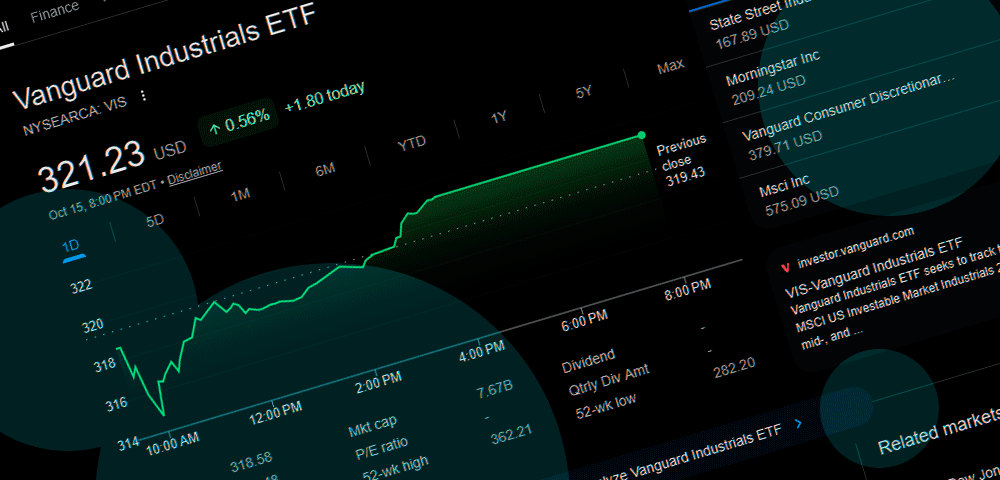
- VIS closed at $321.23 on October 15, gaining 0.56%. The fund remains below its 2026 highs despite continued investment in US industrial infrastructure.
- TipRanks’ holdings-based 12-month price target stands at $409.18, suggesting approximately 27.4% upside. This is an aggregated forecast for portfolio companies, not a direct institutional price target for VIS.
- CFRA maintains an Overweight view on US industrials, while Morningstar considers the sector fully valued. Capital expenditure, defense spending and grid infrastructure remain important earnings drivers.
Vanguard Industrials ETF (NYSE Arca: VIS) enters the final quarter of 2026 with a favorable longer-term industry outlook but increasing uncertainty over valuations and borrowing costs.
The fund closed October 15 at $321.23, up 0.56% from the previous session. Shares had fallen 1.09% on October 14 as investors reassessed industrial companies’ exposure to artificial intelligence infrastructure spending and tighter financial conditions.
VIS tracks the MSCI US Investable Market Industrials 25/50 Index, providing market-capitalization-weighted exposure to US industrial companies across aerospace, defense, machinery, transportation and electrical equipment.
The ETF charges an annual expense ratio of 0.09% and manages approximately $8 bn in assets. Its portfolio contains around 400 companies, with the 10 largest holdings accounting for approximately 30.4% of total assets.
The largest positions include Caterpillar at 5.27%, GE Aerospace at 4.99%, RTX at 4.01%, GE Vernova at 3.46% and Deere at 2.28%, based on the latest available holdings data.
This composition provides exposure to several long-term investment themes but also leaves the fund sensitive to industrial capital spending, government defense budgets and economic conditions.
The strongest institutional case for VIS comes from CFRA Research. In May, the firm upgraded US Industrials to Overweight from Marketweight, citing a multiyear capital expenditure cycle supported by AI data centers, electricity grid modernization, defense spending and domestic manufacturing.
CFRA’s Aniket Ullal identified VIS as a low-cost way to access these investments. The firm also upgraded Caterpillar to Buy, citing strong orders for power generation equipment, and maintained positive assessments of GE Aerospace and RTX.
Morningstar takes a more cautious position. In its October 12 sector review, the research firm described industrial stocks as fully valued, although it continued to identify opportunities in aerospace, defense, construction and business services.
Its assessment suggests that much of the expected investment growth is already reflected in share prices.
Citi analyst Andrew Kaplowitz also favors selected industrial companies ahead of third-quarter earnings, including Vertiv, Parker-Hannifin, Emerson Electric, Trane Technologies, Dover and Eaton. His analysis emphasizes earnings visibility and valuation rather than buying the entire sector indiscriminately.
The main risk for VIS is that higher financing costs could slow industrial investment. Recent concerns about debt-funded AI infrastructure have affected companies including Caterpillar, GE Vernova and Eaton.
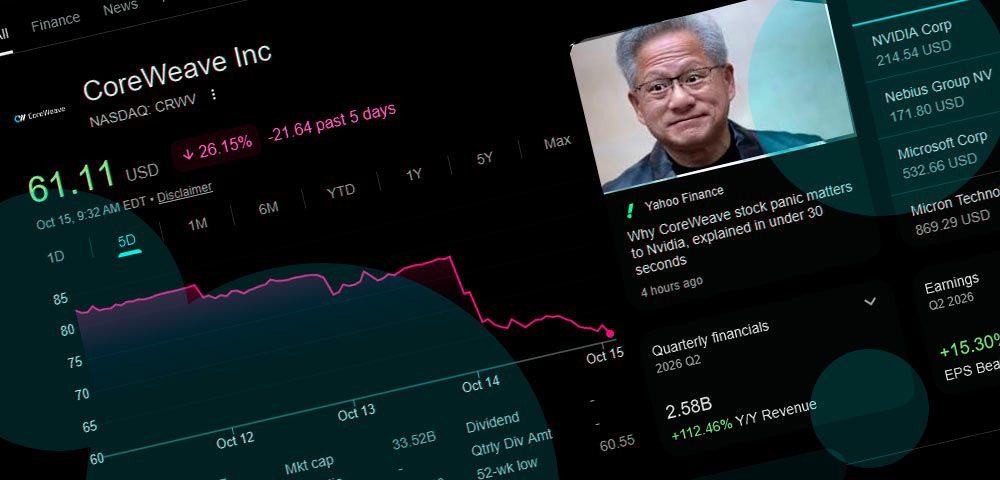
Because these businesses are represented in VIS, the ETF is exposed to changes in AI-related capital expenditure expectations even though it does not invest directly in technology companies such as CoreWeave.
At roughly 27 times earnings, VIS also leaves limited room for earnings disappointments. Its low expense ratio reduces investment costs, but does not protect against a sector-wide valuation adjustment.
The $409.18 forecast from TipRanks should be interpreted carefully. It aggregates analysts’ price targets for individual holdings rather than representing a direct forecast from Vanguard, CFRA or an investment bank. Its implied 27.4% return is therefore a measure of underlying analyst expectations, not a probability-weighted prediction for the ETF itself.
For the remainder of 2026 and into 2027, VIS performance will depend primarily on industrial earnings, capital spending commitments, interest rates and the sustainability of orders linked to energy infrastructure and defense.
CFRA’s investment thesis supports longer-term demand, but Morningstar’s valuation assessment makes the near-term outlook less compelling.
VIS remains a cost-efficient way to invest in US industrial businesses. The case for further appreciation is credible, although earnings growth will need to justify valuations that already incorporate substantial expectations for infrastructure investment.