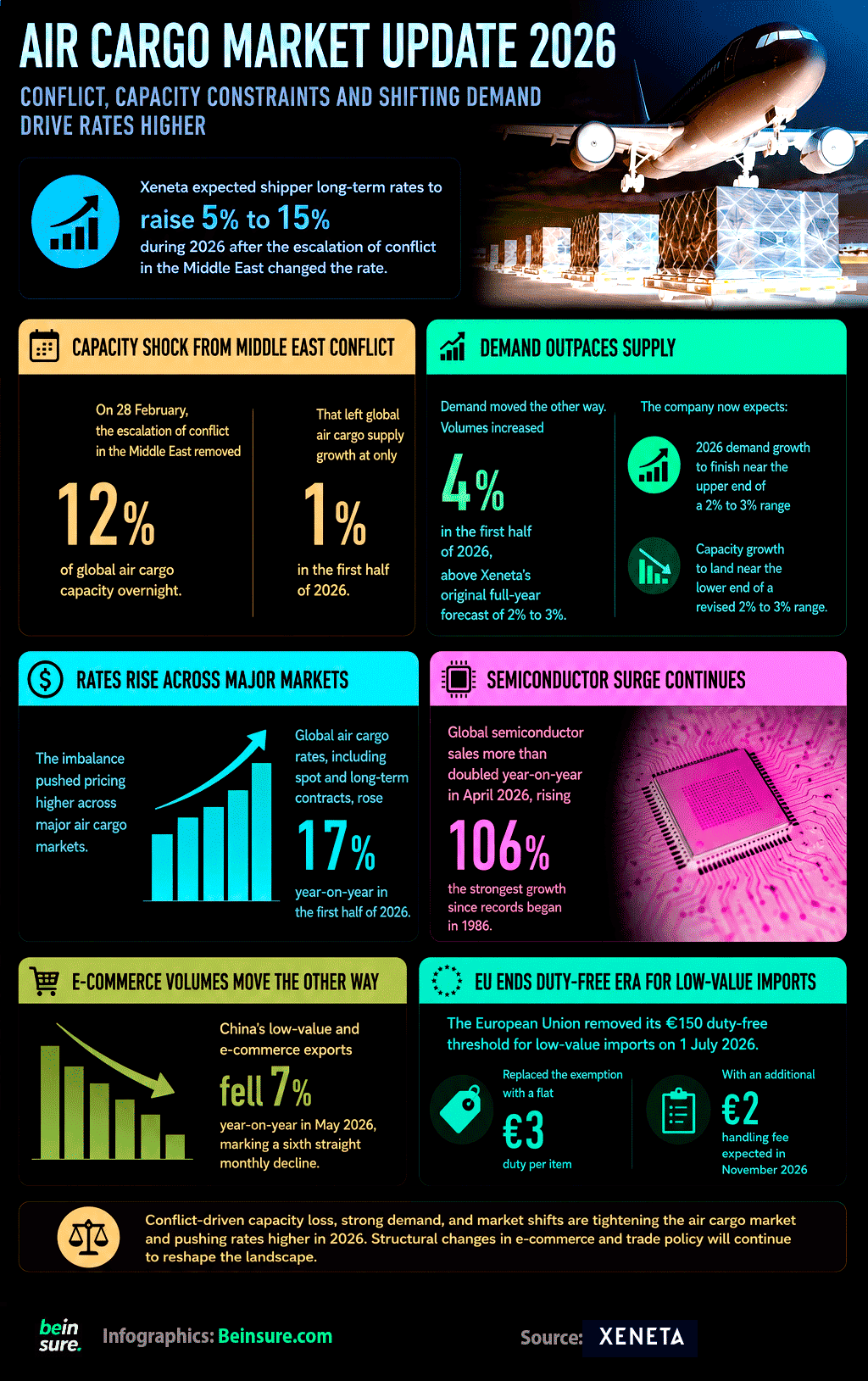
Xeneta expected shipper long-term rates to raise 5% to 15% during 2026 after the escalation of conflict in the Middle East changed the rate. On 28 February, the escalation of conflict in the Middle East removed 12% of global air cargo capacity overnight. That left global air cargo supply growth at only 1% in the first half of 2026.
- Volumes increased 4% over the same period, above Xeneta’s original full-year forecast of 2% to 3%. The company now expects 2026 demand growth to finish near the upper end of that range, while capacity growth lands near the lower end of a revised 2% to 3% range.
- The imbalance pushed pricing higher across major air cargo markets. Global air cargo rates, including spot and long-term contracts, rose 17% year-on-year in the first half of 2026.
- Global semiconductor sales more than doubled year-on-year in April 2026, rising 106%, the strongest growth since records began in 1986.
- China’s low-value and e-commerce exports fell 7% year-on-year in May 2026, marking a sixth straight monthly decline.
- The European Union removed its €150 duty-free threshold for low-value imports on 1 July 2026. It replaced the exemption with a flat €3 duty per item, with an additional €2 handling fee expected in November.
The analysis draws on Xeneta Air Freight Intelligence, which gives procurement and supply chain teams an independent view of the air freight market in one place, covering shipper contract rates, airline selling rates and dynamic load factors. Xeneta has now expanded the platform with rate and volume intelligence broken out by special cargo type, including pharma, perishables, live animals, valuables and dangerous goods, allowing shippers to benchmark against the market they are actually operating in.
What changed in Xeneta’s 2026 air freight forecast?
Xeneta now expects shipper long-term air freight rates to rise 5% to 15% in 2026. Its December 2025 forecast had pointed to a 5% to 10% decline. The change follows the February escalation of conflict in the Middle East, which removed 12% of global air cargo capacity overnight.
Why did air freight rates rise in the first half of 2026?
Supply tightened sharply while demand stayed stronger than expected. Global air cargo supply grew only 1% in H1 2026, while demand increased 4%. That imbalance pushed combined spot and long-term air cargo rates up 17% year-on-year.
How did the Middle East conflict affect air cargo capacity?
The escalation on 28 February closed major air hubs and disrupted routes across the region. Xeneta said the shock removed 12% of global air cargo capacity overnight, creating one of the most sudden capacity drops the market has seen.
What is driving air cargo demand in 2026?
AI-related shipments are adding demand, mainly through semiconductors and hardware. Global semiconductor sales rose 106% year-on-year in April 2026, the strongest growth since records began in 1986. E-commerce is weaker, with China’s low-value and e-commerce exports down 7% year-on-year in May.
Will air freight rates fall in 2026?
Xeneta expects demand growth to ease in H2 as supply recovers from the Middle East disruption. That should improve conditions for shippers, but rates aren’t expected to fall quickly because capacity remains tight and geopolitical risk still affects major cargo routes.