- Hackers compromised refrigeration systems at approximately 350 French supermarkets, raising temperatures to 50°C and causing potentially tens of millions of euros in food losses.
- Standard cyber insurance typically excludes physical damage and spoiled inventory, leaving retailers exposed unless they have specific coverage for perishable goods.
- Insurance specialists warn that attacks on connected equipment could increase cyber premiums and demand for policies covering physical losses.
French supermarket operators face potentially tens of millions of euros in losses after hackers compromised refrigeration systems at approximately 350 stores, exposing a significant gap in commercial cyber insurance coverage.
The attack occurred on Sunday night when unidentified hackers gained control of internet-connected refrigerators and freezers, raising temperatures to 50°C (122°F). Large quantities of food had to be discarded after refrigeration systems were compromised, according to Reuters.
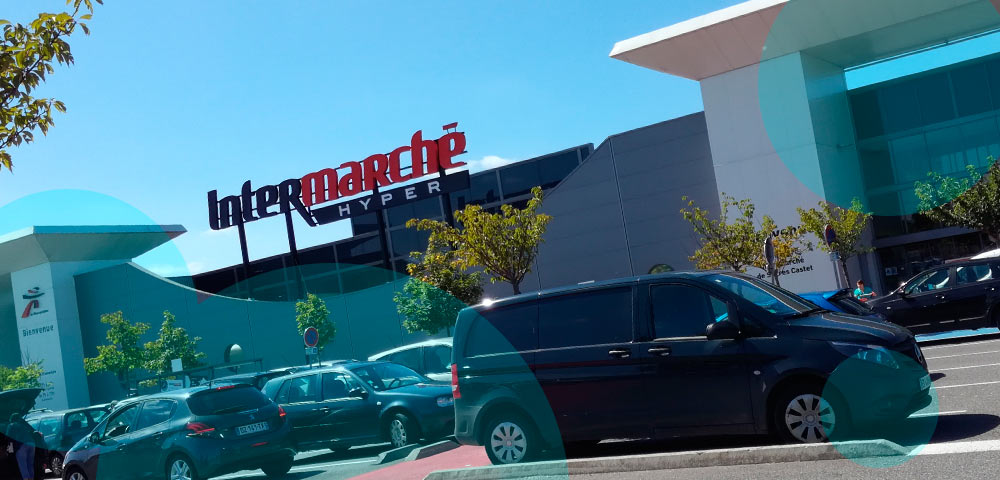
Thierry Cotillard, president of Les Mousquetaires, which owns Intermarché, estimated that nationwide losses could reach tens of millions of euros. He said affected retailers were preparing legal action to determine responsibility for the damage.
The incident raises questions about whether conventional cyber insurance policies adequately cover physical losses resulting from attacks on connected industrial equipment.
The cyberattack, which occurred overnight on October 11-12, 2026, affected several major grocery chains, including Intermarché, Netto, Coopérative U, Carrefour and E.Leclerc. Monoprix also reported disruption.
Four insurance brokers told Reuters that standard cyber policies generally exclude physical damage, although they may cover incident response expenses, internal investigations and public relations costs.
Intermarché told AFP that its insurance did not cover this type of incident. Les Mousquetaires declined to disclose its insurance arrangements when contacted by Reuters. Carrefour, Monoprix, Coopérative U and E.Leclerc did not respond to requests for comment.
Coverage disputes could also depend on whether affected businesses maintained appropriate cybersecurity protections and installed required software updates.
France’s cybersecurity agency said the attack involved refrigeration equipment using software supplied by Danish manufacturer Danfoss, as well as Copeland and Dixell.
Danfoss said many affected appliances were running outdated software or had reached the end of their operational life and no longer received security updates.
Emma Pleut, head of cyber insurance for France at WTW, explained that businesses purchasing cyber policies typically disclose their software maintenance procedures, including commitments to install critical updates within specified periods.
Whether failure to update equipment affects a claim depends on the contractual terms.
Paul Gooch, deputy departmental head at Tokio Marine Kiln, said outdated software alone would not normally justify rejecting an insurance claim.
Another complication could arise if investigators determine that the attack involved a state-backed actor. A cyber underwriter said such findings could create coverage disputes because policies typically contain war exclusions.
The attack illustrates the growing financial exposure associated with the Internet of Things, as equipment that previously operated through largely mechanical systems becomes connected to corporate networks.
According to insurance broker Howden, cyberattacks generated more than €300 bn in economic losses across France, Germany, Italy and Spain between 2020 and 2025.
David Molony, head of cyber and financial sponsors at Aon, said companies in sectors such as retail and pharmaceuticals should consider specific insurance protection for perishable goods requiring controlled storage conditions.
Insurance covering physical damage caused by cyber incidents already exists in industries including energy, marine cargo and defence.
Aon has advised major retailers and other clients to extend policies to cover perishable stock. The broker has also recently arranged high-value insurance programmes in the London market that include such protection and provide substantial payout limits.
Demand for these products is increasing as retailers reassess the potential consequences of attacks on operational technology.
Recent cyber incidents in France and Britain could also influence commercial cyber insurance pricing.
Asked whether European retailers could face higher premiums following the attacks, Sydonie Williams, head of international cyber risks at Beazley, said: “I absolutely think that could happen.”
Gooch expects insurers to place greater emphasis on products covering physical losses caused by cyber incidents.
“The recent cyberattack impacting refrigeration systems across France should act as a wake-up call to those who underestimate the potential physical consequences of cyber incidents,” he said.
For affected supermarkets, the immediate issue is determining which losses are recoverable under existing policies and who bears responsibility for equipment vulnerabilities. The outcome could influence how insurers assess connected refrigeration systems and other operational technology when underwriting commercial cyber risks.
French Prime Minister Sébastien Lecornu instructed ANSSI to investigate the attack and coordinate with European cybersecurity authorities. Officials are assessing whether similar vulnerabilities could affect businesses in other countries.
Dutch supermarket group Ahold Delhaize separately reported a cybersecurity issue affecting several digital systems, including services used by Albert Heijn and Delhaize. The company temporarily disabled some systems as a precaution.
No direct connection between that incident and the French supermarket attack has been established.
European Commissioner for Agriculture and Food Christophe Hansen condemned the targeting of food infrastructure. “Food security requires more attention at all levels. Because the weaponisation of food has become a reality,” Hansen wrote on X.
For retailers and insurers, the incident raises questions about cyber-related property losses, spoiled inventory, equipment damage and business interruption coverage. Whether losses are recoverable will depend on individual insurance policies and the circumstances of the attack.