Follow Beinsure
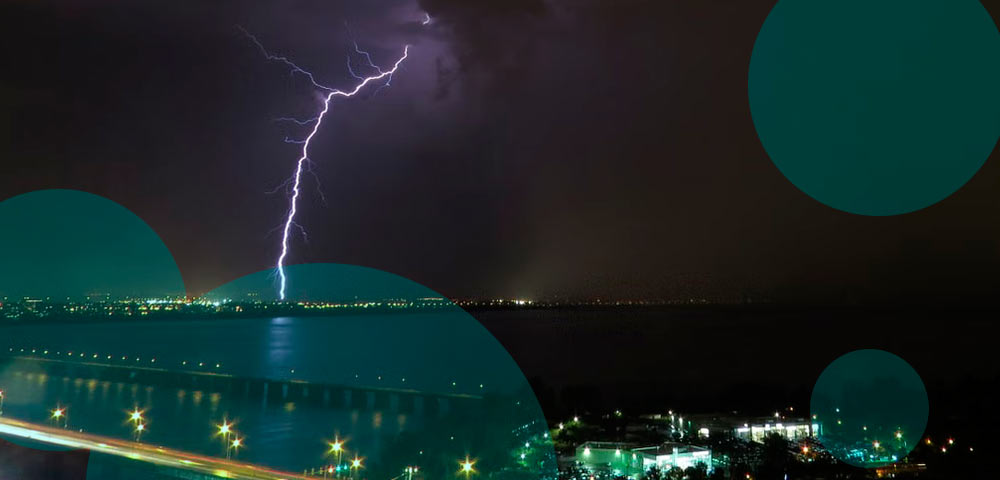
Severe weather across Canada caused more than C$3.7 bn ($2.63 bn) in insured losses during summer 2026, making it the third-costliest summer in the country’s history, according to estimates from Catastrophe Indices and Quantification Inc. (CatIQ).
Four of Canada’s five most expensive summers for insured weather-related damage have occurred within the past six years, reflecting a sustained increase in catastrophe costs for insurers, households and businesses.
- Canada’s summer 2026 severe weather generated more than C$3.7 bn ($2.63 bn) in insured losses, making it the third-costliest summer on record, according to CatIQ.
- Severe storms across the Prairies accounted for C$1.8 bn in losses, followed by June storms in Manitoba, Saskatchewan and Montreal at C$1.1 bn.
- Annual insured catastrophe losses have increased roughly 300% since the late 1990s and early 2000s, even after adjusting for inflation.
Major events included severe thunderstorms across Manitoba, Saskatchewan and Montreal in June, flooding in Ontario’s Niagara Region during July and August, storms affecting Ontario and Quebec between late June and early July, and extensive wildfires in British Columbia. The Prairie provinces also experienced repeated flooding, windstorms and hail events.
This summer’s extreme weather once again highlights the significant impact that severe weather events are having on Canadian communities.
Celyeste Power, President and CEO of the Insurance Bureau of Canada (IBC)
“These events are part of a long-term pattern of increasingly severe and costly disasters across the country. IBC continues to advocate for a whole-of-society approach to protect Canadians from the ongoing impacts of fires, floods and other catastrophic weather events.”
Canada’s costliest severe weather events in summer 2026
Severe storms across Alberta, Saskatchewan and Manitoba generated more than C$1.8 bn in insured losses, making them the costliest group of weather events reported for the summer.
June storms affecting Manitoba, Saskatchewan and Montreal caused approximately C$1.1 bn in insured damage. Wildfires across British Columbia produced another C$550 mn in losses, while flooding in the Niagara Region during July and August resulted in nearly C$360 mn.
Early-summer storms in Ontario and Quebec were initially associated with C$439 mn in insured damage. CatIQ subsequently increased its estimate for severe thunderstorms that struck parts of southern Ontario and southern Quebec between June 30 and July 3 to C$491 mn, marking the second upward revision.
The reported event estimates cover different geographical areas and reporting periods, including broader regional storm activity, and should not be treated as separate components that can necessarily be added together.
The five costliest Canadian summers for insured catastrophe losses
Summer 2026 ranks behind only 2024 and 2013 for insured severe-weather losses in Canada, based on CatIQ figures expressed in 2025 Canadian dollars.
| Rank | Year | Insured losses (C$) |
|---|---|---|
| 1 | 2024 | C$8.8 bn |
| 2 | 2013 | C$3.9 bn |
| 3 | 2026 | C$3.7 bn |
| 4 | 2023 | C$2.8 bn |
| 5 | 2020 | C$1.7 bn |
The figures show the concentration of major catastrophe losses in recent years. The summers of 2020, 2023, 2024 and 2026 all rank among the five most expensive on record, with 2024 producing more than twice the inflation-adjusted summer losses recorded in 2013.
Extreme weather losses in Canada have risen 300%
Canada’s longer-term insured catastrophe loss figures show a substantial increase in the financial consequences of extreme weather.
Over the past decade, annual insured losses from severe weather have averaged more than C$3.7 bn, compared with C$1.4 bn during the preceding decade and C$883 mn in the decade before that, according to IBC.
After adjusting for inflation, annual insured weather losses have increased by approximately 300% since the late 1990s and early 2000s.
Canada recorded its costliest full year for severe weather in 2024, when insured losses exceeded C$9 bn. That annual figure is separate from the C$8.8 bn inflation-adjusted summer loss total used in CatIQ’s historical comparison.
The increasing financial burden extends beyond insurers to property owners, businesses, governments and communities facing damage to buildings, public infrastructure and other assets.
The insurance industry will continue to be there for Canadians following these devastating events. However, we cannot solve this issue on our own.
“We look forward to working with governments across the country to take meaningful action to stop putting people in harm’s way, reduce the risk currently facing Canadian homes and businesses and invest in weather-resilient infrastructure to protect communities.”
Canadian insurers call for stronger flood and wildfire protection
IBC has renewed its appeal for federal, provincial and municipal governments to adopt measures aimed at reducing exposure to floods, wildfires and other severe weather events.
A central recommendation is to prevent new residential development in high-risk flood and wildfire zones through stronger land-use planning and restrictions on construction in the most exposed locations.
Where development in vulnerable areas cannot be avoided, IBC wants cost-effective community protection measures, including flood-defence infrastructure and FireSmart practices intended to reduce wildfire damage.
The organisation also recommends financial incentives to encourage homeowners to adopt practical, affordable property improvements that reduce damage and recovery expenses.
Additional investment in weather-resilient public infrastructure is another priority, particularly in communities exposed to recurring flood risks.
IBC is calling for stronger building codes and construction standards so newly built homes incorporate protective features designed for current and anticipated climate conditions.
Improving access to clear risk information is also part of its recommendations. Homeowners, renters and businesses should be able to understand the hazards affecting their properties and identify practical measures to reduce potential losses.
The proposals focus on reducing exposure before disasters occur, rather than relying exclusively on insurance payouts and post-event recovery.
With four of Canada’s five costliest summers occurring since 2020, IBC is pressing governments to address development in high-risk areas, strengthen construction requirements and invest in infrastructure capable of limiting future weather-related damage.