Follow Beinsure
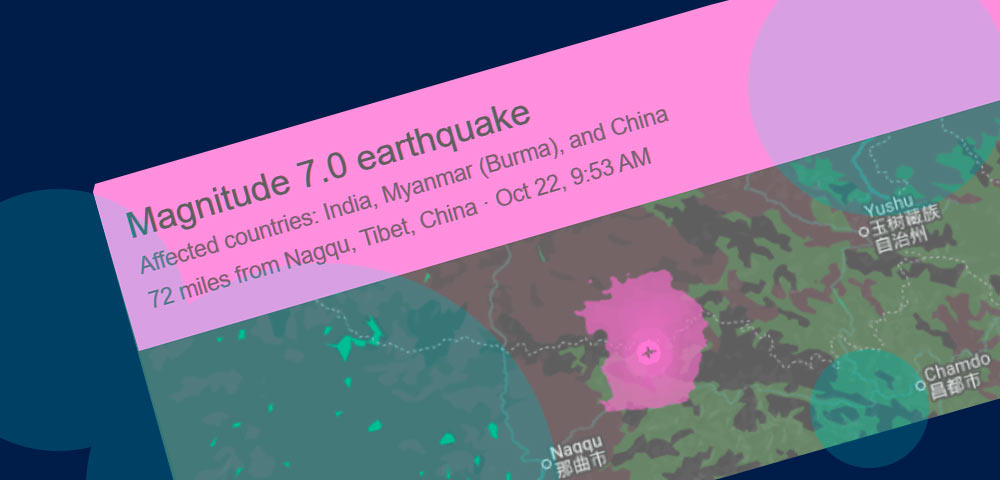
A magnitude-7 earthquake in China’s southwestern Tibet region has killed 16 people and injured 76, according to local authorities, as emergency teams continue searching damaged communities amid concerns about aftershocks, rockslides and further building collapses.
The number of injured people has risen to 76, while the confirmed death toll remains unchanged at 16. At least 339 homes collapsed following the earthquake, which struck the high-altitude Nagqu region on Thursday night.
- A magnitude-7 earthquake struck China’s Tibet region, leaving 16 people dead, 76 injured and at least 339 homes destroyed.
- More than 12,000 residents were evacuated as over 5,000 emergency personnel conducted rescue operations amid aftershocks, freezing temperatures and damaged infrastructure.
- Chinese authorities deployed emergency shelters, restricted transport routes and mobilized relief supplies, while President Xi Jinping ordered extensive rescue and medical assistance.
The earthquake was the strongest recorded in China since January 2024, according to the initial reports.
More than 12,000 residents have been evacuated, China’s official Xinhua news agency reported, with authorities constructing additional temporary shelters for displaced households.
Rescue operations have been complicated by mountainous terrain, low temperatures, disrupted communications and damage to transport infrastructure.
Earthquake strikes Tibet as aftershocks threaten damaged buildings
The US Geological Survey (USGS) recorded the earthquake at 10:33 p.m. local time on Thursday, placing its epicenter approximately 191 kilometers east-northeast of Nagqu at a depth of 18 kilometers.
The agency subsequently recorded at least seven aftershocks with magnitudes ranging from 4.3 to 5.2, each at a depth of approximately 10 kilometers.
Authorities warned that further tremors could cause already weakened buildings to collapse and trigger additional rockslides, increasing the danger to residents and emergency personnel.
China’s national broadcaster CCTV showed footage of collapsed homes, damaged structures and shattered stone walls across affected communities in Nagqu.
Despite the destruction, officials reported that no residents were missing in Baqen County, where the earthquake struck.
Communication services remained unavailable in some affected areas on Friday, according to Xinhua, complicating efforts to assess damage and coordinate emergency assistance.
The region’s geography presents additional challenges. Its high elevation, mountainous terrain and exposure to severe weather can restrict access to isolated settlements and slow the delivery of essential supplies.
Intermittent snowfall was forecast for the earthquake-affected area over the following three days, raising further concerns about conditions for displaced residents and rescue workers.
More than 5,000 personnel deployed for search and rescue
Authorities mobilized more than 5,000 people from three local counties to participate in rescue and emergency response operations. Rescue teams had completed three rounds of searches, inspecting households and villages throughout the affected area.
Dunzhu, acting mayor of Nagqu, said at a news conference that emergency personnel had systematically searched communities to identify casualties and residents requiring assistance.
The operations involved inspecting damaged buildings, coordinating evacuations and assessing the stability of structures exposed to the initial earthquake and subsequent aftershocks.
Emergency workers also faced the possibility of additional rockfalls in areas where seismic activity had destabilized surrounding slopes.
The authorities prioritized the distribution of temporary accommodation and essential supplies as thousands of residents remained displaced from damaged or unsafe homes.
According to official reports, relief deliveries included 2,000 prefabricated housing units, approximately 3,400 tents and 2,000 folding beds.
Torches, winter clothing and other emergency materials were also transported into the region to support affected households and rescue teams.
Temporary tents were established at facilities including a primary school, while construction of additional shelters continued to accommodate displaced residents.
The provision of winter clothing and insulated temporary accommodation is particularly important in Nagqu, where low temperatures and the prospect of further snowfall create additional risks for people unable to return to their homes.
Damaged roads and disrupted rail services complicate relief efforts
The earthquake triggered rockfalls that forced authorities to restrict access to a section of National Highway 317, one of the transport routes serving the affected region.
According to Xinhua, only emergency response vehicles, rescue teams and official support transport were permitted to use the affected section while crews cleared debris.
Local railway authorities also introduced emergency restrictions, temporarily halting trains traveling through the earthquake-affected area.
The measures were intended to protect passengers and ensure that emergency operations could proceed safely while infrastructure conditions were assessed.
Road closures, railway restrictions and interrupted communication services have added logistical difficulties to rescue efforts in the mountainous region.
Emergency personnel continued inspecting damaged village homes, clearing debris and coordinating the movement of supplies to affected communities.
Xi Jinping orders emergency rescue and medical assistance
Chinese President Xi Jinping called for extensive rescue operations and medical relief measures following the earthquake. Xi issued instructions on Friday morning, directing authorities to mobilize resources to support affected communities. Such direct intervention by the Chinese president is generally associated with major disasters and serious accidents.
Local government departments, emergency responders and national agencies have been coordinating the response, including search operations, evacuation arrangements and the distribution of temporary housing.
Officials remain concerned about the possibility of further structural damage as aftershocks continue in areas where homes and other buildings have already been weakened.
The authorities are also monitoring weather conditions and the risk of additional rockslides while working to restore access to affected settlements.
With further snowfall expected and aftershocks continuing, emergency operations remain focused on protecting displaced households, reaching isolated communities and preventing additional casualties from unstable structures and rockslides.