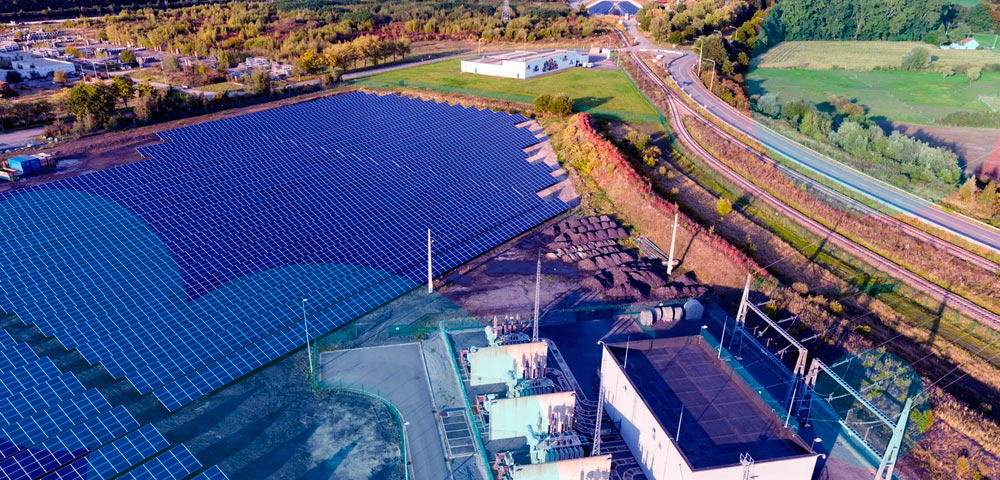
- AI data center investment creates a growing insurance market
- New insurance products emerge across the data center lifecycle
- Power failures and cooling risks increase operational exposure
- Business interruption and parametric insurance address coverage gaps
- Data center accumulation risk challenges insurers and reinsurers
- Reinsurance capacity will support large AI infrastructure projects
Global data center insurance premiums are projected to increase from $10.6bn to $24.2bn by 2030, according to Swiss Re Institute, as investment in AI infrastructure expands the market for construction, property, business interruption and specialty insurance.
The growth creates opportunities for insurers and reinsurers, but also introduces complex risks involving high-value equipment, concentrated infrastructure, power failures and contractual obligations.
- Swiss Re forecasts global data center insurance premiums will more than double to $24.2 bn by 2030, while JLL expects nearly 100 GW of additional capacity between 2026 and 2030.
- New insurance opportunities include Warranty and Indemnity (W&I), equipment breakdown, GPU and semiconductor coverage, non-damage business interruption and SLA-triggered parametric insurance.
- Uptime Institute’s 2026 outage analysis found that 57% of surveyed operators reporting major outages faced costs exceeding $100,000, while approximately 20% reported losses above $1mn.
AI data center investment creates a growing insurance market
The expansion of hyperscale and AI computing infrastructure is generating demand for insurance across the entire data center lifecycle.
JLL projects that nearly 100 GW of new capacity will come online globally between 2026 and 2030, approximately doubling the installed base.
The expansion is expected to create $1.2tn in real estate asset value, excluding some equipment and tenant investments.
Swiss Re estimates that annual global data center insurance premiums will reach $24.2 bn by 2030, compared with $10.6 bn currently. The scale of the investment means that insurers must assess risks extending beyond traditional property damage.
Specialist coverage is increasingly relevant for acquisitions, high-value computing equipment, contractual performance and operational outages.
New insurance products emerge across the data center lifecycle
Warranty and Indemnity insurance can support data center acquisitions by transferring specified risks arising from representations and warranties in transaction agreements.
Equipment breakdown coverage becomes particularly important during testing and commissioning, when power and cooling systems operate under demanding conditions for the first time.
High-value GPU clusters and high-bandwidth memory components introduce additional concerns involving theft, physical damage and lengthy replacement periods.
Specialty insurance solutions may help address these exposures, although coverage depends on policy terms and the nature of the insured property.
Emerging data center insurance coverage opportunities
| Insurance product | Principal exposure |
|---|---|
| Warranty and Indemnity | Transaction-related liabilities in data center acquisitions |
| Construction All-Risks | Physical damage during development and construction |
| Equipment breakdown | Mechanical and electrical failures |
| Marine cargo | Transportation of servers, GPUs and other equipment |
| Specie and specialty property | High-value portable computing equipment |
| Business interruption | Lost income following insured interruptions |
| Non-damage business interruption | Operational outages without qualifying physical damage |
| SLA-triggered parametric insurance | Contractual penalties following service availability failures |
| Cyber insurance | Cyberattacks, data breaches and digital disruption |
| Environmental liability | Pollution and environmental damage |
| Directors and Officers liability | Management and corporate governance claims |
These products address different parts of the risk profile, making coordinated underwriting important for large data center programs.
Power failures and cooling risks increase operational exposure
AI infrastructure is moving toward higher computing densities, creating greater demands on electrical distribution and cooling systems.
Liquid cooling is increasingly used to manage heat from advanced GPUs and high-density server racks. However, these systems introduce additional potential failure modes, including coolant leaks, corrosion and equipment damage.
Responsibility for failures can also become complicated when cooling manufacturers, engineering contractors, equipment suppliers and facility operators are involved.
Data center outages remain expensive. Uptime Institute’s 2026 outage analysis found that 57% of surveyed operators reporting major outages estimated their most recent incident cost more than $100,000.
Approximately one in five reported costs exceeding $1 mn.Power-related problems remained a leading cause of significant outages.
Business interruption and parametric insurance address coverage gaps
Traditional business interruption insurance generally requires insured physical damage to trigger coverage.
However, data center operators may experience substantial financial losses from power interruptions, cooling failures or software problems that do not meet this requirement. These disruptions can also result in breaches of service-level agreements.
SLA penalties create financial exposures separate from physical asset damage and may fall outside standard property insurance policies.
Non-damage business interruption extensions and parametric insurance products are emerging to address these risks.
Parametric policies can provide predetermined payments when specified service availability thresholds are breached, reducing the need for conventional loss adjustment.
For insurers, these products represent opportunities to develop coverage tailored to the operational economics of digital infrastructure.
Data center accumulation risk challenges insurers and reinsurers
One of the most significant underwriting concerns is the accumulation of multiple insurance exposures at a single location.
A carrier may insure a data center’s buildings while also covering equipment shipments, power infrastructure, contractors and tenants.
Those exposures may be distributed across separate policies and underwriting teams despite depending on the same physical facility.
A major power outage, fire or natural catastrophe could therefore generate claims across several insurance lines simultaneously.
Swiss Re has identified this concentration as an important challenge for the industry. Insurers increasingly need site-level exposure data and portfolio models capable of aggregating risks across entire campuses rather than assessing individual buildings independently.
Reinsurance capacity will support large AI infrastructure projects
Large data center developments can generate total insured values exceeding the capacity that individual primary insurers are willing to retain.
Reinsurance is therefore essential for supporting construction and operational programs involving multibillion-dollar facilities.
Treaty reinsurance, facultative placements and retrocession can help distribute exposures across multiple risk carriers.
However, transferring risk does not eliminate concentration. Reinsurers must also assess dependencies involving power networks, equipment suppliers, natural catastrophes and shared infrastructure.
As more independent developers enter the market, demand for specialist underwriting expertise is expected to increase.
Engineering assessments, cooling system reviews, power resilience testing and commissioning audits will become important tools for evaluating risks where historical claims data remains limited.
The expansion of AI infrastructure offers insurers and reinsurers substantial long-term premium opportunities, but profitable participation will depend on identifying interconnected exposures and developing coverage that reflects how modern data centers operate.