Edgevana, a data center, energy and AI compute infrastructure platform, has announced more than $700 mn in committed multi-year agreements to deploy NVIDIA Blackwell computing systems across North America and Europe.
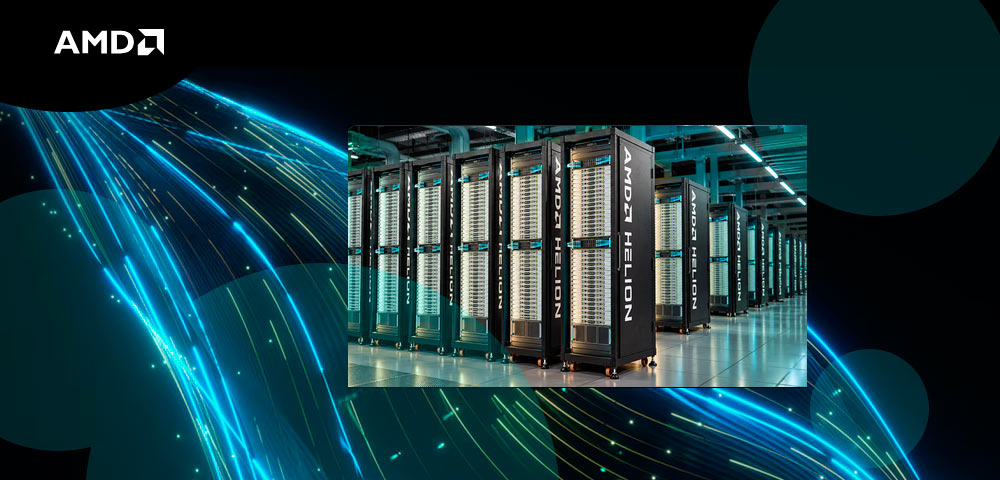
The agreements cover NVIDIA B300 graphics processing units (GPUs) and GB300 systems, supporting growing demand for AI computing infrastructure as electricity constraints delay conventional data center construction.
- Edgevana has signed more than $700 mn in multi-year agreements to deploy NVIDIA Blackwell AI computing systems across North America and Europe.
- The company reports $7 bn in contracted customer demand and an active pipeline exceeding $20 bn for its data center and compute infrastructure platform.
- Edgevana aims to bring high-density AI computing capacity online within 90–120 days, using existing powered facilities instead of developing new data centers.
Edgevana also reported $7 bn in contracted customer demand and an active development pipeline exceeding $20 bn.
The company is positioning its infrastructure platform to serve enterprises requiring faster access to high-performance AI computing capacity, particularly for inference workloads.
Edgevana to deploy NVIDIA B300 and GB300 AI systems
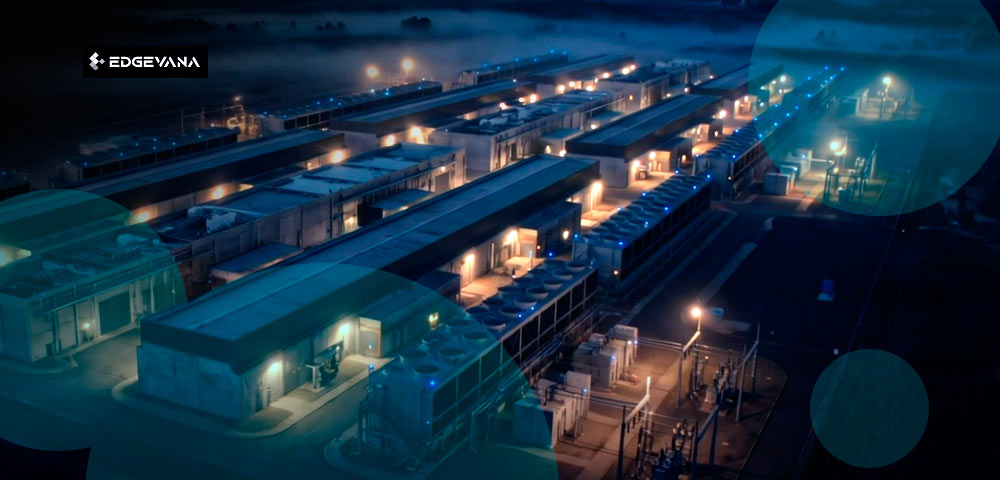
Under the agreements, Edgevana will coordinate the deployment of NVIDIA Blackwell systems across distributed data center locations. Its platform combines existing powered land, operational facilities and high-speed network connections into a unified computing environment.
This approach allows customers to operate infrastructure across multiple physical locations while managing resources through a single control system.
Edgevana estimates that customers can bring tens of megawatts of high-density AI computing capacity online within 90–120 days.
Traditional data center development can take several years because of electricity availability, grid connections, permitting requirements and construction schedules.
By using infrastructure with power already available, Edgevana aims to shorten deployment timelines and reduce dependence on new large-scale construction projects.
AI infrastructure demand reaches $7 bn
Edgevana’s announced commitments reflect growing demand for computing capacity as enterprises expand artificial intelligence applications.
The company reported three separate measures of its commercial activity:
| Indicator | Reported value |
|---|---|
| New multi-year take-or-pay agreements | $700 mn |
| Contracted customer demand | $7 bn |
| Active development pipeline | $20 bn |
| Operational data center locations | 17 |
| Additional locations in development | 10 |
| Target AI compute deployment time | 90-120 days |
| Downstream enterprise customers served | 10,000 |
The $700 mn agreements represent committed contractual arrangements, while the $20 bn pipeline reflects potential future business rather than completed transactions.
Edgevana did not disclose the identities of the customers involved or the specific delivery schedule for the newly announced contracts.
Edgevana expands distributed AI data center infrastructure
Edgevana operates across 17 data center locations worldwide, with another 10 facilities under active development. Its infrastructure supports platforms serving more than 10,000 downstream enterprise customers.
The company’s strategy differs from the centralized development model commonly associated with large AI training facilities.
Instead of relying exclusively on massive campuses, Edgevana distributes computing resources across multiple interconnected locations.
Ryan Fay, co-founder and co-CEO of Edgevana, said the company initially focused on infrastructure requiring extremely low network latency, including high-frequency trading and services for major hyperscale cloud providers. He explained that the growing importance of AI inference creates demand for computing resources located closer to users and business applications.
Unlike training workloads, which can be concentrated in large computing clusters, inference increasingly involves live production traffic requiring consistent performance and rapid response times.
Power constraints reshape AI infrastructure development
Electricity availability has become a significant constraint on AI data center expansion.
High-density GPU installations require substantial power capacity, cooling systems and network infrastructure. In some markets, limited grid capacity and lengthy connection schedules are delaying the construction of new facilities.
Subhan Jahromi, Edgevana’s co-founder and co-CEO, identified physical infrastructure availability as a central challenge for AI development.
He said Edgevana has spent several years securing powered locations, land and computing resources to support distributed deployments.
The company’s latest agreements indicate growing commercial interest in infrastructure that can accommodate advanced GPUs without waiting for conventional data center construction.
For enterprises expanding AI operations, the ability to access existing powered facilities could reduce deployment delays and provide greater flexibility in locating computing capacity.
Edgevana’s next stage of growth will depend on converting its reported customer pipeline into additional contracts and delivering the infrastructure required to support large-scale NVIDIA Blackwell deployments.