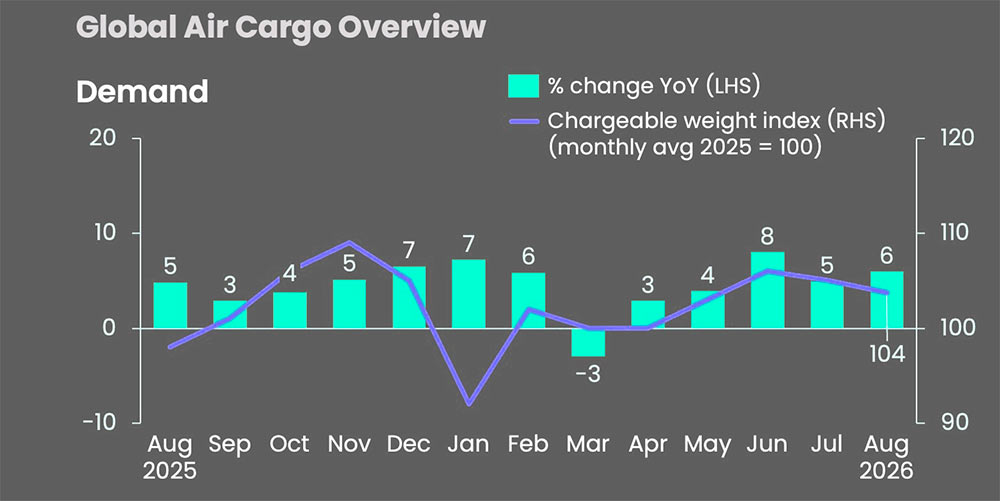
Global air cargo demand increased 6% year-on-year in August 2026, extending the strong summer performance recorded in July. Xeneta said freight rates are easing, but remain well above year-earlier levels as demand continues to outpace available capacity.
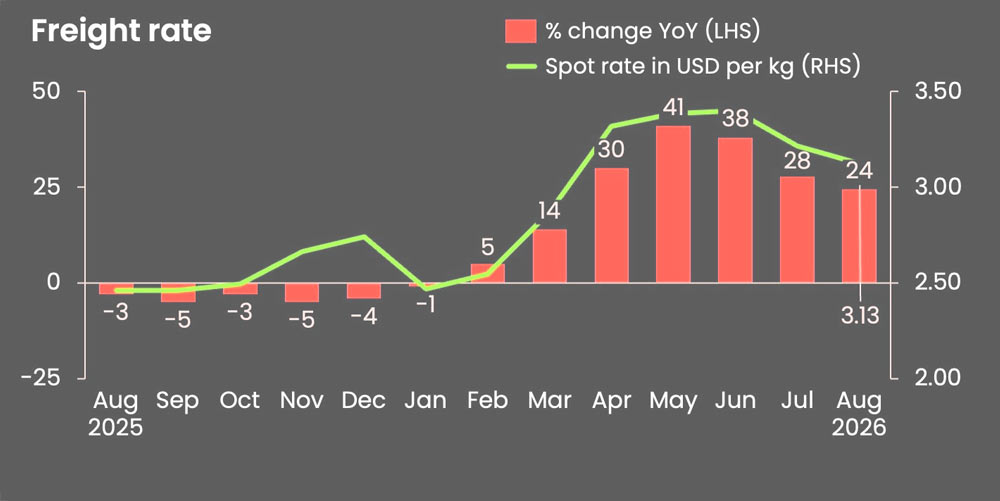
Global air cargo spot rates averaged $3.13 per kg in August, up 24% from a year earlier. The year-on-year increase slowed for a third consecutive month after reaching 28% in July, 38% in June and 41% in May.
Rates declined 3% from July, compared with a 6% month-on-month drop in the previous month. Xeneta expects further decreases, although the pace remains slower than many shippers would prefer.
Shippers, meanwhile, are continuing to push for lower prices after several months of elevated freight costs. Xeneta isn’t seeing evidence of a major demand increase in coming months, suggesting rates should continue falling gradually.
More shippers are purchasing capacity on the short-term market while waiting for further price declines. Demand growth still exceeds supply, while rising jet fuel prices have added another constraint on a faster reduction in freight rates.
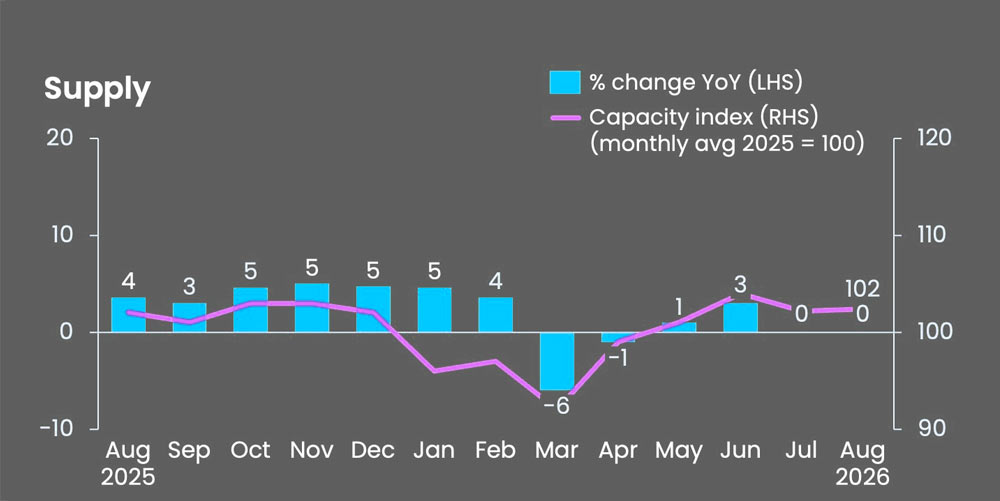
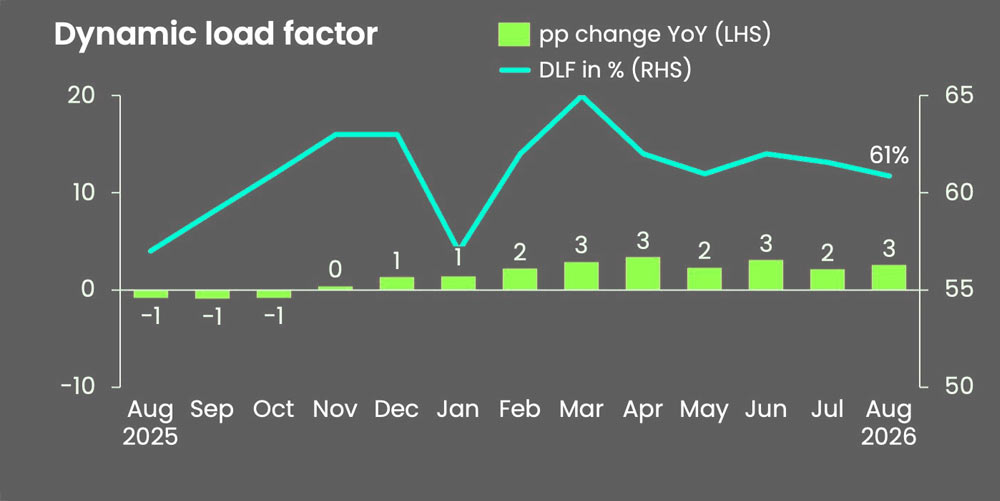
Global air cargo capacity was unchanged from August 2025. Xeneta’s dynamic load factor reached 61%, three percentage points above a year earlier, reflecting higher utilization of available cargo space.
A major change in the market came from Chinese low-value and e-commerce exports. Those shipments declined 11% year-on-year in July 2026, according to analysis by Xeneta and Trade and Transport Group using China Customs data.
Global air cargo spot rate
Exports from China to Europe fell 25%, the steepest decline among regions measured. The drop followed the EU’s removal of its €150 duty-free threshold for low-value goods on July 1 and the introduction of a €3 customs charge per item.
Analysts expect part of the decline to reverse over time. They pointed to the US market, where Chinese e-commerce exports initially fell after removal of the de minimis threshold in 2025 before recovering.
Chinese e-commerce exports to the US were 23% higher year-on-year in July 2026, although the comparison came from a lower base. Xeneta expects the China-Europe trade lane could follow a similar pattern, though the longer-term effect of the EU changes remains uncertain.
Sellers are still deciding whether to absorb the added customs cost, increase product prices or charge it separately. Consumer demand for major Chinese e-commerce platforms to remain relatively stable because many products retain a substantial price advantage over European alternatives.
Lower volumes are already affecting freight pricing from Asia to Europe. China to Western Europe spot rates averaged $3.85 per kg in August, down 6% month-on-month after a 22% decline in July.
Northeast Asia to Europe spot rates decreased 3% from July. Southeast Asia to Europe fell 7% to an average of $4.20 per kg.
Pricing varied sharply across major air freight corridors as local supply and demand conditions outweighed broader fuel-cost movements. In week 35, covering August 24-30, rates into the Middle East remained substantially above late-February levels.
South Asia to Middle East spot rates were 100% above late-February levels, while Europe to Middle East rates were 66% higher. Northeast Asia and Southeast Asia to the region were up 21% and 20%, respectively.
Transpacific pricing also remained elevated, supported partly by AI-related shipments. Northeast Asia to North America spot rates were 36% above late-February levels, while Southeast Asia to North America rates were 34% higher.
Northeast Asia to North America averaged $5.76 per kg in August. That represented a 2% increase from July.
Transatlantic routes showed a different pattern because of abundant summer belly capacity on passenger aircraft. Europe to North America spot rates remained 25% below late-February levels, although prices rose 2% month-on-month in August.
Xeneta still expects global air cargo volumes to grow about 4% in 2026. That forecast is stronger than many projections made at the end of 2025, despite continued pricing differences between major trade corridors.
The market has operated at relatively stable levels for several months despite geopolitical and trade-related disruption. Shippers continue seeking lower freight costs, while airlines are trying to retain pricing before seasonal demand strengthens.