Tiledesk, an Italian startup developing an open-source platform for creating AI agents and automating business processes, has raised €1.1 mn in new funding as it expands beyond its original customer service software into broader enterprise automation.
The round was backed by Zest and Vertis through the Vertis Venture 6 Digital Sud and Vertis Venture 7 Digital Puglia funds. Vertis Venture 6 Digital Sud is partially funded through the European Union’s Next Generation EU programme, while OpenT, the joint venture formed by Tinexta and Zest, also participated.
The financing follows an earlier €600,000 seed round completed in 2022 and led by Techshop Primo. Across the two disclosed rounds, Tiledesk has raised at least €1.7 mn as its product has moved from conversational customer service towards AI agents operating across business processes.
Tiledesk was founded in 2020 with an initial focus on coordinating human operators and AI across customer service and conversational marketing channels. Its early platform combined chatbots, messaging applications and human support in one system, giving enterprises a modular alternative to customer service products from larger software vendors.
Open source formed part of the product strategy from the beginning.
Tiledesk developed its software so companies could customise deployments, run the technology on-premise and connect individual modules with third-party applications rather than adopting an entirely proprietary stack.
By 2022, the company was positioning itself as a full-stack customer service platform built around messaging and dialogue between businesses and customers. The €600,000 round was intended to support that model as Tiledesk expanded integrations and commercial adoption.
Its product has since moved well beyond customer care. Tiledesk now works with organisations including Aruba and the Puglia Region, with applications covering telecommunications, public administration, manufacturing and retail, alongside automation of IT operations.
The new financing will primarily support further development of the platform and work aimed at making business automation easier for non-technical users.
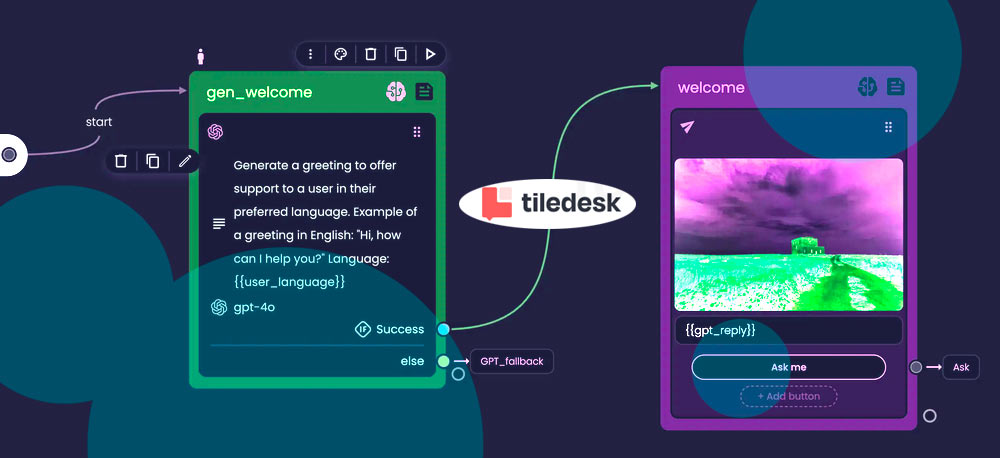
Tiledesk wants companies to create workflows and AI agents by describing the required process or result in natural language, rather than manually configuring each step.
The platform then determines which agents, tools and integrations need to participate in the workflow. Human review remains part of processes where companies require approval, oversight or intervention before an action proceeds.
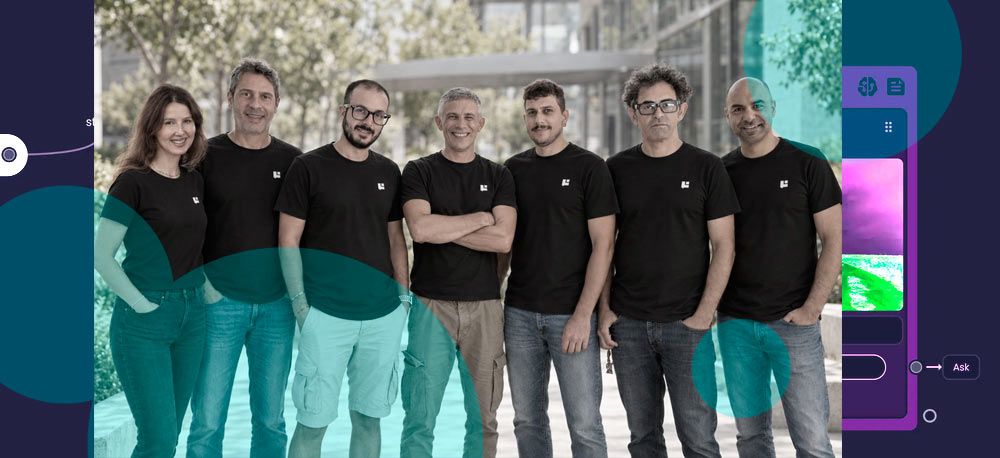
Founder Andrea Sponziello said customer demand has shifted materially since Tiledesk’s early years.
Businesses that initially used the platform for customer service are now asking the company to automate back-office processes including invoice management, payment request verification and IT activities.
Tiledesk is applying the same natural-language approach that coding assistants brought to software development. Instead of writing code or building a workflow manually, employees describe the process they want automated and the platform coordinates agents, software systems and human involvement around the requested outcome.
The company’s open-core architecture remains central to that strategy. Tiledesk doesn’t rely exclusively on a SaaS model, allowing enterprises to retain greater control over infrastructure, data and the AI models used inside their workflows.
That structure also reduces dependence on a single model provider. Companies can decide which AI systems support different tasks and retain more freedom over deployment architecture, an issue receiving increasing attention across Europe as businesses examine data control and technological sovereignty.
Sponziello said openness has already influenced purchasing decisions among organisations with stricter requirements around data and infrastructure. Tiledesk plans to keep model independence and an open stack as it expands deeper into enterprise automation.
The platform also addresses security, traceability and human supervision as agents receive broader access to business systems. Companies can keep employees involved in sensitive stages rather than allowing every process to run without review.
Vertis partner Marco de Palma said the investor was attracted by Tiledesk’s move from conversational AI into agents that perform operational work. He also pointed to the company’s existing enterprise deployments and its ability to develop the technology from Puglia while pursuing international customers.
OpenT Chair Paola Generali said the commercial value of enterprise AI increasingly depends on connecting models with existing software, company data and internal expertise. Tiledesk is designed to coordinate those elements rather than operating as another isolated AI application.
Zest has supported Tiledesk through earlier phases of its development. Senior portfolio manager Federica Cardona said the company has repeatedly adjusted its product around practical business requirements as the market moves from conversational interfaces towards agents connected directly with operating processes.
The latest financing marks another stage in a product transition that began with customer service. Tiledesk started with chatbots, messaging and human support, then expanded into a platform where AI agents execute workflows across several business functions.