Follow Beinsure
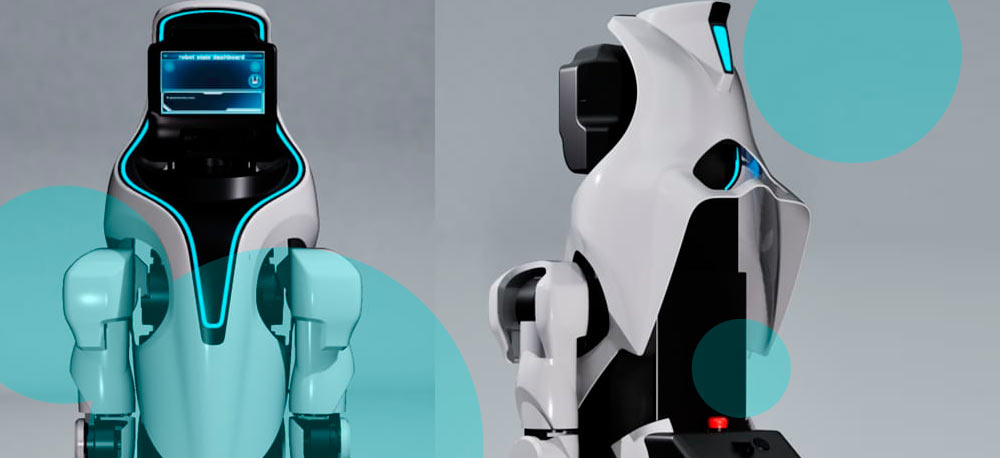
Toyota Motor estimates that a broader automation push across its factories, group companies and major suppliers could require roughly 400,000 robots, with annual spending reaching about 1 tn yen, or $6.4 bn, from 2028.
The automaker discussed the potential investment with investors earlier in September, according to Reuters. Toyota has not confirmed whether it will proceed with the full programme or how long annual spending at the estimated level would continue.
The 400,000 figure covers replacement equipment as well as new installations. It includes humanoid and non-humanoid machines, industrial robotics, automated logistics systems and future production setups where employees work alongside robots.
Toyota already deploys and tests robotics across several manufacturing processes. In its FY2026 financial results, the company cited factory demonstrations involving parts transportation and picking, alongside robotics projects in areas including medical equipment transport.
Toyota has spent years experimenting with different levels of factory automation, including projects where equipment later returned to manual operation.
At the Kamigo Plant, a piston assembly line that began operating with robots in January 2025 has since moved from three operators to full automation, according to Toyota’s 2025 integrated report. The project followed more than a decade of work on automated production at the site.
Kamigo started introducing robots on selected sub-lines in 2008. Toyota later encountered maintenance problems as engine production expanded outside Japan, where some plants did not have enough skilled maintenance staff to keep increasingly automated equipment running reliably.
The company responded by returning some processes to manual production while transferring manufacturing knowledge from Japanese plants to overseas facilities. Workers developed jigs and other production tools that Toyota said doubled or tripled efficiency in certain manually operated processes.
Experience gained through those projects later fed into newer automation systems, including the piston assembly line at Kamigo. Toyota’s approach therefore combines robotics development with production methods refined through manual factory work.
The automaker is also working on systems designed to handle components without requiring precise positioning before a robot picks them up. Its KumiPro parts-picking robot uses cameras to identify and handle loosely positioned components. Toyota Motor East Japan already operates the system on production lines.
Toyota has also demonstrated an assembly process using force-feedback control to compensate for recognition errors generated by cameras. The robot adjusts its movement while inserting parts into narrow spaces, correcting differences between the position identified by the vision system and the actual location of the component.
Toyota uses the term physical AI for systems that let robots perceive their surroundings through sensors, learn or optimise actions according to operating conditions and perform tasks autonomously.
Its Frontier Research Center is working on robotics applications intended to address labour shortages and difficulties transferring manufacturing skills between workers and production sites. Some of this research builds on technology developed through Toyota’s Human Support Robot programme.
Toyota said object recognition, decision-making and motion execution technology originating from the Human Support Robot project has already been applied to KumiPro at Toyota Motor East Japan.
The company is also developing ELEY, short for Embodied Learning robot for Enhanced Yield. The machine is intended for work involving physical contact with components and surrounding equipment, using two human-like arms mounted on an omnidirectional mobile base.
ELEY is designed to respond to unexpected external forces when physical conditions differ from the robot’s internal estimate. Such differences arise when an object sits slightly away from its expected position or when contact produces forces the control system did not predict.
Toyota has identified long-duration reliability and repeatable positioning accuracy as areas requiring further development. The company is also working on the data infrastructure needed to train robots from repeated physical interactions.
Future tests will place ELEY in conditions closer to production environments. Toyota plans to use successful attempts together with failed ones as training data, giving the system more information about how physical tasks behave outside controlled demonstrations.
Toyota is separately applying reinforcement learning to humanoid robotics, training machines in simulated environments before transferring learned behaviour to physical hardware.
The company runs thousands of virtual robot instances at the same time, allowing researchers to generate large volumes of training experience faster than physical testing alone would permit.
Movements that succeed in simulation do not always perform the same way on real machines. Sensor readings, floor friction and actuator behaviour differ between virtual environments and physical hardware, creating discrepancies once a trained policy moves onto an actual robot.
Toyota introduces variations in those conditions during simulation training and then uses physical robot data to reduce what its researchers call the Sim2Real gap. The process is intended to make learned behaviours less dependent on idealised virtual conditions.
The work places Toyota’s planned automation spending within a broader robotics strategy spanning conventional industrial machines, specialised production robots and humanoid systems. The company is testing how much of that technology is ready for factory deployment while continuing research into reliability, learning and physical interaction required for larger-scale use.