Follow Beinsure
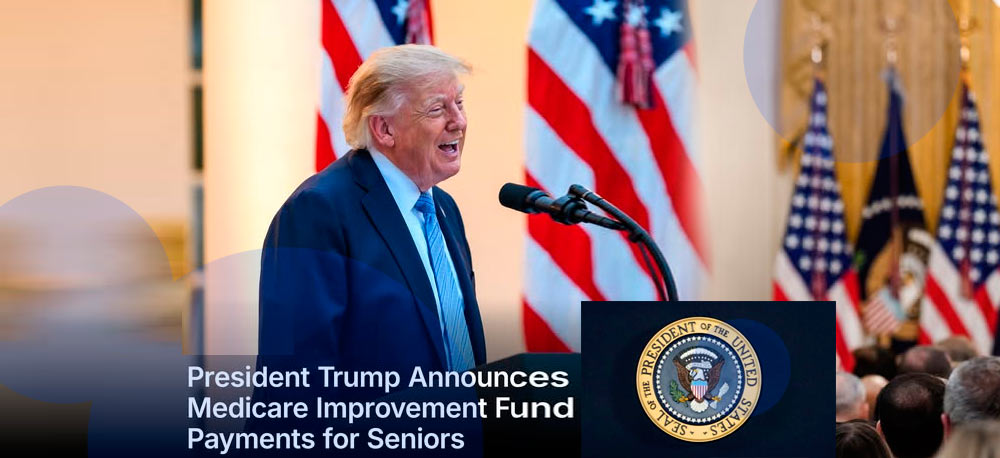
President Donald Trump has announced one-time $90 payments for more than 20.8 mn Medicare beneficiaries, while repeating his promise to send $5,000 to every American adult if Republicans retain control of Congress in the November midterm elections.
Trump announced the Medicare payments, saying they would help recipients cover Medicare Part B premiums. The Centers for Medicare & Medicaid Services said 20.8 mn Americans enrolled in Original Medicare Part B are eligible under the program.
Most eligible beneficiaries will receive a $90 direct deposit on or around Oct. 8, 2026. People without direct deposit will receive a paper check from the U.S. Treasury later in October, according to CMS.
Eligibility is limited to people enrolled in Original Medicare Part B who live in the U.S., don’t receive Medicaid assistance for their premiums and don’t pay an Income-Related Monthly Adjustment Amount. Medicare Advantage members aren’t eligible for the payment.
The money will come from the Medicare Improvement Fund, which Congress established in 2008 to finance improvements to Medicare’s fee-for-service program. The White House said Congress has allocated $2 bn to the fund.
Trump described the fund in a Truth Social post as a pointless slush fund and said the money should instead go directly to Medicare beneficiaries. The White House said previous administrations had not made direct payments from the fund, although Congress has withdrawn money from it roughly 20 times to offset other federal spending.
The payments arrive about a month before the Nov. 3 midterm elections, when control of Congress will be decided. Trump has also continued promoting a separate proposal to distribute $5,000 payments to American adults if Republicans retain control of both chambers.
He repeated the $5,000 pledge in early October after first announcing the proposal in September. Reuters reported the plan would provide what Trump calls a dividend to U.S. adults if Republicans maintain congressional control.
The Medicare payments are spread across all 50 states. California has the largest number of recipients, with more than 1.52 mn seniors expected to receive $90, followed by Texas with 1.43 mn and Florida with 1.40 mn. New York has about 1.02 mn eligible recipients, while Pennsylvania has roughly 905,000.
Several states with closely contested Senate races also have large numbers of recipients. About 748,000 beneficiaries in Ohio are expected to receive payments, along with 644,000 in North Carolina, 568,000 in Georgia, 539,000 in Michigan, 327,000 in Iowa and 293,000 in Kansas. Maine has about 88,000 eligible recipients.
- The $90 Medicare payments follow another round of federal payments announced by the administration in September. The White House said nearly 1 million people who bought health insurance through the federal Affordable Care Act marketplace would receive $500 each after the administration said they had been overcharged.
- Those $500 payments began going out in late September across 30 states. The administration described them as refunds connected to fees paid through the federal ACA exchange, while recipients also received letters signed by Trump.
Trump has increasingly used direct-payment proposals as part of his economic message before the midterms. The $90 Medicare rebate is already scheduled for distribution, while the $5,000 payment remains a campaign pledge tied to Republican control of Congress.
For the Medicare program, distribution is already defined. Eligible beneficiaries with direct deposit should receive the money automatically, while those without it will receive checks at the mailing address registered with Medicare. CMS said beneficiaries seeking to confirm their eligibility should contact Medicare, while payment-status inquiries will be handled by the Social Security Administration beginning Oct. 15.
State-by-state breakdown detailing where Trump’s $90 checks for seniors are going
| State/Territory | Est. # of Beneficiaries |
| Alabama | 281,000 |
| Alaska | 74,000 |
| Arizona | 492,000 |
| Arkansas | 257,000 |
| California | 1,524,000 |
| Colorado | 319,000 |
| Connecticut | 163,000 |
| Delaware | 120,000 |
| District of Columbia | 23,000 |
| Florida | 1,398,000 |
| Georgia | 568,000 |
| Hawaii | 80,000 |
| Idaho | 160,000 |
| Illinois | 867,000 |
| Indiana | 483,000 |
| Iowa | 327,000 |
| Kansas | 293,000 |
| Kentucky | 306,000 |
| Louisiana | 265,000 |
| Maine | 88,000 |
| Maryland | 515,000 |
| Massachusetts | 528,000 |
| Michigan | 539,000 |
| Minnesota | 331,000 |
| Mississippi | 248,000 |
| Missouri | 431,000 |
| Montana | 141,000 |
| Nebraska | 191,000 |
| Nevada | 172,000 |
| New Hampshire | 170,000 |
| New Jersey | 645,000 |
| New Mexico | 142,000 |
| New York | 1,018,000 |
| North Carolina | 644,000 |
| North Dakota | 69,000 |
| Ohio | 748,000 |
| Oklahoma | 332,000 |
| Oregon | 271,000 |
| Pennsylvania | 905,000 |
| Rhode Island | 60,000 |
| South Carolina | 499,000 |
| South Dakota | 93,000 |
| Tennessee | 491,000 |
| Texas | 1,432,000 |
| Utah | 144,000 |
| Vermont | 95,000 |
| Virginia | 681,000 |
| Washington | 490,000 |
| West Virginia | 135,000 |
| Wisconsin | 406,000 |
| Wyoming | 82,000 |
| Territories | 51,000 |
| Armed Forces Europe & Pacific | 3,000 |
In Sept.30, Donald Trump’s administration is preparing to distribute $500 Affordable Care Act (ACA) refund checks to more than 950,000 Americans across 30 states, returning money it says consumers overpaid through the federal health insurance marketplace.
The Treasury Department is expected to begin issuing payments on September 30. Recipients will also receive letters signed by Trump explaining the refunds.
The White House’s original September 10 announcement specified October 2026 as the start of distribution, leaving a difference between the two reported schedules.
The refunds concern user fees collected from health insurers participating in HealthCare.gov, the federal marketplace for ACA coverage. The administration maintains that fees collected during Joe Biden’s presidency exceeded the amount required to operate the exchange, with additional costs passed to consumers through insurance premiums.