- 2025 Trends: How Manufacturing Becomes Smart and Connected
- What Is Connected Manufacturing Really: Fundamentals and Principles
- Core Benefits: Why Companies Transition to Connected Manufacturing
- How to Implement Connected Manufacturing: A Practical Path
- Connected Manufacturing in Practice: Examples and Results
Technology is transforming manufacturing faster than ever before. In 2025, more and more companies understand that to remain competitive, they must transition from isolated production systems to integrated, networked manufacturing.
Connected manufacturing is not just another buzzword. It is a fundamental transformation of how we produce goods.
When different systems on the factory floor communicate with each other, production becomes faster, more precise, cheaper. Workers receive real-time information.
Managers can predict problems before they occur. Customers get higher quality products when they need them.
This is an evolution that began several decades ago. In the 1960s, the assembly line revolutionized manufacturing.
In the 1970s, automation began replacing manual labor. Then came computers, numerical control, and production management systems. But each of these technologies worked independently. The breakthrough came when people started connecting them.
2025 Trends: How Manufacturing Becomes Smart and Connected
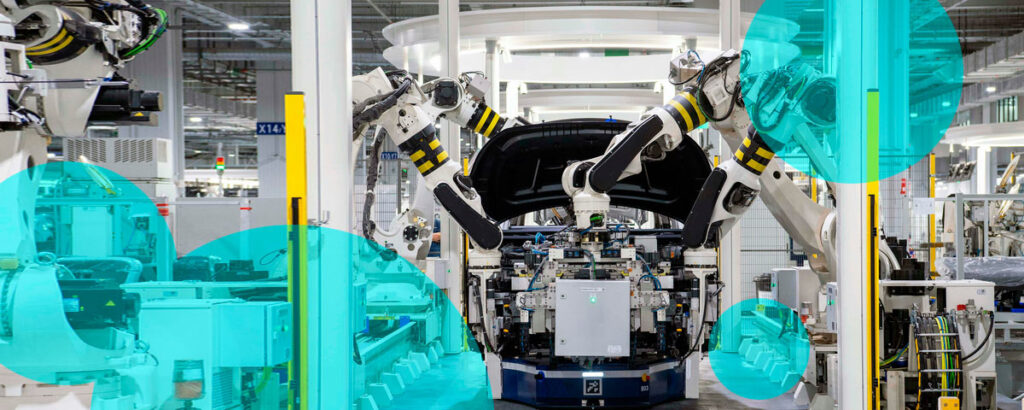
Leading industry experts speak about it this way. Klaus Schwab, founder of the World Economic Forum, called this process the “Fourth Industrial Revolution.” He wrote that smart connected manufacturing expands the ways in which humans, machines, and systems interact.
Engineer Cindy Gordon described connected manufacturing as the transition from a “deaf factory to a listening factory,” where every element knows what others are doing.
This article is devoted to precisely this phenomenon. We will examine how networked manufacturing actually works, what technologies enable it, how to implement it, and what benefits it brings to companies.
If you manage manufacturing or simply want to understand where the industry is heading, you will need this information.
What Is Connected Manufacturing Really: Fundamentals and Principles
Connected manufacturing means integrating all components of the production process into a single information network. It is not just about placing sensors on equipment. It is about enabling every machine, every worker, every management system to exchange data and make decisions based on that data.
Imagine a traditional factory floor. On one end stand machines of one type, on the other, machines of another type. Each has its own control system.
When a part is needed, an operator manually passes the order to the next machine. If something breaks, people find out when the supplier calls to say the material isn’t arriving. But that’s not what we’re talking about.
Smart connected manufacturing changes all of this. Orders are automatically transmitted from one system to another. When a defect is detected on the first machine, the system reports it immediately.
Predictive analytics forecast which parts might fail, and staff begins preventive maintenance before failure occurs. This saves millions.
The core of networked manufacturing consists of several key components
- First, there are sensors and IoT (Internet of Things). They collect data on temperature, vibration, pressure, material consumption.
- Second, there are cloud platforms and data storage systems. They receive millions of data points every second.
- Third, there is analytics and artificial intelligence. They detect patterns and suggest solutions.
- Fourth, there are production management systems and ERP (Enterprise Resource Planning). They translate these solutions into concrete actions.
One important detail: security. When everything is connected in a network, security becomes critical.
As one leading manufacturer’s chief technology officer said: you must protect both the company’s IT infrastructure and OT (operational technology) that controls the actual machines.
Both must operate safely and without interruption. Companies like DXC Technology help manufacturers intelligently implement these systems, combining smart factory and Industry 4.0 concepts to accelerate production and improve supply chain efficiency.
Core Benefits: Why Companies Transition to Connected Manufacturing
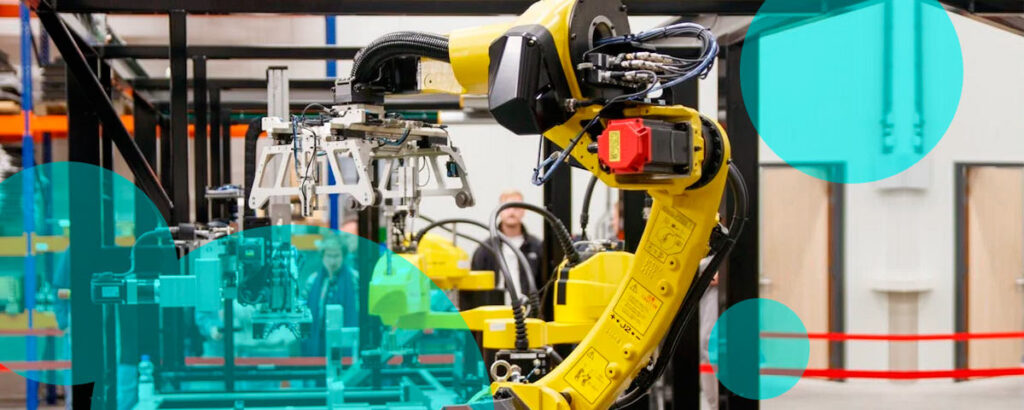
When manufacturing leaders discuss the results of implementing connected manufacturing, the numbers are truly impressive.
The first major benefit is productivity
Companies that have implemented real-time monitoring systems report output increases of 20-40 percent. How is this possible?
When the system knows what each machine is doing, it can optimize the sequence of operations. If one machine works faster than others, the system distributes tasks to avoid delays. Working time is used much more efficiently.
The second benefit is quality
Defects cost money, reputation, and customer trust. Connected manufacturing enables the detection of quality problems at early stages.
Sensors notice when a part is manufactured outside tolerance. The system immediately stops production or redirects execution to another machine. Result: fewer defects, more satisfied customers.
The third benefit is prevention
An ordinary machine breaks down suddenly, and production stops for a week or even months. Repair costs are high. Connected manufacturing uses predictive analytics to forecast failure days or weeks in advance. The company already plans the repair, orders spare parts, organizes the schedule. And when the problem begins, the system is already ready. Downtime is minimized.
The fourth benefit is flexibility
When customers order new product variations, traditional manufacturing requires reconfiguration for several days or even weeks.
Smart connected manufacturing changes machine settings instantly. People enter new parameters into the system, the entire network of devices receives the update immediately. Production transitions to a new product within minutes.
The fifth benefit is reduced material costs
When the system knows how much material is used at each stage, it identifies waste. Sometimes it is simply spray, scrap, or remnants that are discarded.
Sometimes it is excessive consumption in certain operations. Connected manufacturing gives managers tools to reduce costs without impacting quality.
The sixth benefit is data for strategy. When you have information about each step of production, you understand your business much better.
Which products are most profitable? Which operations are most critical? Where is the greatest risk? Networked manufacturing provides answers.
How to Implement Connected Manufacturing: A Practical Path

Implementing connected manufacturing does not mean replacing everything at once. Wise companies do this in stages.
The first stage is an audit
You look at your current manufacturing and understand it. What machines do you have, how old are they, what management systems are used, how do people exchange information with each other. This gives you a starting position.
The second stage is choosing priorities
You cannot automate everything simultaneously. It is better to start where the problem is greatest or the benefit most obvious. Maybe you frequently have a critical machine break down. Or one stage is constantly a bottleneck. Or maybe quality is low on a certain operation. You choose this place as your first pilot.
The third stage is technical preparation
You choose the necessary sensors, accounting platform, analytical tools. It is important to do this wisely. Many companies spend a lot of money on the latest technologies they do not actually need. Wise enterprises choose systems that integrate with what they already have.
The fourth stage is training people
This is often underestimated. New technologies require new skills. Workers must understand how to read data in the system. Managers must be able to interpret reports. IT staff must understand how to maintain new infrastructure. Time spent on training is time well spent.
The fifth stage is gradual launch
You do not turn everything on at once. You start in one shift, on one line, for one week. You observe what works, what needs adjustment. You learn from mistakes, then expand.
The sixth stage is scaling
When the pilot is successful, you expand the system to other lines and operations. At this stage, it is already clear which components work best, what skills your team needs, how to integrate everything into the overall process.
The key to success is communication
At each stage, everyone in the company must understand why this is being done and what is expected of them. People need to see early results to maintain faith. A chosen small, quick success often speaks louder than a big plan.
Connected Manufacturing in Practice: Examples and Results
Let us look at how this actually appears in real companies.
The automotive industry has been actively implementing networked manufacturing for about five years now. One European company installed sensors on all machines in the assembly shop.
The system tracks each step, from parts delivery to final quality control. Result: automobile assembly time was reduced by 15%, defects decreased by 30%, and machine downtime was reduced by 50%.
The food industry often faces quality and hygiene problems. One Russian company that produces dairy products implemented temperature and cleanliness level monitoring systems at each stage.
Connected manufacturing allowed them to identify exactly where bacterial contamination formed and how to prevent it. Defects were reduced by 45%, and the company was able to expand its sales geography, as product quality is now guaranteed.
The pharmaceutical industry requires maximum precision. One company installed a system that tracks each component of a tablet from mixing ingredients to packaging.
The system inspects 10,000 tablets per hour. Quality deviations are detected instantly.
Moreover, production achieved full traceability: if a customer reports an issue with a certain batch, the company knows exactly how it was manufactured, on which machines, by which shifts, and which people were present.
The textile industry is often characterized by complexity and a large number of operations. One company from South Asia implemented smart connected manufacturing on its 200 looms.
Previously, the shift manager made manual rounds, checking each loom. Now the system sends alerts if it detects a problem. Manufacturing visibility changed from 40% to 95% in a year.
These are real numbers from real companies. They show that networked manufacturing works across different industries, from complex machinery to simple operations. The pattern is the same: real-time data + analytics = better results.
FAQ: Five Questions Manufacturing Managers Ask
You do not need to buy everything at once. Start with the simplest sensors. Even basic temperature sensors and vibration gauges can give you information that will change your understanding of production. Install them on the most problematic equipment. Then capture data in a spreadsheet or simple database. Analyze it. Based on this, decide next steps. Often less expensive solutions yield the greatest results because you actually use them.
This is a legitimate fear, and it should not be ignored. Tell the truth: connected manufacturing does not replace people. It replaces tedious, repetitive, dangerous work. People in the process transition to more interesting work: system configuration, data analysis, problem-solving. Instead of monitoring machines for 8 hours a day, a worker engages in actual optimization. This is better for the worker and better for the company. Show examples of other companies where this happened.
It depends on scale. A small system for one line based on basic sensors and cloud analytics can cost $20,000-$50,000. Full transformation of a large factory floor spanning several thousand square meters can cost millions. But think about ROI. If the system reduces downtime by 10%, it often pays for itself in a year. If quality improves by 20%, you gain profit and reputation. Most companies recover their investment within 18-24 months.
Risk exists, as with any network. But a smart approach minimizes it. First, use closed networks (not the global internet) for critical systems. Second, establish strong authentication and encryption. Third, train staff on cybersecurity. Fourth, work with a provider that specializes in manufacturing security. When done correctly, smart connected manufacturing actually increases security because the system can detect unauthorized access attempts.
If you do it correctly, first results are visible within 3-4 months. This is time for purchasing and installing sensors, configuring analytics, training staff, and initial testing. More significant results will come within 6-12 months. Implementation across a large factory floor can take 1-2 years. Do not rush. Better 12 months of proper transformation than 3 months of quick implementation that needs to be redone later.