European insurers are raising deductibles, reducing coverage limits and restricting riot insurance as widespread protests increase the risk of property losses.
Insurers across Europe are tightening coverage for strikes, riots and civil commotion (SRCC) as widespread protests increase the potential for substantial property damage and insured losses.
According to Morningstar DBRS, insurers are introducing coverage caps, increasing deductibles and, in some high-risk locations, withdrawing protection altogether.
The changes follow demonstrations across France, Germany, Belgium and Portugal, driven by concerns over living costs and other economic issues. Protests against planned data centers have added to the unrest, Bloomberg noted.
- European insurers are imposing higher deductibles, lower policy limits and coverage exclusions as strikes, riots and civil commotion become more frequent.
- Insured losses from recent protests in France are currently expected to remain below €1.2 bn, according to Morningstar DBRS, although the estimate could increase.
- Insurers and reinsurers are reassessing SRCC catastrophe modeling as geographically connected protests create larger potential accumulated losses.
Allianz has warned that companies must increasingly consider political violence and civil unrest as material risks in developed economies rather than exposures primarily associated with emerging markets.
Civil unrest changes insurance underwriting across Europe
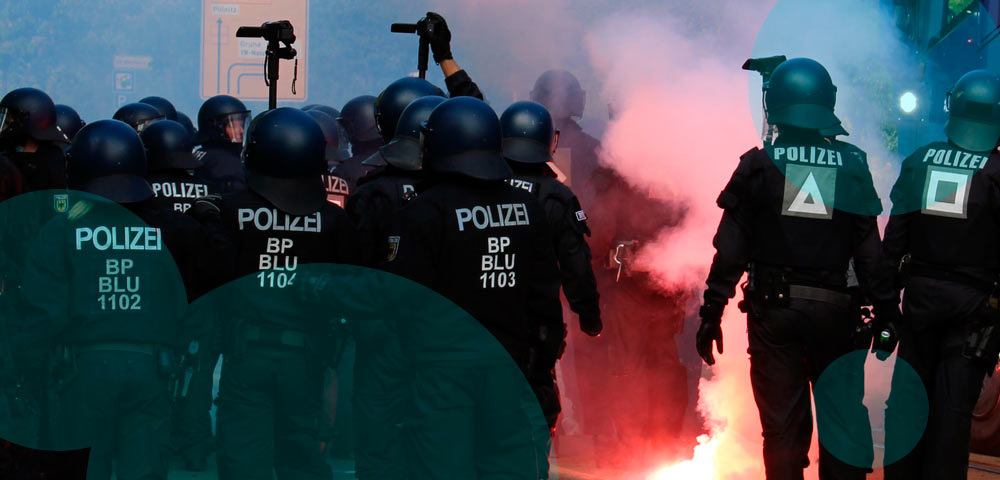
The scale and geographic spread of recent demonstrations are prompting insurers to reconsider how SRCC exposures are underwritten.
SRCC losses are increasingly displaying characteristics associated with natural catastrophes, including widespread property damage, simultaneous claims and pressure on insurers’ capital.
More than 500,000 people participated in protests across France in mid-October 2026. Some demonstrations were accompanied by violence and looting, resulting in damage to commercial premises and public buildings.
French authorities subsequently increased police deployments and introduced additional requirements intended to reduce violence during marches.
Protests have also affected Germany, Belgium and Portugal, with affordability concerns contributing to public discontent.
Because of the severity and the magnitude of losses, SRCC is now behaving like a natural catastrophe. These aren’t secondary threats anymore.
Marcos Alvarez of Morningstar DBRS
Historically, riot-related insurance claims were often concentrated in individual cities over relatively short periods. Insurers now face the possibility of connected disturbances affecting multiple cities and countries.
This creates a different accumulation risk, particularly when many insured properties sustain damage during the same period.
Changing SRCC risks are directly influencing policy conditions.
The strain shows in tighter terms – higher deductibles, lower limits and coverage restrictions, some businesses are being left with greater uninsured exposures.
Nicolas Aubert, CEO of Howden France
Insurers have also faced pressure to accelerate claims payments and provide financial support to businesses affected by the disturbances.
Allianz maintains case-by-case approach to riot insurance
Despite the recent escalation in protests, Allianz said it has not introduced broad restrictions on political violence and civil unrest coverage in response to the latest events.
Underwriting decisions consider characteristics of the insured property, including its proximity to locations considered more susceptible to civil unrest.
Allianz is maintaining individual risk assessments rather than imposing blanket restrictions, with the location and characteristics of insured properties influencing coverage decisions.
The distinction matters because insurers are increasingly separating SRCC exposure from other risks traditionally included in commercial property policies.
According to AM Best, SRCC protection has historically been provided as part of standard commercial insurance arrangements.
The potential for substantial losses is now encouraging insurers to assess these exposures separately and adjust coverage structures accordingly.
Previous civil unrest events in Minneapolis, New Caledonia and Nepal demonstrate that riots can generate multibillion-dollar losses.
Mathilde Jakobsen, senior director at AM Best
AM Best identified the 2020 Minneapolis unrest, the 2024 New Caledonia disturbances, the 2025 Nepal riots and recent destruction in France as examples of the financial consequences associated with SRCC events.
Insured losses from France protests could approach €1.2 bn
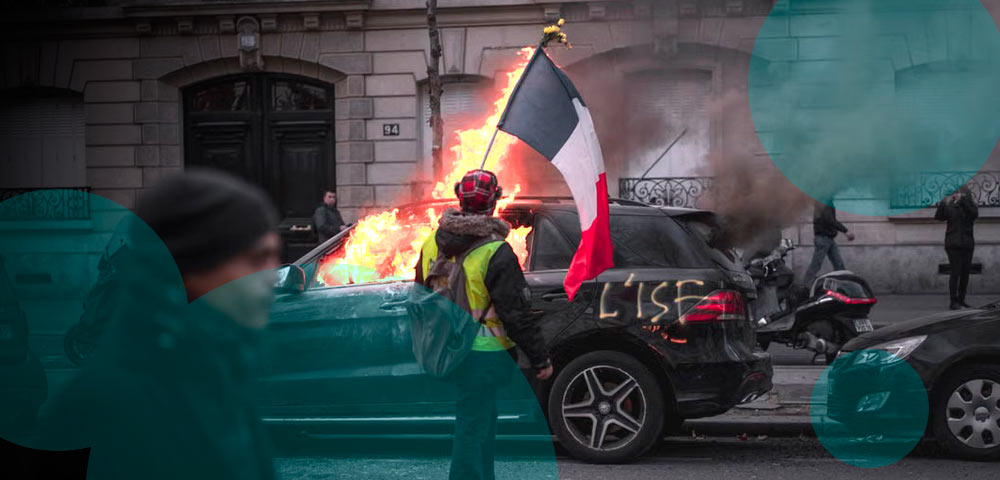
Morningstar DBRS estimates that insured losses from the latest French protests will remain below €1.2 bn, based on the damage reported so far.
Commercial properties and public buildings have accounted for a disproportionate share of the losses. The estimate remains subject to revision if demonstrations continue or further violence causes additional property damage.
France has experienced several costly periods of civil unrest over the past decade.
The Gilets Jaunes demonstrations in 2018-2019 produced approximately €220 mn in insured losses, while riots in June 2023 generated around €730 mn, according to Morningstar DBRS.
The financial impact of the latest protests has not yet been established, making the final insurance cost uncertain.
For insurers, the principal concern extends beyond individual incidents of vandalism or looting.
Simultaneous losses across numerous insured locations can affect underwriting results, capital requirements and solvency ratios.
Typical riots were concentrated in one city for a couple of days, but now the violence is being correlated across a country or even across several countries.
Losses involving many properties at the same time create additional pressure on insurers’ earnings and capital positions.
The accumulation of claims across different geographic locations also complicates traditional assumptions about how civil unrest losses develop.
Insurers turn to catastrophe models for SRCC risk assessment
The insurance industry is developing more specialized analytical tools to measure the financial consequences of political violence and civil unrest.
In September 2026, Howden Re introduced UNREST, an analytics platform designed to help insurers and reinsurers assess strikes, riots and civil commotion risks using more recent loss data.
The model helps identify concentrations of insured exposure, evaluate how unrest could spread and estimate potential effects on insurance portfolios.
Howden said SRCC events are becoming more frequent and localized, while older analytical models may not adequately represent the exposures insurers currently face.
Howden Re’s UNREST platform is designed to measure portfolio concentrations and potential losses from civil unrest, using updated information to support underwriting and reinsurance decisions.
Verisk Maplecroft described the latest demonstrations as Europe’s most significant period of concurrent unrest in several years. Its indicator measuring large-scale unrest risk in Europe has reached its highest level since 2021.
Large demonstrations do not necessarily lead to violence or looting. Nevertheless, recent incidents have shown how initially peaceful protests can attract groups engaging in more confrontational activities.
Verisk Maplecroft warns that further damaging unrest cannot be excluded, as the risk of large-scale disturbances in Europe has reached its highest level since 2021.
Jess Middleton, senior Europe analyst at Verisk Maplecroft
The assessment does not imply that every demonstration will result in insured property losses. It does, however, indicate greater uncertainty for companies and insurers with assets exposed to possible disturbances.
France considers government-backed reinsurance for riot losses
The frequency and financial impact of civil unrest have renewed discussions about whether additional government-supported risk transfer mechanisms are needed.
In France, insurers are examining the potential role of state-backed reinsurance arrangements in covering future SRCC events.
Such arrangements could become relevant where commercial insurers face difficulty providing sufficient capacity for concentrated or widespread riot exposures.
Rising SRCC losses have prompted further discussions about French government reinsurance solutions for future civil unrest events, according to Allianz.
Humphries said recent unrest had contributed to renewed consideration of government-supported protection.
The discussions come as insurers reassess the availability, pricing and structure of SRCC coverage following successive periods of costly demonstrations.
Insurers’ increasing use of coverage limits, higher deductibles and geographic restrictions means businesses in locations exposed to civil unrest may retain a larger share of future losses.
For commercial policyholders, the immediate consequences are changes to insurance terms and potentially reduced financial protection against damage caused by protests, riots and related disturbances.
……………..
EXPERTS: Marcos Alvarez – Morningstar DBRS, Nicolas Aubert – CEO of Howden France, Mathilde Jakobsen -senior director at AM Best, Jess Middleton – senior Europe analyst at Verisk Maplecroft
by Nataly Kramer – Lead Insurance Editor