Follow Beinsure
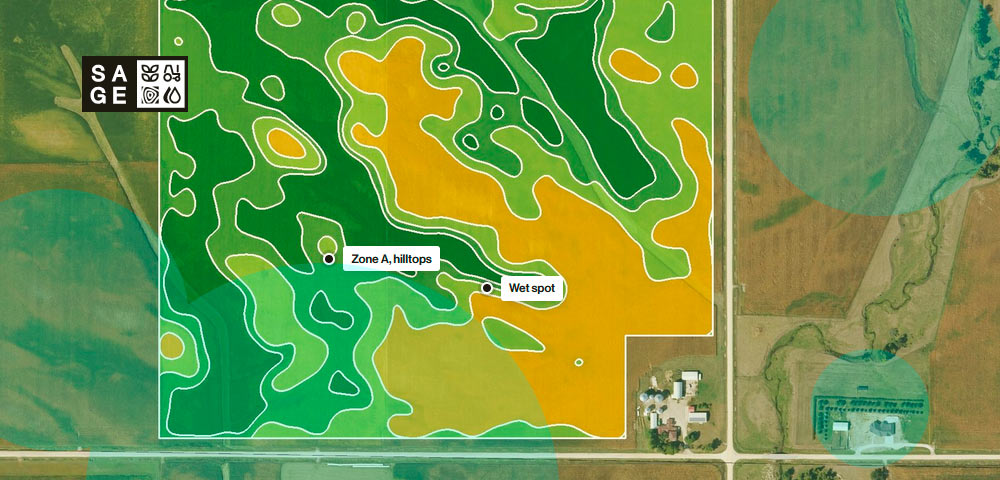
Insurance broker Aon and agricultural risk intelligence company SAGE are introducing an AI-powered crop insurance program that calculates premiums based on the risk characteristics of individual fields rather than countywide averages. The approach could reduce insurance costs for farmers operating on lower-risk land.
The program is designed as an alternative to traditional federal crop insurance pricing, which relies on average risk within a county despite differences in soil quality, farming practices and field conditions.
- Aon and SAGE are developing a precision crop insurance program that prices agricultural risk at the individual field level rather than relying on county averages.
- SAGE’s AI technology combines soil information, satellite observations, farm equipment data and agricultural research to assess risk and potentially reduce premiums for lower-risk farmland.
- The program will be available for corn and soybean acreage across 15 Corn Belt states in 2027, with AgriCap serving as the preferred insurance distribution partner.
Robert Bonnie, a former US Department of Agriculture (USDA) undersecretary for farm production and conservation, and technology executive Bill Veghte co-founded SAGE to develop more precise methods of evaluating agricultural risk.
Veghte told Agri-Pulse that the current federal insurance model can result in farmers paying premiums that do not accurately reflect the conditions of their land.
“Crop insurance is really, really popular, and a lot of growers rely on it,” Bonnie said. “At the same time, I think there are a lot of growers also that understand that the price they’re paying for USDA isn’t entirely reflective of actually what they’re doing on the ground.”
AI enables field-level crop insurance risk assessment
The USDA previously considered allowing crop insurance policies to be priced on a field-by-field basis but encountered technological and operational limitations, Bonnie told Agri-Pulse.
SAGE aims to address those constraints using artificial intelligence to combine information from agricultural equipment, USDA databases, satellite observations, scientific publications and deterministic process models developed by universities.
The system evaluates risk at the field level, providing information that Aon can use to determine premiums and structure insurance policies.
Bonnie described SAGE as the “analytical engine that allows Aon to price risk and write policies”. AgriCap will serve as the preferred insurance partner responsible for selling the coverage during the 2027 crop cycle.
The program is intended to complement federal crop insurance by aligning premiums and coverage more closely with the value of the insured farmland and its underlying risk characteristics.
Its initial rollout will cover corn and soybean acreage across 15 states in the US Corn Belt.
Soil health and regenerative farming enter the insurance pricing model
A central component of SAGE’s risk assessment is the inclusion of soil data, which could allow insurers to account more accurately for agricultural practices that influence field conditions.
Bonnie said the approach may help reduce the perceived insurance risks associated with conservation and regenerative farming practices.
By incorporating soil characteristics into insurance pricing, the model could provide a more detailed assessment of individual farms than existing county-based calculations.
What’s most important here is they’re connecting soil into the risk equation. When we then understand soil as the underlying asset, we can understand if there is increasing or diminishing value to that asset.
Travis Stewart, senior vice president at Aon
Beyond supporting insurance underwriting, SAGE will analyse grower data and provide farmers with field-level measurements, performance metrics and recommendations concerning conservation practices.
The information is intended to help farmers understand the risk characteristics of their land and evaluate agricultural management decisions.
Michigan pilot to offer lower premiums for conservation practices
Aon and SAGE are also participating in a Michigan pilot developed by the Resilience in Agricultural Lending and Insurance Coalition (RALIC), with support from the state’s agriculture department.
Beginning in 2027, the initiative will offer lower crop insurance premiums to corn and soybean farmers in four Michigan counties who adopt conservation practices such as cover cropping and no-till farming.
The pilot will examine how agricultural practices and soil conditions can be incorporated into insurance risk assessments and pricing.
Tina Owens, who works on regenerative agriculture systems and investment at the nonprofit Transformational Investing in Food Systems and founded RALIC, described the new insurance approach as a “game-changer”.
Owens said SAGE’s AI technology was generating the information necessary to incorporate soil health into crop insurance underwriting.
The next 10 years of the regenerative ag and soil health movement is going to be about how this rewrite of actuarial services and AI data insights completely shifts the way the financial sector gets engaged in this industry. And SAGE is a stellar example.
Travis Stewart, senior vice president at Aon
The broader Aon-SAGE insurance offering is scheduled for the 2027 crop year. Its field-level pricing model is intended to give farmers coverage that more closely reflects their individual risk exposure, while potentially reducing premiums for agricultural land assessed as lower risk.