Follow Beinsure

US insurtech company Lemonade is preparing to introduce an agentic AI insurance experience that will allow customers’ personal AI agents to purchase policies, manage coverage and handle claims by interacting directly with the insurer’s technology systems.
The new experience, built on Lemonade OS, is designed to support agent-to-agent transactions rather than requiring customers or their AI assistants to navigate conventional websites, submit forms or contact service representatives.
- Lemonade is developing an agent-to-agent insurance experience that allows customers’ personal AI assistants to interact directly with its systems without navigating websites or completing forms.
- Lemonade OS is designed to automate insurance pricing, underwriting, policy administration, renewals and claims, with AI agents managing coverage as customers’ circumstances change.
- The insurer plans to begin rolling out the experience and has opened a beta waitlist, extending its distribution strategy beyond direct online sales and traditional insurance agents.
Lemonade said the technology would allow personal AI agents to perform many of the same functions as its own service teams, including obtaining insurance quotes, purchasing policies, changing coverage and processing claims.
The company plans to begin rolling out the service and has opened a beta waitlist for early access. The new agent-to-agent functionality has not yet been made generally available.
The announcement represents a further development in Lemonade’s strategy of operating insurance through automated software, with personal AI agents becoming another way for customers to access insurance products and services.
Lemonade OS connects personal AI agents directly to insurance systems
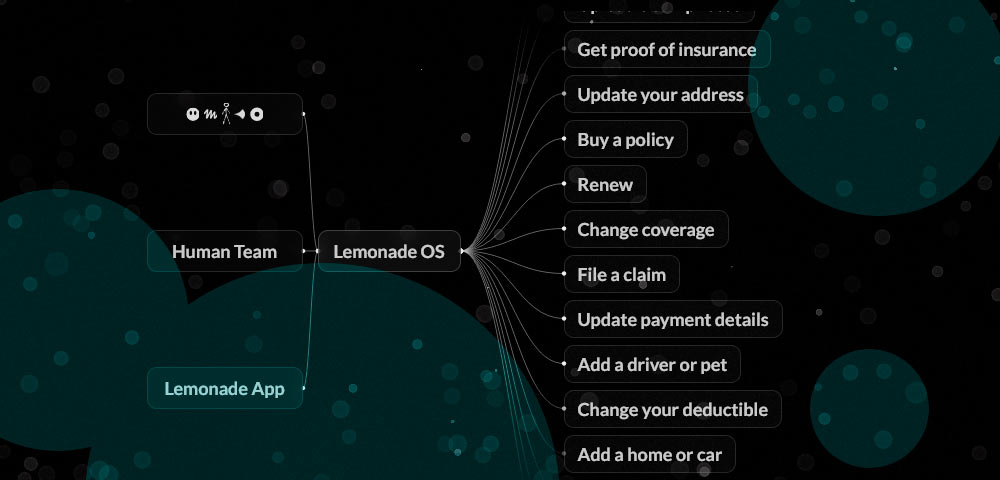
Lemonade has spent approximately a decade developing its proprietary technology platform, Lemonade OS, to automate insurance operations and reduce the need for manual intervention.
The system is designed to support functions across pricing, underwriting, policy administration, customer servicing and claims management.
Until now, customers have primarily interacted with these capabilities through Lemonade’s own applications, website and service channels.
The planned agentic experience would allow customers’ independent AI assistants to interact directly with Lemonade OS and complete transactions on their behalf.
Rather than using an insurer’s website as a human customer would, personal agents would be able to execute actions within Lemonade’s systems.
The planned functionality includes obtaining quotes, purchasing and renewing policies, updating addresses and payment information, changing deductibles and coverage limits, and adding drivers, pets, homes or vehicles to existing insurance arrangements.
Agents would also be able to bundle policies, insure additional valuable items, obtain proof of insurance, upload claim photographs, submit and track claims, and cancel coverage.
Lemonade expects these capabilities to reduce administrative work for policyholders and allow insurance arrangements to be managed with fewer direct customer interactions.
How agent-to-agent insurance transactions would work
Lemonade illustrated the planned experience with an example involving a customer whose personal AI assistant identifies a change in family circumstances.
In the demonstration, the assistant asks whether the customer wants to add two children, Chloe and Leo, to an existing Lemonade Car policy.
After receiving confirmation, the agent completes the transaction and reports that both drivers have been added to the policy, effective that day.
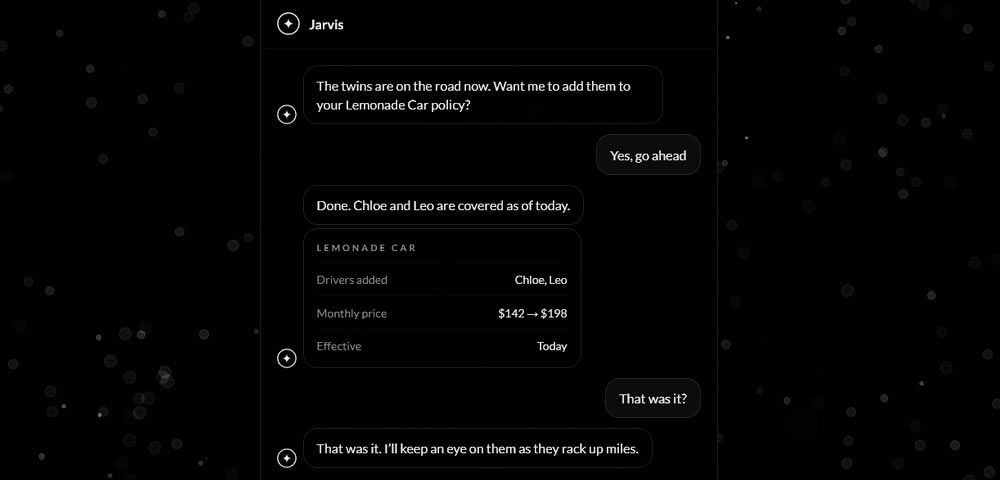
The example shows how Lemonade intends to connect personal agents with policy administration systems, allowing an authorised customer request to result in an insurance policy change without a conventional online application process.
The company also envisages agents monitoring customers’ circumstances and recommending insurance adjustments when necessary, including changes resulting from purchases, family developments or lifestyle decisions.
Under the proposed model, a personal agent could identify a coverage requirement, communicate with Lemonade OS and complete the relevant transaction with limited customer involvement.
Agentic AI could automate underwriting and insurance claims
Lemonade’s plans extend beyond using conversational AI to sell insurance policies. The company intends to operate insurance processes through autonomous software, connecting its existing underwriting and claims capabilities with personal AI assistants acting for customers.
Its broader objective is to automate activities that have traditionally required substantial administrative resources, including insurance pricing, policy changes, renewals, customer service and claims handling.
Lemonade expects greater automation to reduce operating costs and make insurance transactions faster. The company also envisages insurance becoming more responsive to changes in customers’ lives and the assets they own.
As connected vehicles and other forms of physical AI become more capable, Lemonade expects its insurance systems to interact with those technologies and adjust coverage in response to changing circumstances.
Lemonade has not disclosed a detailed rollout schedule or quantified the expected operating cost reductions from the new experience.
Lemonade expands insurance distribution beyond websites and brokers

The initiative also introduces another potential distribution channel for Lemonade’s insurance products.
The company initially concentrated on direct-to-consumer distribution through its own website and digital applications. It subsequently expanded its approach by working with traditional insurance agents and brokers.
Personal AI agents could now become another interface through which customers discover, compare, purchase and manage insurance.
Lemonade said customers are already using personal AI assistants to purchase its products through its existing conversational experience.
The planned Lemonade OS integration goes further by allowing agents to execute transactions directly within the insurer’s systems instead of relying on a customer-facing website.
Lemonade expects established insurers to make their websites accessible to AI agents, but considers that approach less extensive than enabling direct interaction with insurance operations.
The distinction is relevant for insurers developing AI distribution strategies. Allowing an AI assistant to retrieve a quote or navigate a website differs from giving it the ability to change policies, complete purchases and manage claims within an insurer’s systems.
Other insurance companies and insurtech startups have been introducing AI-based customer interfaces, including services that allow customers to obtain quotes or initiate insurance purchases through conversational platforms.
Lemonade’s proposed model places greater emphasis on autonomous transactions between the customer’s AI assistant and the insurer’s own software.
Lemonade builds on its AI-first insurance strategy
The announcement is consistent with Lemonade’s longstanding focus on developing insurance operations around proprietary technology.
Lemonade’s chief executive previously discussed the implications of an AI-first insurance model, including improving operational efficiency, modelling insurance risks and preventing damage.
Those applications extend across the insurance value chain, rather than being limited to sales and customer support.
Lemonade’s latest initiative applies the same approach to interactions between customers and insurers.
The company has described its ambition as creating insurance operated by software that can manage customer requirements with minimal administrative intervention.
The insurer believes personal agents will increasingly manage administrative tasks such as financial arrangements, taxes and insurance on behalf of individuals.
For Lemonade, this creates an opportunity to make its existing automated infrastructure accessible to software agents operating outside the company’s own applications.
The next stage will be the introduction of the new Lemonade OS agentic experience through its planned rollout and beta programme.
Customers interested in early access can join the company’s waitlist, while Lemonade prepares to extend its insurance purchasing, administration and claims capabilities to personal AI agents.