Apple Inc. (NASDAQ: AAPL) enters the final quarter of 2026 trading near record highs, supported by strong iPhone demand, expanding services revenue and renewed investor interest in its artificial intelligence strategy.
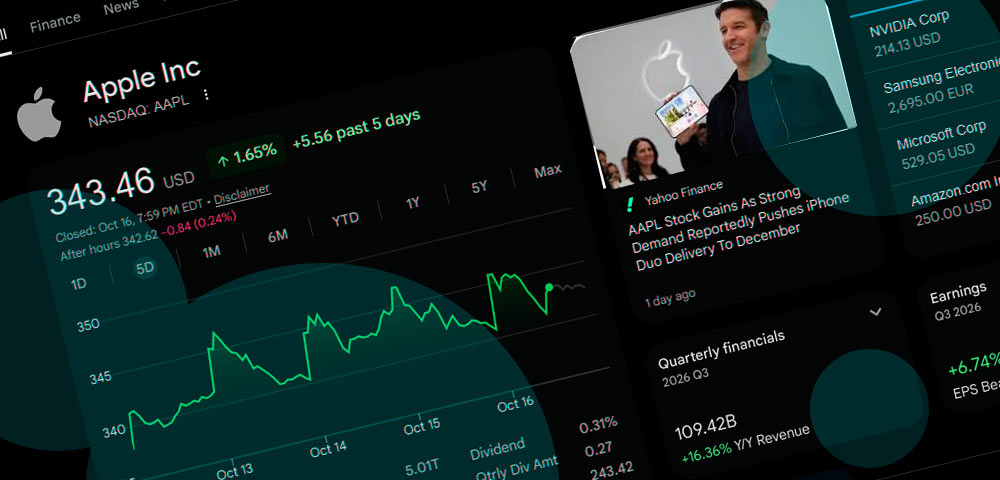
Shares closed at $343.46 on October 16, up 0.43% for the session and less than 1.4% below their 52-week high of $348.15. Apple’s market capitalization stands at approximately $5.01 trillion, making it one of the world’s most valuable publicly traded companies.
- Apple shares closed at $343.46 on October 16, up 0.43%, valuing the company at approximately $5.01 trillion. The stock has gained around 27% year-to-date.
- Evercore ISI raised its price target to $380, while JPMorgan increased its forecast to $360. Bank of America maintains a $370 target, compared with UBS at $296 and KeyBanc at $250.
- MarketBeat’s 12-month consensus target of $340.39 implies 0.9% downside, while Investing.com’s $329.38 average indicates 4.1% downside. Apple’s next earnings report is scheduled for November 2.
Despite the rally, Wall Street analysts remain divided over the stock’s valuation and potential returns over the next 12 months.
According to MarketBeat, Apple carries a Moderate Buy consensus based on 42 analyst ratings, including 26 positive recommendations, 14 Hold ratings and two Sell ratings. The average price target of $340.39 sits slightly below the latest closing price.
Investing.com’s broader coverage indicates a Buy consensus but a lower average target of $329.38, with individual forecasts ranging from $215 to $405.
Apple stock forecast: JPMorgan, Evercore, Morgan Stanley and UBS
Evercore ISI analyst Amit Daryanani raised his Apple price target from $365 to $380 on October 16, maintaining an Outperform rating. The revised target implies approximately 10.6% upside.
Evercore identified Apple as a relatively defensive technology investment amid concerns about excessive AI infrastructure spending and higher borrowing costs. Its assessment emphasized resilient iPhone demand and improving gross margins.
JPMorgan analyst Samik Chatterjee increased his target from $340 to $360 on October 12, retaining an Overweight rating. The forecast implies 4.8% upside, supported by expectations for strong premium iPhone sales during the holiday quarter.
Bank of America’s Wamsi Mohan reiterated Buy with a $370 target, representing potential appreciation of 7.7%.
Morgan Stanley’s Erik Woodring maintained an Overweight rating and $355 target, suggesting 3.4% upside, although reports of component order reductions raised concerns about near-term production volumes.
Citi maintained a Buy recommendation and $365 target, while TD Cowen’s $400 forecast remains among the more optimistic institutional valuations.
More cautious analysts see substantial downside.
- UBS analyst David Vogt reiterated Neutral with a $296 target on October 16, approximately 13.8% below the market price.
- KeyBanc’s Brandon Nispel maintained an Underweight rating and $250 target on October 15, suggesting 27.2% downside.
- Moffett Nathanson also maintains a Neutral recommendation with a $304 target.
Apple earnings growth supports premium valuation
Apple reported fiscal third-quarter revenue of $109.42 bn, up 16.4% year over year, exceeding Wall Street expectations. Diluted earnings per share increased 29% to $2.02, compared with the $1.89 consensus estimate.
iPhone revenue climbed approximately 22% to $54.25 bn, while Services revenue increased 12% to $30.74 bn.
The company’s gross margin reached 50.1%, although tariff refunds contributed approximately two percentage points. Earnings per share also benefited by $0.11 from those refunds.
The results demonstrated continued demand for Apple’s hardware and subscription services, but they also revealed challenges involving production capacity and components.
Management forecast September-quarter revenue growth of 9% to 11%, below the approximately 12% growth analysts had expected at the time.
Apple’s next quarterly report will provide an updated assessment of these constraints and the profitability of its latest product cycle.
AI strategy and new devices could support 2027 growth
Under CEO John Ternus, Apple has concentrated on integrating AI into consumer devices rather than committing the same level of capital expenditure to AI infrastructure as some technology competitors.
On October 13, Apple introduced HomeView, a smart-home device featuring personalized Siri capabilities and integration with connected household equipment.
The company also opened preorders for its foldable iPhone Duo on October 16, ahead of the device’s scheduled October 23 release.
These products could expand Apple’s hardware and services opportunities, although their commercial contribution remains uncertain.
At approximately 39 times earnings, Apple trades at a premium valuation that assumes continued revenue growth and strong profitability.
Higher interest rates, component costs, competition and potential weakness in consumer spending could limit further valuation expansion.
Apple stock outlook for late 2026 and 2027
Apple will report fiscal fourth-quarter results on November 2, 2026. Analysts expect approximately $113.38 bn in quarterly revenue and earnings of $1.99 per share, according to MarketBeat estimates.
Investors will focus on iPhone sales, Services growth, gross margins and management’s outlook for the December holiday quarter.
The broader analyst consensus suggests limited appreciation from current levels, even though several major investment banks maintain targets between $355 and $400.
Apple’s operating performance remains strong, but its valuation already reflects substantial expectations for hardware demand, services profitability and AI-related growth.
Further gains will depend on whether earnings growth can support the stock’s premium multiple, particularly as investors become more selective about technology valuations.