Follow Beinsure
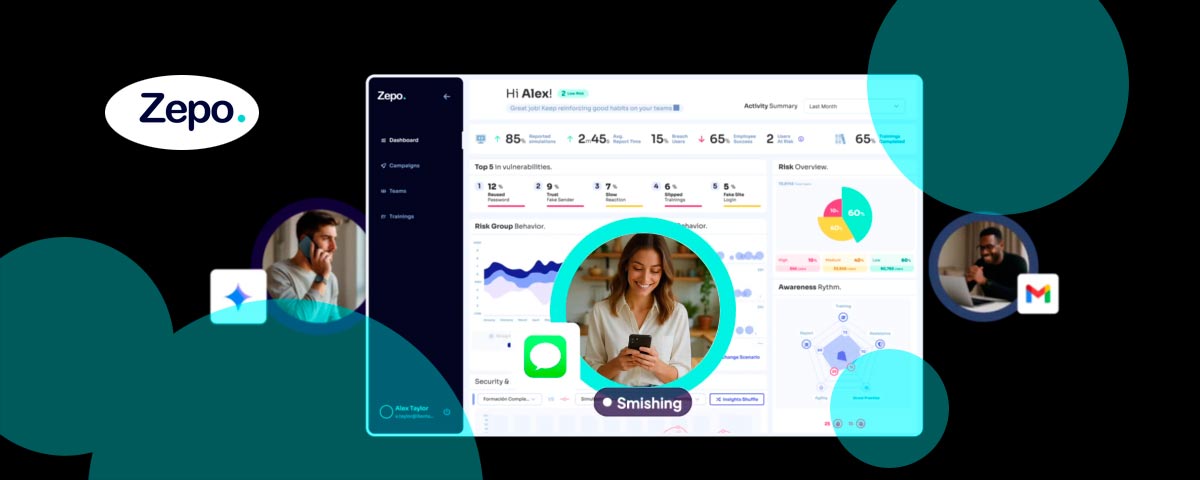
Spain-based cybersecurity startup Zepo Intelligence, focused on protecting organizations from AI-driven, human-targeted social engineering attacks, has closed a €12.8 mn Seed round to scale its platform aimed at protecting organisations from AI-powered social engineering attacks.
The round was backed by Kibo Ventures, eCAPITAL, and TIN Capital. The company plans to use the funding to expand globally and grow its engineering team, with hiring concentrated in data engineering and artificial intelligence roles.
Zepo was founded in 2021 by Antonio Muñoz and Enrique Holgado and describes itself as the first agentic social intelligence platform focused on workspace security.
Its system allows organisations to simulate realistic, AI-driven social engineering attacks, including deepfakes, voice calls, cross-platform messaging, and personalised phishing, while continuously measuring human risk exposure across teams.
Enrique Holgado, co-founder and CPTO, said AI sits at the centre of the platform and shapes how the company approaches both security and hiring. He framed Zepo as a place for engineers working at the intersection of AI and cybersecurity, building systems intended for global-scale deployment.
AI is the core of our platform. For engineers looking to develop their careers at the frontier of AI and cybersecurity, Zepo offers the ideal environment to build technology with global impact
Enrique Holgado, CPTO and co-founder of Zepo
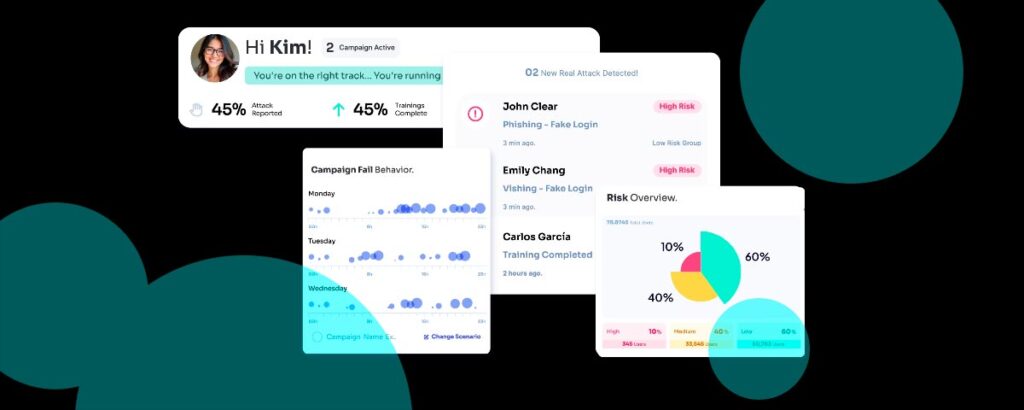
The platform goes beyond traditional awareness training. It analyses employee behaviour in real time, identifies where manipulation succeeds, and adapts both training and protection to individual risk profiles. Zepo positions this approach as a response to what it sees as a structural failure in legacy cybersecurity models built around email filters and static simulations.
The company points to the acceleration of generative AI as a breaking point. Citing data from the World Economic Forum, Zepo said social engineering attacks increased by roughly 1,200% following the release of ChatGPT, contributing to more than $1 tn in global losses during 2024.
Antonio Muñoz, CEO and co-founder, said attackers now operate across multiple channels with personalised, AI-generated tactics that outpace conventional controls. He said modern breaches often begin with human manipulation rather than technical exploits, leaving organisations exposed even when core systems remain hardened.
Artificial Intelligence has turned social engineering into one of the biggest challenges society faces today. As attackers have exploited generative AI and moved to multi-vector personalised attacks on employees, traditional cybersecurity – focused on isolated training tools and email filters – no longer provides the needed protection.
Antonio Muñoz, CEO and co-founder
Muñoz said Zepo’s platform combines human risk management with live threat detection, aiming to intervene at the moment a threat unfolds rather than after credentials leak or funds move. The system monitors the channels where employees work, flagging suspicious interactions before damage occurs.
Zepo operates with teams distributed across New York, Madrid, Tel Aviv, and Mexico City. The company reported 5x year-over-year revenue growth and plans to expand headcount and operations across Europe and the U.S. over the next 18 months.
The startup has also been recognised by Google as one of the world’s 15 most innovative cybersecurity and AI startups, a signal Zepo cites as validation of its approach as enterprises grapple with AI-enabled manipulation at scale.