Follow Beinsure

Roots, a specialist insurtech company that provides an AI agentic platform for insurers, focused on automating claims, underwriting, and policy operations, has released a newly validated Accelerator for users of Guidewire ClaimCenter running on Guidewire Cloud, making the product available through the Guidewire Marketplace.
The launch targets a problem claims teams know too well. Manual document handling still eats time, money, and patience, according to FF News.
Claims adjusters spend hours sorting, classifying, and rekeying information from inbound documents. The work piles up fast, bottlenecks form, resolution slows.
Attention drifts away from policyholders right when it matters most. Roots built the Accelerator to cut through that drag and free capacity inside claims operations (see Top Insurance Claims Management Software Platforms).
The company focuses on AI-driven agents built for insurance-specific workflows, with claims automation at the centre.
Roots pitches its tech as a way to update ageing processes without ripping out core systems. Modernisation without chaos.
Claims teams work faster, service improves, and operational metrics stop slipping. At least, that’s the idea.
The Roots Accelerator functions as a Document Indexing AI Agent embedded directly into ClaimCenter. It monitors multiple document intake channels, classifies more than 70 document types, and pushes accuracy past 98%.
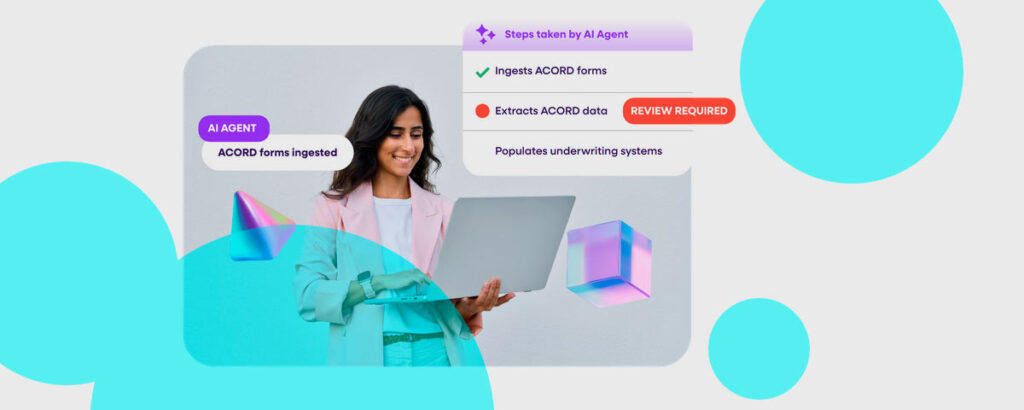
Relevant data flows straight into ClaimCenter, without adjusters babysitting the process.
The automation goes further than sorting and extraction. The agent supports straight-through processing at scale, trimming handling times and removing repeat document reviews.
Reliance on third-party processing vendors drops. Operational costs follow. Faster claim payments tend to come with it, and customer experience steadies instead of wobbling.
Roots distributes the Accelerator through the Guidewire Marketplace, and it has validation for use on Guidewire Cloud. For insurers already on ClaimCenter, deployment stays relatively quick.
According to Roots, that setup shortens time-to-value and avoids long, fragile implementation cycles. Nobody misses those.
Chaz Perera, co-founder and CEO of Roots, said claims professionals lose critical time to routine document work instead of supporting customers.
He said the Document Indexing AI Agent, powered by InsurGPT, can automate up to 90% of document processing with high accuracy, shifting adjuster focus toward faster decisions and better outcomes, and superior customer experiences.
Every day claims adjusters spend handling routine document classification is a day they’re not serving policyholders in their time of need
Chaz Perera, co-founder and CEO of Roots
He added that deep integration with ClaimCenter lets insurers roll out the capability inside existing environments rather than rebuilding workflows from scratch.
“Our integration with ClaimCenter means insurers can quickly deploy this capability within their existing infrastructure, accelerating time-to-value across their entire claims operation.”
Will Murphy, vice president of technology alliances and marketplace at Guidewire, said efficient document processing remains central to claims performance.
He said Roots’ Accelerator gives ClaimCenter users a way to move documents faster and with greater accuracy, improving operational results and claims outcomes across the board.
Roots emerged to address the volume of unstructured data in insurance – emails, PDFs, medical bills, legal demands, and submissions – that slow down claims and underwriting.
Its early positioning was as “digital coworkers” for insurance teams, later evolving into an AI agent platform with a strong focus on domain-specific models and workflows.
The Roots platform provides pre-built, self-learning AI agents that can monitor inboxes, classify and index documents, extract structured data, and update policy, claims, and billing systems.
These agents sit on top of proprietary insurance-tuned models and integrate with core systems such as policy admin and claims platforms, supporting use cases across submissions intake, loss runs, FNOL, claims summaries, premium audits, COIs, and more.