Follow Beinsure
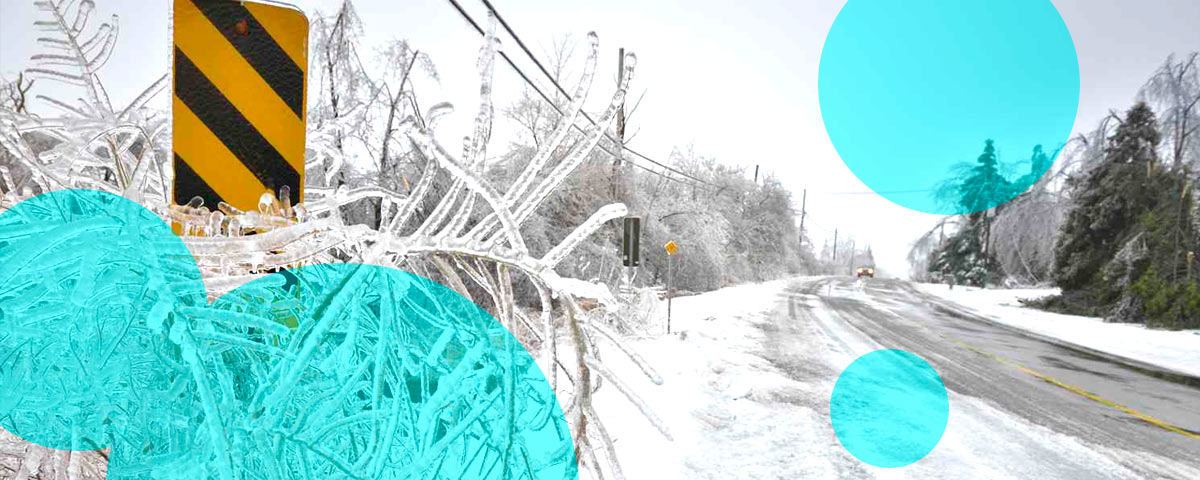
Canada’s costliest disaster of 2025 has sharpened the case for building more resilient communities. The storm was the most expensive severe weather event in Canada last year and now ranks as the sixth costliest in Ontario’s history.
Catastrophe Indices and Quantification, the Toronto-based catastrophe data provider and subsidiary of PERILS, has released its fifth and final industry loss estimate for the storm that hit Ontario and Quebec between March 28 and 31, 2025.
Insured damage from the late-March 2025 ice storm in Ontario and Quebec is now estimated at C$466 mn, based on the latest figures from CatIQ.
That compares with an initial estimate of C$342 mn issued soon after the event.
The number covers residential and commercial property claims, motor claims, and additional loss adjustment expenses. CatIQ said the figure edged down from the six-month estimate of C$490 mn issued on September 30, 2025, mainly because of lower personal lines losses in Ontario.
Maximilien Roy, vice-president of strategy at the Insurance Bureau of Canada, said severe weather continues to intensify. He said insured losses from catastrophic weather and wildfires have nearly tripled over the past decade, climbing from C$14 bn a year to C$37 bn, while claims volumes have almost doubled.
According to Roy, that trend demands a different approach to how communities are built and planned, with resilience investment now essential to keeping Canadians safe and insurance both available and affordable.
Canada’s property and casualty insurance sector is continuing to press governments at every level to take more meaningful steps to reduce disaster risk.
The industry wants more investment in flood-defence infrastructure, stronger land-use planning to keep development away from flood-prone areas, wider FireSmart adoption in communities exposed to wildfire risk, and long-delayed building code updates designed to better protect homes, businesses, and livelihoods.
Roy said Canada has an opportunity to become a world leader in resilience, though getting there will take coordinated action. He said insurers and policymakers need to work together now to protect Canadians facing heavier risk in a more volatile environment.
After the worst year for catastrophic weather losses in Canadian history, the Insurance Bureau of Canada released a three-point resilience plan aimed at giving governments clearer priorities.
The plan calls on authorities to stop putting people in harm’s way by keeping new homes out of high-risk zones and updating building codes for severe weather.
It also urges more spending on resilience through better hazard mapping and stronger public infrastructure, while calling for measures to close protection gaps linked to climate change through risk-based pricing and public-private partnerships, without resorting to harmful market intervention.
The event itself was brutal and drawn out. A prolonged stretch of wintry precipitation hit southern Ontario and Quebec between March 28 and 31.
Parts of the Kawarthas recorded as much as 35 hours of freezing rain, with ice accretion reaching 25 mm. That buildup placed heavy strain on power lines, trees, and other exposed surfaces, causing widespread damage and leaving hundreds of thousands of customers without electricity. In the hardest-hit areas, power outages lasted for weeks.
Ice storms are not unusual across the Lower Great Lakes and St. Lawrence regions. Still, they can turn nasty fast. One of the most damaging such events in Canadian history hit the region in 1998. April has also produced major storms, including events in 2018 and 2023.
Caroline Floyd, director of CatIQ, said the final estimate shows a slight reduction in personal lines losses compared with the six-month mark, which had shown somewhat above-average development last autumn.
She said it now appears reasonable to assume insurers have received the remaining claims, especially those involving seasonal access properties, and have released any added reserves.
This final estimate shows a slight decrease in the personal line losses versus the 6-month mark, which, as noted at the time, demonstrated somewhat above-average growth last autumn.
Caroline Floyd, Director of CatIQ
“At this point, it seems reasonable to expect that insurers feel comfortable they have received all the outstanding claims, particularly those related to any seasonal access properties, and have released their additional reserves.”
Floyd continued: “This supposition is reinforced when one looks at the closed claims information, which shows that more than 90% of personal lines claims have been closed. This is in line with what we would generally expect at the one-year mark from an event of this magnitude,” Caroline Floyd commented.
Floyd added that this view is supported by claims closure data showing more than 90% of personal lines claims have now been closed. At the one-year mark, she said, that sits broadly in line with what the market would expect after an event of this size.