- A preliminary magnitude 7.7 earthquake struck southern Panama, with the USGS warning that casualties are possible and extensive damage is probable.
- Buildings were damaged near the epicenter and in Penonome, while Panama suspended metro service, closed schools and, according to local media, temporarily shut its main international airport.
- Tsunami warnings and alerts were issued across parts of Central and South America, even as officials said the Panama Canal was not affected.
A powerful earthquake with a preliminary magnitude of 7.7 struck southern Panama on Friday, according to the U.S. Geological Survey, rattling buildings more than 100 miles away in the capital, prompting evacuations and raising tsunami concerns across the region.
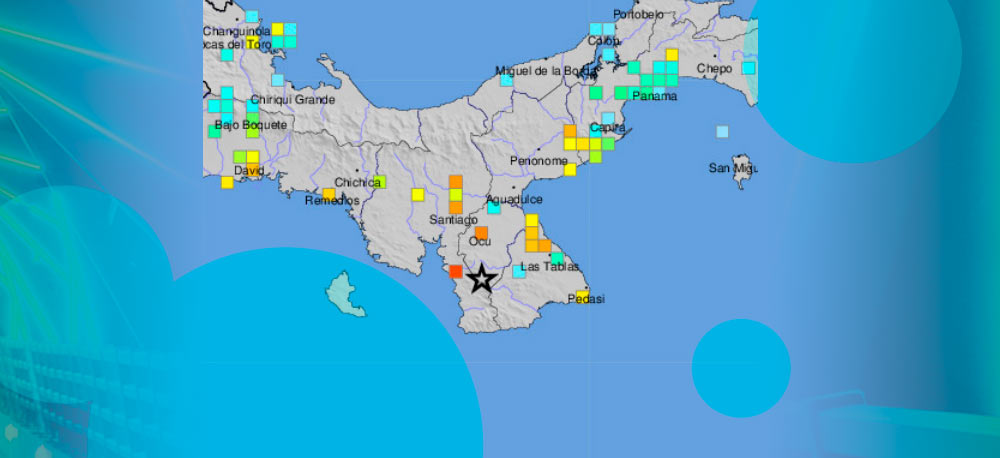
The USGS said casualties are possible and extensive damage is probable. The quake struck near Panama’s southern tip on the Pacific side of the country. The agency said the epicenter was 12 km west-southwest of Pitaloza Arriba, while another USGS description placed it about 7 miles southwest of the remote community and at a depth of 7 miles. A map released by the USGS identified the event as a 7.6 magnitude quake near Pitaloza Arriba.
Footage verified by CNN showed several damaged buildings in Penonome, around 70 miles from the epicenter. One video showed a church with a partially collapsed steeple, while another captured a building with a crumbled facade.
Reuters reported that videos shared by newspaper La Prensa showed the tower of a historic building had collapsed, along with several balconies of a residential building in the city.
Damage was also reported closer to the epicentral area. Omar Smith, head of Panama’s civil protection agency, told local outlet Telemetro Reporta that impacts had been reported in Chitre, the capital of Herrera province, and along the coast in Los Santos province.
Panama’s president, Jose Raul Mulino, called for calm and instructed the minister of government to provide information on the effects of the earthquake. The president’s office said more than a dozen aftershocks had been recorded since the quake struck shortly before 1 p.m. local time. Several aftershocks were also reported near the epicenter by other outlets.
Authorities suspended a range of services as a precaution. Panama City’s public transit system halted operations on two metro lines and evacuated passengers from some stations.
Nationwide, the Education Ministry canceled classes for the rest of the day and the president’s office said all administrative offices and schools had suspended operations. Local media also reported that Panama’s main international airport had been temporarily closed.
The U.S. Tsunami Warning System said tsunami waves of 1 to 3 meters were possible along some coasts of Panama. It also warned that Ecuador, Chile, Colombia, Costa Rica, El Salvador, Guatemala, Honduras, Mexico, Nicaragua and Peru could see less intense waves.
The U.S. Pacific Tsunami Warning Center said waves of about 3 to 9 feet were possible along Panama’s coast and warned that hazardous tsunami waves could reach parts of Costa Rica, El Salvador, Peru, Mexico, Guatemala, Panama, Nicaragua, Colombia and Ecuador within hours. Reuters reported that the system also identified a tsunami threat to Hawaii, while Chile’s navy issued a tsunami alert.
The quake’s epicenter was close to the rural community of La Pitaloza in a sparsely populated area of Herrera near the Pacific coastline, Reuters reported. Shaking was also felt in San Jose, the capital of neighboring Costa Rica, according to a Reuters witness, and local media in Panama reported the tremor was also felt in parts of Colombia.
Despite the disruption, the earthquake did not affect the Panama Canal, the country’s critical trade waterway. That left the canal operating even as emergency services assessed structural damage and public infrastructure disruptions elsewhere.
In Panama, where earthquakes of this magnitude are rare, television images showed elderly residents in tears in the streets as weaker aftershocks continued.
The country had been due to hold a national evacuation drill on Monday next week to test emergency response capabilities for earthquakes.
The earthquake is the latest major seismic event to hit Latin America this year. Over the summer, Venezuela was struck by two powerful earthquakes that killed more than 6,400 people, while Colombia experienced a tremor that left around 300 dead.
The quake’s epicenter was close to the rural community of La Pitaloza in a sparsely populated area of Herrera, near the Pacific coastline. Shaking was also felt as far as San Jose, the capital of neighboring Costa Rica, according to a Reuters witness.
In Penonome, a city about halfway between the epicenter and Panama City, social media videos verified by Reuters showed a damaged church and nearby buildings that collapsed.
A tsunami threat triggered by the earthquake off Panama has passed, and no further tsunami danger remains, the US Tsunami Warning System said.
Panama was due to hold a national evacuation drill on Monday of next week to test the country’s emergency response capabilities against earthquakes.
Venezuela and Colombia have also suffered major earthquakes in recent months, causing thousands of deaths in total.