- AI valuations and capital spending point to a market bubble
- Venture capital faces a liquidity problem as AI attracts funding
- Why Selby believes the next major technology company may emerge outside Silicon Valley
- Copper Sky targets startups at lower valuations
- Peter Thiel’s PayPal experience shapes Selby’s investment approach
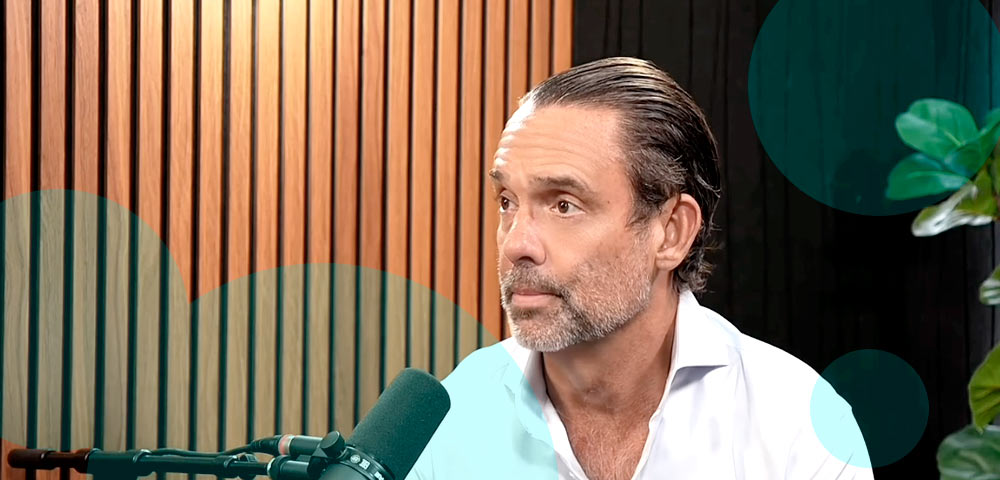
Jack Selby, managing director at Thiel Capital and a longtime business partner of Peter Thiel, has warned that the artificial intelligence investment boom is a bubble, citing inflated valuations, circular financing and unprecedented capital expenditure.
Speaking on the November 4, 2026 episode of the How I Invest podcast with David Weisburd, Selby said a correction was inevitable and could wipe out hundreds of billions of dollars in invested capital. “Anyone who doesn’t believe that there is an AI bubble is an absolute contrarian,” Selby said.
- Jack Selby expects the AI investment bubble to correct, potentially destroying hundreds of billions of dollars in capital.
- High valuations, circular financing and infrastructure spending have created risks similar to those seen during the dot-com boom.
- Selby favors AI-enabled businesses outside Silicon Valley, where founders can build companies at substantially lower valuations.
His assessment comes as investors continue pouring money into AI infrastructure, frontier models and technology companies, including OpenAI, Anthropic and Palantir Technologies. Thiel has backed several prominent technology businesses, making Selby’s warning particularly notable.
AI valuations and capital spending point to a market bubble
Selby identified several factors behind his assessment, including elevated valuation multiples, circular financing arrangements and the amount of capital required to develop advanced AI systems.
“This will correct,” he said, describing the eventual downturn as a question of when rather than whether it will happen.
He compared the current investment cycle with the dot-com boom, when substantial amounts of capital flowed into technology businesses before their commercial prospects had been established.
The AI cycle differs in the scale of infrastructure spending required. Developing frontier models involves expensive computing facilities, specialized processors and substantial ongoing operating costs.
Selby expects hundreds of billions of dollars in AI investment to lose their value when the market corrects, although he continues to see AI as a transformative technology.
He also questioned the investment industry’s emphasis on finding companies capable of reaching trillion-dollar valuations. He described Anthropic and SpaceX as exceptional businesses that should not serve as valuation benchmarks for ordinary startups.
With private AI companies attracting substantial investor demand, Selby characterized the current environment as more suitable for traders seeking to capitalize on price movements than for long-term investors.
Venture capital faces a liquidity problem as AI attracts funding
Selby’s concerns extend beyond artificial intelligence valuations to the broader venture capital market.
After spending six months meeting limited partners, he concluded that venture firms had struggled to return sufficient capital to investors over the past decade.
He cited a concentration of fundraising among a small number of firms, with eight managers attracting approximately $70 bn during 2026.
According to Selby, the capital still available for private technology investments has become heavily concentrated in high-profile, late-stage AI opportunities.
This creates a difficult environment for smaller venture funds and companies operating outside the most sought-after technology categories.
The problem is not necessarily a lack of promising businesses. Selby argues that capital allocation increasingly reflects investor demand for access to a narrow group of expensive companies.
The shortage of distributions to venture capital investors is limiting new commitments, while much of the remaining capital is being directed toward late-stage AI investments.
For investors, the combination of limited liquidity and elevated entry valuations creates additional risk if the AI market experiences a prolonged correction.
Why Selby believes the next major technology company may emerge outside Silicon Valley
Selby also challenged the geographic concentration of American venture capital.
He estimated that approximately 90% of venture funding flows to California, New York and Massachusetts, leaving entrepreneurs in the other 47 states competing for a comparatively small share of available capital.
In his view, Silicon Valley’s principal advantage is the concentration of financial resources rather than exclusive access to talented founders. He pointed to Carvana as an example of a major technology business developed outside the traditional venture capital ecosystem.
Founded in Arizona, Carvana struggled to attract funding from Sand Hill Road investors before developing into a publicly traded company that Selby cited as having reached approximately $65 bn in market capitalization.
Selby believes similar opportunities exist in cities such as Phoenix, Milwaukee and Cincinnati.
AI tools could strengthen the economics of these businesses by allowing smaller teams to develop software, automate processes and compete without the same staffing and infrastructure requirements as traditional technology startups.
Selby argues that AI-enabled companies do not need to be built in Palo Alto unless they are competing directly in frontier AI development.
This distinction underpins his investment approach: rather than financing companies seeking to build the next major foundation model, he sees opportunities in businesses using AI to improve established products and services.
Copper Sky targets startups at lower valuations
Selby’s investment strategy at Copper Sky focuses on entrepreneurs outside California, New York and Massachusetts.
The fund takes a sector-agnostic approach, prioritizing founders with strong execution capabilities over specific technologies or industries.
Selby said valuations in these markets can be approximately one-tenth of those found in Silicon Valley.
Lower entry prices can provide investors with a different risk-return profile, particularly when compared with late-stage AI companies already valued at tens or hundreds of billions of dollars.
His approach also reflects the belief that venture capital returns do not require every successful company to achieve a trillion-dollar valuation.
For AI-enabled startups, the opportunity may instead lie in applying available technology to profitable business models without competing directly with the largest AI laboratories.
Peter Thiel’s PayPal experience shapes Selby’s investment approach
Selby has known Peter Thiel for 28 years and worked with him for 27 of them. He was among PayPal’s first ten employees and credits Thiel’s early hiring philosophy with helping the company assemble a team capable of handling rapid growth and repeated operational crises.
Rather than recruiting exclusively from the payments industry, Thiel prioritized highly capable people who could adapt to unfamiliar problems.
Selby recalled that the average age of PayPal’s executive team during its IPO roadshow was just 26.
The company’s early development included persistent fraud attacks, with Max Levchin leading efforts to counter sophisticated criminal activity.
PayPal’s acquisition by eBay for approximately $1.5 bn in 2002 subsequently helped establish the financial resources and entrepreneurial networks associated with the group of founders and executives often described as the PayPal Mafia.
Selby has carried that emphasis on founder quality into his later investment decisions. His warning about an AI bubble does not amount to a rejection of the technology. Instead, it reflects his concern that investors are paying prices that assume exceptional outcomes across too many companies.
For Selby, the distinction is between the commercial potential of artificial intelligence and the valuations investors are currently willing to accept.