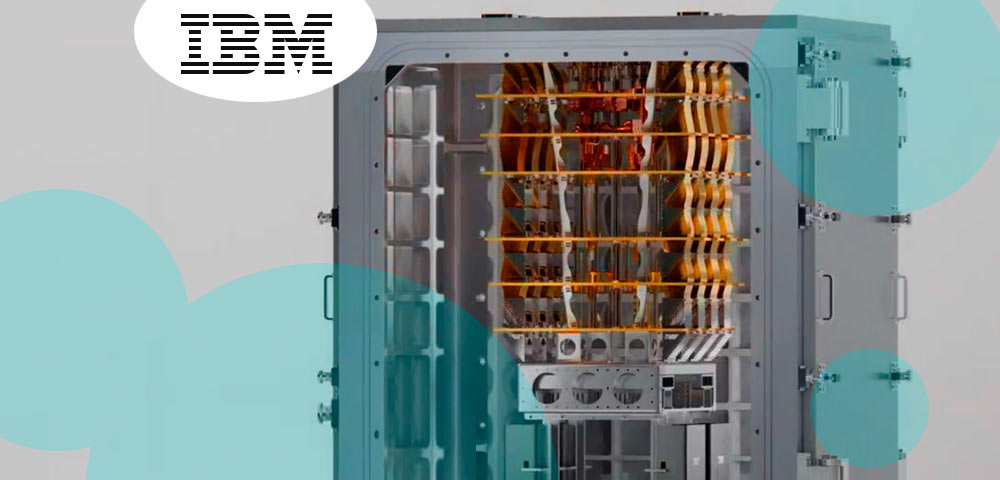
IBM (NYSE: IBM) has announced Quantum Nighthawk r3, a next-generation quantum processor designed to execute 10,000 quantum operations across 520 qubits. The company plans to connect two processors in 2027, creating a system with 1,040 qubits as it advances toward fault-tolerant quantum computing.
The announcement follows reported performance improvements from IBM’s existing Nighthawk r2 processor, which has processed more than 34 bn quantum circuits for customers and research partners.
- IBM Quantum Nighthawk r3 will support 520 qubits and 10,000 quantum operations, with plans to combine two processors into a 1,040-qubit system in 2027.
- Nighthawk r2 currently processes up to 100,000 samples per second and supports more than 7,500 operations across 120 qubits.
- IBM customers and partners, including E.ON, Algorithmiq and Q-CTRL, have executed over 34 billion circuits on Nighthawk r2, reporting performance gains of up to 19 times.
IBM Quantum Nighthawk r3 targets larger quantum workloads
IBM is developing Nighthawk r3 to handle more complex computations while preserving the processing speed and accuracy of its current-generation hardware.
The 520-qubit processor is designed to execute 10,000 quantum operations accurately, expanding the range of computational problems that can be addressed.
In 2027, IBM intends to connect two Nighthawk r3 processors, increasing the system’s total qubit count to 1,040.
| IBM quantum processor | Nighthawk r2 | Nighthawk r3 |
|---|---|---|
| Qubits | 120 | 520 |
| Quantum operations | More than 7,500 | 10,000 |
| Sampling speed | Up to 100,000 samples/second | Not disclosed |
| Development status | Available | Planned |
| Multi-processor configuration | — | 1,040 qubits planned for 2027 |
The planned system would represent a substantial increase in hardware scale, although IBM has not disclosed performance benchmarks for the completed r3 architecture.
Larger quantum systems can support more complex algorithms, but their practical usefulness also depends on error rates, circuit execution speed and the ability to perform repeated calculations efficiently.
Nighthawk r2 delivers up to 19x faster quantum computations
IBM introduced Nighthawk r2 in September 2026. The processor uses high-speed qubit reset technology to reduce the time required between quantum circuit executions.
Quantum computers generate results by repeatedly executing circuits and collecting measurement samples. Applications involving complex algorithms may require millions or billions of samples, making execution speed an important factor in overall computational performance.
Nighthawk r2 can produce up to 100,000 samples per second while supporting accurate execution of more than 7,500 quantum operations across 120 qubits.
IBM reported that customers and partners have collectively executed more than 34 billion circuits using the processor.
Organizations including E.ON, Algorithmiq and Q-CTRL reported speed improvements of up to 19 times compared with earlier IBM quantum processors.
These gains reflect results from specific workloads rather than a universal improvement across all quantum applications.
Jay Gambetta, Director of IBM Research and IBM Fellow, emphasized that practical quantum computing requires both computational accuracy and sufficient execution speed.
IBM expects the Nighthawk architecture to support increasingly demanding scientific and industrial workloads as its hardware capabilities expand.
IBM expands quantum and classical computing integration
Alongside the new processor, IBM announced enhancements to its Quantum Platform, bringing quantum and classical computing resources into a more integrated environment.
The approach reflects the growing importance of hybrid computing, where conventional processors manage parts of a calculation while quantum hardware executes specialized operations.
Such integration is particularly relevant for applications requiring repeated circuit execution, data processing and algorithm optimization.
IBM is positioning its quantum infrastructure for research and potential industrial applications, including energy, chemistry, materials science and computational optimization.
However, the company has not provided revenue projections or commercial adoption targets specifically associated with Nighthawk r3.
IBM quantum computing roadmap for 2027
The next major development milestone will be the planned integration of two Nighthawk r3 processors into a single quantum system.
IBM has also reported 99.3% state-transfer fidelity in work supporting modular quantum architectures, compared with its stated 99.9% target.
| Development milestone | Reported status |
|---|---|
| Nighthawk r2 launched | September 2026 |
| More than 34 billion circuits executed | Reported November 2026 |
| Nighthawk r3 with 520 qubits | Announced |
| Two-processor system with 1,040 qubits | Planned for 2027 |
| State-transfer fidelity demonstrated | 99.3% |
| State-transfer fidelity target | 99.9% |
Achieving the planned hardware scale would strengthen IBM’s quantum computing roadmap, but larger qubit counts alone do not establish fault tolerance or commercial quantum advantage.
The key performance measures will remain computational accuracy, execution speed, error correction and the ability to complete useful workloads more efficiently than existing alternatives.
IBM’s announcement establishes its next hardware development targets while providing new evidence of performance improvements achieved by the current Nighthawk generation.