Follow Beinsure

Reinsurance renewals at 1 April extended the softening seen at 1 January, according to Howden Re, the reinsurance, capital markets, and strategic advisory arm of global intermediary Howden.
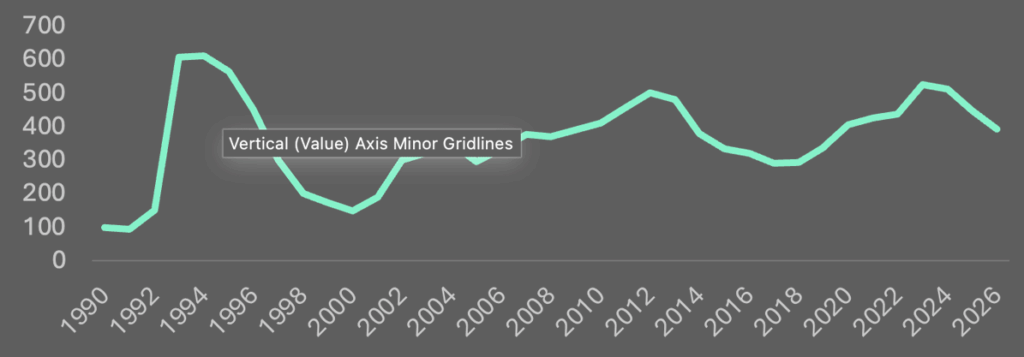
Risk-adjusted property-catastrophe rates on line moved back to levels last seen in the early 2020s, even as turmoil in the Middle East put sharp pressure on several specialty classes around the world.
In Japan, the property-catastrophe market kept moving in a cedent-friendly direction. Catastrophe excess-of-loss programmes recorded risk-adjusted price cuts of up to 20%, with a point estimate of 16%.
Howden Re linked that outcome to benign global property-catastrophe conditions and another year of low catastrophe losses in Japan.
On proportional business, commissions on property surplus and earthquake quota share treaties rose by 2-5 percentage points. The upper end of that range was most often achieved on earthquake quota share placements.
Andy Souter, Head of Asia Pacific at Howden Re, said Japan rates are now broadly back to early twenties levels. He said strong reinsurer appetite, better underlying performance, and an absence of major loss activity all helped push the renewal toward cedents.
Property catastrophe risk adjusted rate change 1990-2026
Reinsurers, for the most part, kept a disciplined stance aimed at defending established positions in Japan. Even so, some capacity providers still looked for selective opportunities to grow their shares.
Overall supply and demand stayed broadly in line with the prior year. Programme structures also stayed close to expiring terms, with only limited cases of extra buying or structural changes.
The Middle East crisis did not directly hit the 1 April property-catastrophe renewal. Howden Re said the effective closure of the Strait of Hormuz, following coordinated US and Israeli strikes on Iranian military targets in late February 2026 and Iran’s later declaration of closure, has so far been felt mainly in specialty business.
That dislocation is concentrated in marine war risk, energy, and political violence, where capacity has repriced at several multiples of pre-conflict levels. So the pressure is real. It’s just sitting elsewhere in the market, for now.
Howden Re still warned that the macro channel from the Gulf crisis reaches further than the specialty lines taking the first hit.
David Flandro, Head of Industry Analysis and Strategic Advisory at Howden Re, said the 1 April renewal was completed in a largely benign property-catastrophe setting and stayed insulated from the immediate disruption in the Gulf.
He added that a prolonged energy supply shock would raise the risk of renewed inflation and higher interest rates, forces that have historically affected reinsurance capital and pricing across all lines, not only those directly exposed to conflict.
For the broader market, Howden Re said the 1 April renewals confirmed that reinsurer balance sheets remain strong and appetite for well-structured programmes remains healthy.
The orderly outcome, with no structural disruption, disciplined capacity, and cedent-friendly pricing, points to a market still in good shape despite heavier geopolitical stress.
Looking ahead, mid-year 2026 renewals are expected to be tougher and less straightforward. Upward pricing pressure is likely across marine, energy, and political violence as the full effect of the Hormuz crisis moves through the market and reinsurers reassess aggregation, event definitions, and Middle East exposure in specialty portfolios.
For property-catastrophe business, the next direction will depend heavily on loss activity in the first half of the year.
It will also depend on how the broader economic effects develop over the coming months, including energy prices, inflation pressure, the path of interest rates, and capital market volatility.
Souter said the reinsurance market remains well capitalised and engaged. He added that technical discipline, transparency, and active monitoring will matter as the industry moves into what is shaping into a more complicated mid-year environment.