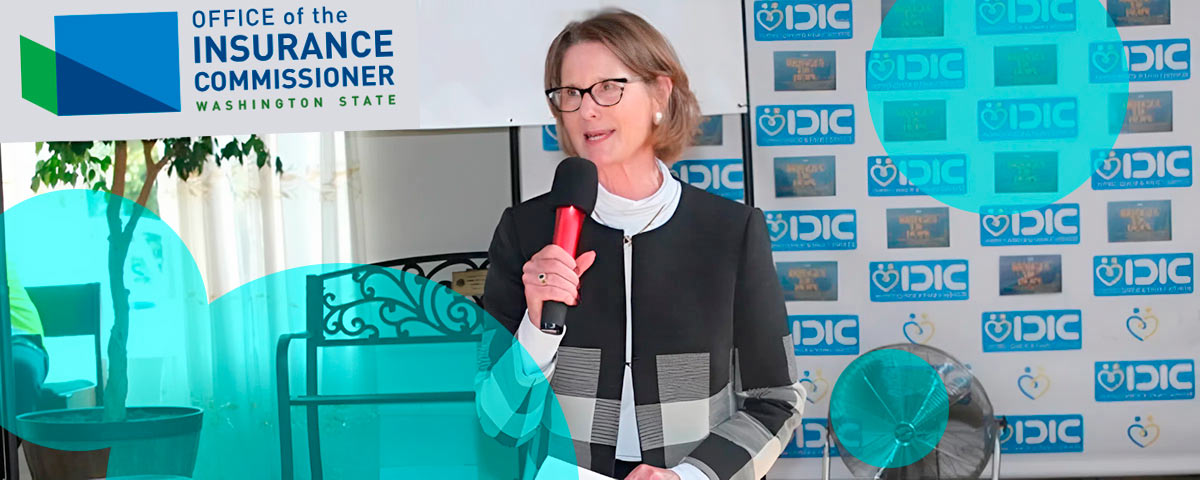
Washington Insurance Commissioner Patty Kuderer laid out a sharp set of 2026 priorities that zero in on three pressure points: restitution authority, post-loss assignment-of-benefits bans and a new home-mitigation pilot geared toward wildfire risk.
The agenda isn’t sprawling, but it bites where carriers and consumer groups already clash.
Kuderer wants lawmakers to revive a bill that lets the Office of the Insurance Commissioner order insurers to pay compensation directly to policyholders for code violations.
The measure also lifts penalties for P&C insurers to $10,000 per violation, matching life and health. It cleared the Senate earlier this year before collapsing in the House after industry lobbyists pushed for an aggregate cap. That add-on backfired.
As Kuderer told the room on December, the cap poisoned the bill’s credibility and torpedoed support. She didn’t mince words, saying aggregate caps tilt the field toward firms with the worst conduct and leave consumers stranded.
She argues the proposal would bring Washington in line with 38 states that already run per-violation frameworks for P&C carriers.
Because of the state’s biennium system, bills introduced in year one survive into year two, so the measure jumps straight into the 2026 session without starting from zero.
The regulator also aims to shut down post-loss AOB clauses in repair contracts. David Forte, senior P&C insurance policy adviser, said these clauses aren’t the same as direct-pay authorizations that carriers and regulators both lean on.
Under AOBs, contractors pull control of the claim away from the policyholder, block communication between the insured and the insurer, accept payments on their own terms and file lawsuits without recourse for the homeowner.
Forte said a ban wouldn’t touch policyholders’ ability to work with public adjusters or attorneys, which matters in a state where wildfire and water-damage claims keep spiking.
A third priority focuses on a pilot for the Strengthen Washington Homes Program.
It links to a separate wildfire grant scheme the regulator supports and uses the Insurance Institute for Business and Home Safety’s Wildfire Prepared Home Standards as its benchmark.
Lauren Burnes, senior P&C analyst, said eligible projects may include ember-resistant vents, ignition-resistant building materials and defensible-space work.
According to our data, wildfire exposure across the Pacific Northwest keeps creeping into suburban zones, so the program lands at a moment when mitigation isn’t optional, it’s survival.