Follow Beinsure
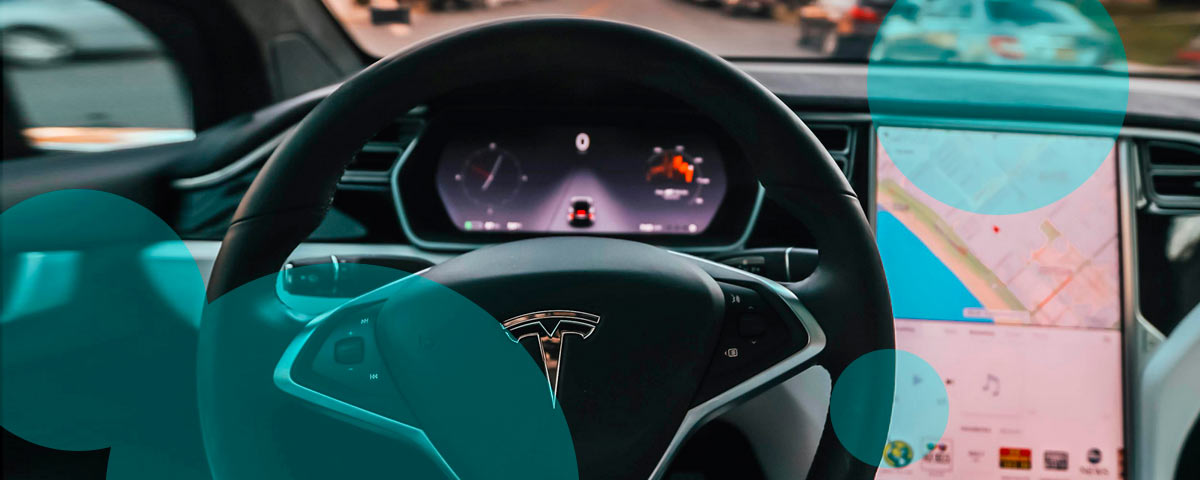
Are autonomous vehicles from companies such as Waymo and Tesla making roads safer? The insurance industry’s research community is watching closely, and the answer remains unsettled.
David Kidd, vice president for vehicle research at the Insurance Institute for Highway Safety, says early evidence suggests autonomous vehicles crash less frequently per mile than human drivers.
That finding carries weight. It does not settle the broader safety debate, according Bloomberg review.
Waymo recently faced scrutiny after robotaxis in Austin and Atlanta passed stopped school buses despite safety recalls.
Federal agencies opened investigations. Incidents like these underscore a persistent challenge: autonomous systems make decisions in ways that even engineers struggle to interpret. Fixing edge-case failures can prove slow.
Insurance underwriting depends on long-term, stable data. Carriers typically rely on historical loss patterns before adjusting pricing assumptions.
Autonomous vehicle deployment remains limited in geographic scope and use cases. Insurers therefore lack sufficient longitudinal data to model overall risk with confidence.
Kidd stresses that safety assessments must remain context-specific. An autonomous trucking fleet operating fixed interstate routes between logistics hubs may outperform human drivers within that narrow corridor.
That outcome does not imply urban robotaxis handle every city environment safely.
Unexpected scenarios expose current limitations. Motorcades in Washington, wildlife encounters in rural states, downed power lines, police activity, snow-covered roadways requiring informal negotiation between drivers.
Humans improvise. Autonomous systems struggle in ambiguous conditions.
Waymo currently leads US autonomous deployment and has released crash and mileage data publicly. Independent researchers can analyze those datasets. Still, replication remains essential.
Safety claims carry more credibility when validated using independent or alternative datasets. Government coordination may become necessary to standardize reporting of miles driven and crash exposure across operators.
For regulators, crash counts and total miles traveled form the baseline metrics. Additional operational data, including lane obstructions or emergency response interference, also inform safety evaluation.
Public expectations remain high. Autonomous driving technology has been marketed as a solution to the more than 100 daily US traffic fatalities tied to human error.
Kidd argues the higher standard applied to AVs is justified. If automation promises systemic risk reduction, performance must substantially exceed human benchmarks.
At the same time, autonomous deployment unfolds gradually. Road safety improvements remain available through existing tools such as speed enforcement cameras, intelligent speed assistance systems, and lower speed limits. Those interventions deliver measurable reductions today.
According to Beinsure analysts, insurers approach autonomous risk cautiously, balancing potential loss reduction against limited operating history.
Autonomous vehicles show promise in defined environments. Whether they produce consistent, large-scale safety gains across varied conditions remains an open question.