Follow Beinsure
FluoSphera, a Swiss biotech startup based near Geneva that develops human-relevant in vitro platforms to test drug efficacy and safety before clinical trials, has raised €1.23 mn (CHF 1.15 mn) to accelerate drug discovery using its patented multi-tissue in vitro platform, positioning itself as part of a broader shift away from animal-heavy preclinical testing.
The round was led by Soulmates Ventures alongside a Swiss business angel, with participation from IndieBio New York.
The company plans to deploy the capital toward commercial partnerships, business development hires, and expansion of AI-driven automation for large-scale imaging analysis.
FluoSphera was founded by Clélia Bourgoint and Gregory Segala as a spin-off from the University of Geneva. The company focuses on systemic, human-relevant preclinical models designed to surface efficacy and toxicity signals earlier in the drug development cycle.
Bourgoint, FluoSphera’s CEO and co-founder, said the goal goes beyond speed or cost control. She said the platform targets a deeper structural problem in drug discovery, where models fail to reflect how compounds behave in the human body, leading to late-stage failure.
Industry data backs that concern. FluoSphera cites Deloitte’s 2023 Pharmaceutical Innovation Report, which estimates that bringing a new drug to market takes 10 to 15 years and costs $2 bn to $3 bn.
Even with that spend, more than 90% of candidates fail in clinical trials. In oncology, success rates drop below 5%.
The company argues the root cause sits upstream. Traditional 2D cell cultures isolate biology. Animal models diverge from human physiology. Toxicities slip through. Time and capital evaporate.
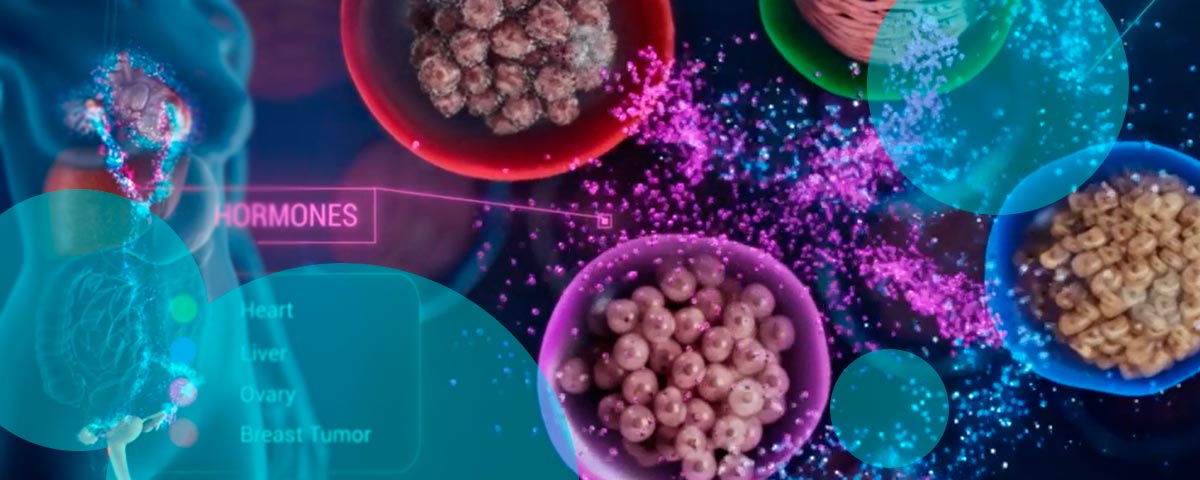
FluoSphera’s response is a multiplexed platform that combines up to six or seven human tissue models in a single well.

Each tissue is tagged using proprietary fluorescent coding, allowing researchers to track organ-specific responses in parallel. Instead of testing liver, heart, and neural tissues separately, developers observe cross-organ effects in one experiment.
That structure allows teams to assess both efficacy and side-effect risk before advancing into animal studies or early clinical phases.
According to the company, earlier signal clarity can translate into estimated savings of $100 mn to $500 mn per molecule by cutting failed paths sooner.
The platform also lines up with regulatory direction. FluoSphera points to the proposed FDA Modernization Act 3.0 in the U.S., which encourages non-animal testing through validated New Approach Methodologies. As regulators soften historic reliance on animal data, demand for scalable human-relevant systems is rising fast.
Hynek Sochor, founder and managing partner at Soulmates Ventures, said the transition away from animal testing creates a structural opening for platforms that offer reliability at scale. He described FluoSphera’s approach as a break from incremental tweaks, framing it as a reset in how preclinical validation gets done.
With the new funding, FluoSphera plans to expand commercial activity with pharmaceutical companies and CROs, deepen integration into existing drug development pipelines, and advance its AI-based image analysis stack.
Geographic focus remains the U.S. and EU in the near term, with early steps toward Asia underway.
Longer term, the company says it wants to broaden access to advanced human tissue modelling and move closer to population-specific testing.
Precision medicine sits on that horizon, though the immediate work stays practical, commercial, and grounded in fixing what breaks most often in drug discovery.