Follow Beinsure
Tucuvi, a HealthTech company based in Madrid, raised €17 mn, about $20 mn, in Series A funding to speed up adoption of its AI-driven care management platform across healthcare systems.
The startup focuses on certified voice AI, a narrow niche, but one that keeps drawing attention as staffing gaps widen.
The round was led by Cathay Innovation and Kfund through its early-growth vehicle Leadwind. Existing backers Frontline Ventures, Seaya Ventures, and Shilling also joined. The mix signals continued conviction rather than a reset.
Healthcare systems sit under heavy strain, and half-fixes don’t hold anymore, according to María González, CEO of Tucuvi. She said providers now need AI they can trust, meaning secure, auditable, and built for clinical reality, not demos.
Tucuvi already works with more than 60 healthcare organisations and plans to scale further as demand keeps climbing.
The deal lands inside a still selective stream of European capital flowing into AI healthcare platforms during 2025–2026. It’s not a flood. It’s more like targeted bets.
- Earlier in 2025, Warsaw-based Jutro Medical raised €12 mn in a Series A round to expand physical clinics and roll out medical AI agents across telemedicine and operations.
- Later that year, the company added a €24 mn Series A extension to push its AI-first primary care model deeper into both clinical and administrative workflows.
Against that backdrop, Tucuvi’s approach looks parallel but distinct.
The company deploys certified voice AI and end-to-end care management software directly into existing healthcare systems rather than running care delivery itself.
Across these announcements, roughly €53 mn has gone into European healthcare AI platforms aiming to increase care capacity and operational efficiency through automation. According to Beinsure analysts, the concentration shows investors still pick carefully, even as demand looks obvious.
One medical director working with the platform said Tucuvi turns protocols and clinical guidelines into consistent AI workflows that reach all patients, while freeing nursing teams to focus on cases that actually need judgment. It’s a practical framing, not a flashy one.
Healthcare providers face a mix of staff shortages, rising care demand, and growing operational mess.
Tucuvi, founded in 2019, built its platform around secure and auditable autonomous AI agents meant to stretch capacity without breaking trust.
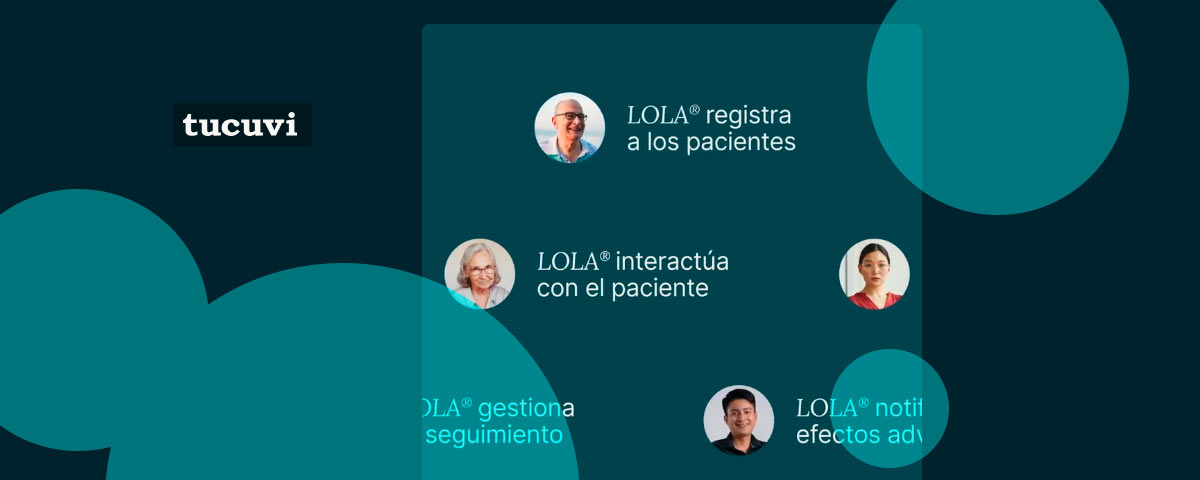
The company’s care management platform automates high-volume workflows from start to finish. It runs on AI agents such as LOLA, a voice-based system that conducts secure phone calls with patients, executes care coordination steps, and escalates to human teams when needed. No theatrics.
Today, Tucuvi supports more than 50 workflows. These range across post-surgical follow-up, discharge management, chronic disease programs, preoperative checks, test preparation, screening, appointment scheduling, and demand management.
The platform manages logic, referrals, documentation, and system integration.
Jacky Abitbol, managing partner at Cathay Innovation, said the firm backed Tucuvi because it combines clinical rigor, regulatory credibility, and real-world scale in one platform. He added that the model lets healthcare organisations deploy autonomous AI with confidence, while protecting safety and care quality.
What convinced us at Cathay Innovation is Tucuvi’s ability to combine clinical rigor, regulatory credibility, and real-world scalability in a single platform.
Jacky Abitbol, Managing Partner at Cathay Innovation
“Its approach allows healthcare organisations to deploy autonomous AI with confidence, freeing up significant capacity for care teams while maintaining the highest levels of safety and quality. We believe Tucuvi is blazing a new trail in how AI can be responsibly integrated into healthcare operations,” said Jacky Abitbol.
Tucuvi says it is the first AI platform to receive European regulatory approval as a Class IIb Software as a Medical Device for both its voice agent and patient management system.
In live deployments, the company reports up to 80% automation of nursing follow-up flows, patient adherence above 90%, and improved outcomes such as a 5.5% drop in COPD readmissions.
With the new funding, Tucuvi plans to expand across Europe and the US, extend its AI capabilities, and keep shaping the platform into an action and intelligence layer for care teams. How fast that scales, honestly, depends on how quickly healthcare systems move from pilots to full adoption.