Follow Beinsure

Insurtech ICEYE, the Synthetic Aperture Radar (SAR) satellite operator known for giving insurers rapid catastrophe intelligence, has launched five more satellites to close stubborn information gaps that slow response and recovery.
The satellites were integrated via Exolaunch and lifted off on 28 November 2025 on SpaceX’s Transporter-15 rideshare from Vandenberg Space Force Base in California.
The company specializes in SAR technology, providing high-resolution Earth observation data for continuous monitoring and disaster management.
ICEYE serves major clients like Swiss Re, Juniper Re, and Insurity, delivering near real-time insights for risk assessment, disaster response, and insurance applications.
With the new hardware in orbit, ICEYE has launched 62 satellites for itself and its customers since 2018 – including 22 in 2025 alone.
According to Beinsure, the company keeps scaling because insurers lean hard on near-real-time imagery when storms or floods hit, and the demand curve isn’t easing.
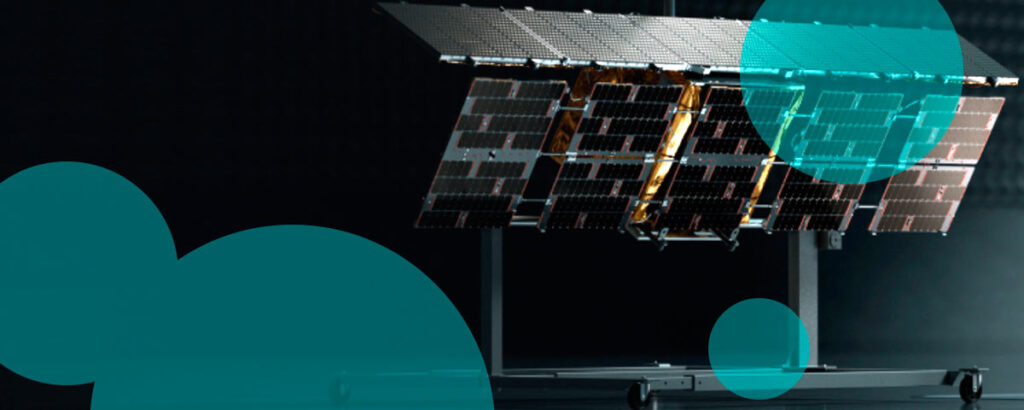
Stephen Lathrope, ICEYE’s SVP, says expanding the constellation raises imaging fidelity and speed, which gives insurers sharper situational awareness when they need it most.
He points out that being able to capture broad areas within hours helps carriers make decisions faster – protect communities, target resources, and push recovery forward instead of waiting for ground assessments that sometimes take days.
Expanding our constellation and elevating our imaging unlocks a new level of catastrophe intelligence, delivering faster, higher-resolution insight that empowers insurers to respond with precision when every moment counts.
Stephen Lathrope, SVP, ICEYE
“By capturing detailed imagery over vast areas within hours, ICEYE is helping close the information gaps that slow decision-making, giving insurers the situational awareness they need to protect communities, target resources, and accelerate recovery,” Stephen Lathrope commented.
The satellites support ICEYE’s commercial constellation and a growing set of national missions. Those include the Greek National Space Program, Poland’s MikroSAR initiative for the armed forces, and BAE Systems’ Azalea constellation.
The mix shows how governments and insurers gravitate to rapid, weather-agnostic SAR imaging as extreme events grow more frequent.
ICEYE says the deployment increases sovereign capabilities, imaging capacity, and resilience for public agencies that rely on reliable, high-fidelity data around the clock.
The company argues the focus stays the same – deliver imagery fast enough and detailed enough that decision-makers can act before damage spirals.
ICEYE has secured an additional $65 mn in its 2024 growth funding round, raising its total capital for the year to $158 mn.
The round included a mix of debt and equity financing, with investments from Solidium Oy, BlackRock, Seraphim, Plio Limited, and Christo Georgiev. Since its founding in 2014, ICEYE has raised over $500 mn to date.
The new funding will accelerate the expansion of ICEYE’s synthetic aperture radar (SAR) satellite constellation and its intelligence, surveillance, and reconnaissance (ISR) systems. These advancements are key to enhancing Earth observation capabilities and catastrophe monitoring solutions.
In June, ICEYE has deployed 6 additional SAR satellites into orbit, bringing its total operational constellation to 54 – currently the largest SAR network in orbit.
The new satellites were launched as part of SpaceX’s Transporter-14 rideshare mission from Vandenberg Space Force Base in California and were integrated via Exolaunch.
Each of the satellites deployed belongs to ICEYE’s 25 cm class collectors, offering the highest imaging fidelity in the SAR industry.
ICEYE’s constellation delivers high-resolution, near-real-time Earth observation data, unaffected by weather or lighting conditions.