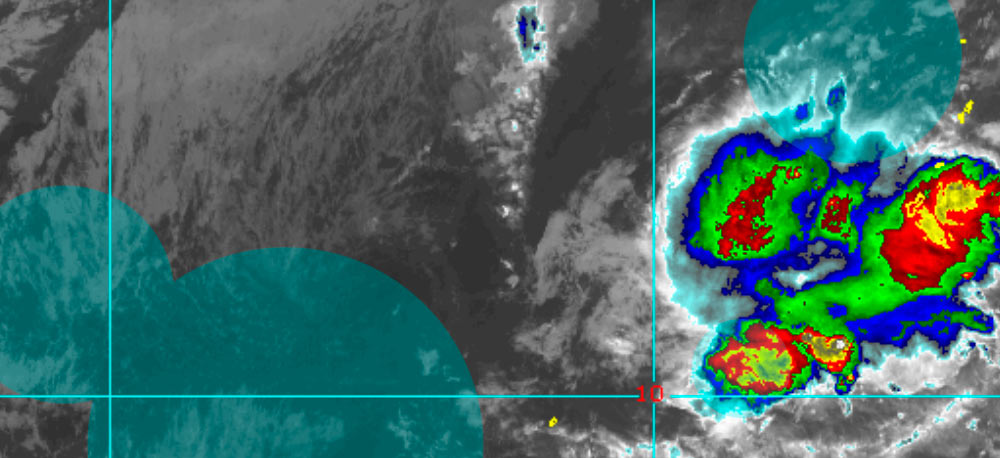
The 2026 Northwest Pacific typhoon season is forecast to run about 60% above its historical average, according to Tropical Storm Risk. The outlook raises catastrophe exposure across major insurance markets in China, Japan, the Philippines and Vietnam.
Tropical Storm Risk expects 20 typhoons during the season, including 13 intense typhoons. The 10-year averages stand at 14.2 typhoons and 8.4 intense systems.
The latest forecast marks an upward revision from outlooks issued in May and July. For insurers and reinsurers, heavier storm activity raises the probability of several loss-producing events landing within one underwriting year.
Cyclone activity had already accelerated by Aug. 1. The Northwest Pacific recorded three Category 5 typhoons by then. Tropical Storm Risk said the early activity supported its expectation for an exceptionally active season.
Typhoon Dolphin dissipated after crossing the Chinese coast over the weekend. Two other named tropical storms remained active across the basin. One was expected to strike Japan, while the US Joint Typhoon Warning Center tracked another tropical depression.
Strengthening El Niño conditions drove much of the forecast revision. Adam Lea, manager at Tropical Storm Risk, said El Niño had already reached strong levels and was expected to intensify during summer and autumn.
El Niño often creates conditions more favorable for tropical cyclone formation across parts of the Northwest Pacific. Tropical Storm Risk also pointed to exceptionally warm Pacific Ocean temperatures. Trade winds had weakened to their lowest level in more than six decades.
Storm totals alone don’t determine insured losses. Tracks, landfall locations and concentrations of insured assets have a much larger effect on claims severity.
Strong typhoons hitting densely populated coastal areas create substantial exposure for property insurers. Business interruption claims often follow, alongside losses across marine and agricultural books.
China, Japan, the Philippines and Vietnam each have major concentrations of population and economic activity in cyclone-exposed regions. Repeated landfalls through the remaining season would increase accumulation across multiple insured portfolios.
The Northwest Pacific typhoon season usually runs between June and October, although tropical cyclones also develop outside those months. With much of the main season still active, insurers remain exposed to further wind damage, flooding and storm surge.
Tropical Storm Risk’s Northwest Pacific outlook differs sharply from its forecast for the Atlantic basin. El Niño is expected to suppress Atlantic hurricane activity through stronger wind shear and drier atmospheric conditions.
The contrast leaves the Northwest Pacific with higher tropical cyclone activity under Tropical Storm Risk’s current seasonal outlooks. For insurers and reinsurers, the remaining months carry elevated catastrophe exposure across several of Asia’s largest insurance markets.
Real-Time Northwest Pacific Ocean Statistics by Storm for 2026
| Name | Dates TC Active | Max Wind (kts) | MSLP (mb) | Named Storm Days | Typhoon Days |
| NOKAEN | 1/16-1/20 | 50 | 992 | 2.50 | 0.00 |
| SINLAKU | 4/9-4/20 | 155 | 896 | 9.50 | 6.25 |
| HAGUPIT | 5/6-5/9 | 40 | 999 | 3.50 | 0.00 |
| JANGMI | 5/28-6/3 | 75 | 973 | 6.25 | 2.00 |
| MEKKHALA | 6/19-6/27 | 125 | 934 | 8.00 | 3.50 |
| HIGOS | 6/23-6/27 | 50 | 989 | 2.75 | 0.00 |
| BAVI | 7/1-7/12 | 155 | 901 | 9.75 | 8.00 |
| MAYSAK | 7/3-7/5 | 50 | 988 | 2.50 | 0.00 |
| NOUL | 7/23-7/26 | 85 | 967 | 2.75 | 1.75 |
| DOLPHIN | 7/27-8/9 | 145 | 915 | 13.50 | 12.25 |
| PEILOU | 8/5-8/11 | 40 | 994 | 2.50 | 0.00 |
| CHAN-HOM | 8/7-8/11 | 50 | 976 | 4.25 | 0.00 |
| FIFTEEN | 8/10-8/10 | 35 | 993 | 0.25 | 0.00 |
| NANGKA | 8/13-8/13 | 35 | 995 | 0.75 | 0.00 |
| SAUDEL | 8/19-9/3 | 115 | 944 | 9.00 | 5.75 |
| NARRA | 8/21-8/25 | 40 | 989 | 3.00 | 0.00 |
| BANG-LANG | 8/27-8/30 | 75 | 970 | 2.50 | 1.25 |
| ETAU | 8/27-8/29 | 45 | 990 | 1.75 | 0.00 |
| KROVANH | 9/1-9/5 | 45 | 982 | 3.75 | 0.00 |
| TWENTY-TH | 9/4-9/4 | 40 | 996 | 0.25 | 0.00 |
| DUJUAN | 9/16-9/18 | 65 | 980 | 2.00 | 0.25 |