- Why Marvell is acquiring Lumentum for $115 bn
- Wall Street analysts assess Marvell’s acquisition strategy
- Why MRVL and LITE stocks fell despite the acquisition premium
- Lumentum earnings support the AI optical connectivity growth outlook
- The $115 bn acquisition creates new risks for Marvell’s valuation
- Marvell vs. Broadcom: The strategic implications for AI infrastructure
- Outlook: What will determine MRVL and LITE prices next?
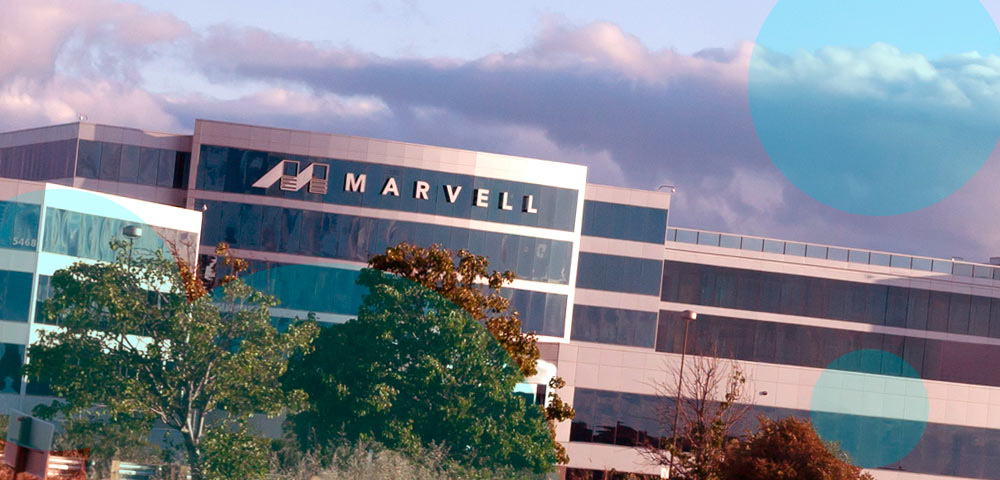
Marvell Technology has agreed to acquire optical components manufacturer Lumentum in a transaction valued at approximately $115 bn, including debt. The deal is one of the largest technology acquisitions of 2026 and represents a major expansion of Marvell’s position in AI infrastructure.
The acquisition combines Marvell’s custom AI processors, networking chips and semiconductor design capabilities with Lumentum’s lasers, photonics and optical connectivity products.
- Marvell is acquiring Lumentum in a $115 bn all-stock transaction, creating a major competitor to Broadcom in AI networking and optical connectivity. The companies expect the deal to close in H1 2028.
- MRVL fell 6.8% to $183.12 and LITE dropped 10.7% to $750.42 in early trading on November 2. The decline reflects concerns over valuation, regulatory approval and the sustainability of AI infrastructure spending.
- Investment banks remain divided. JPMorgan, Bank of America and Jefferies previously issued bullish MRVL price targets, while Goldman Sachs and Morgan Stanley maintained more cautious ratings. The acquisition introduces risks that those earlier forecasts did not fully incorporate.
However, the announcement comes during a broad semiconductor correction. Investors are increasingly concerned about the financing of AI data centers, the return on hyperscaler capital expenditure and valuations that assume sustained high growth.
The immediate reaction was negative for both companies. As of approximately 9:59 a.m. ET on November 2, Marvell traded at $183.12, down 6.8%, while Lumentum traded at $750.42, down 10.7%.
The decline is particularly significant because the acquisition is entirely financed with Marvell shares. A falling MRVL share price automatically reduces the value of the consideration offered to Lumentum investors.
Why Marvell is acquiring Lumentum for $115 bn
The strategic rationale centers on a fundamental change in AI data center architecture. Traditional electrical connections are becoming increasingly difficult to scale as AI clusters grow to hundreds of thousands of processors. Optical connectivity allows data to travel longer distances at higher bandwidths while reducing some of the power and signal-loss constraints associated with copper.
Marvell already develops custom AI accelerators and networking chips for major technology companies. Its customers and partners include Amazon and Google, placing the company in direct competition with Broadcom.
Lumentum supplies the laser and optical technologies needed to connect these systems.
Combining both businesses could allow Marvell to offer a broader range of components used in AI infrastructure, from processors and networking silicon to optical interconnects.
Marvell estimates that the combined company’s total addressable market could reach $550 bn. Management also expects more than $1 bn in annual cost synergies and an improvement in non-GAAP earnings per share during the first year following completion. These figures represent management forecasts, not contracted revenue or realized savings. businesswire.com
The acquisition also follows Marvell’s $3.5 bn purchase of Celestial AI, completed in February 2026. Together, the transactions indicate that Marvell is prioritizing optical technology as a central element of its long-term AI strategy.
The principal strategic advantage is greater control over technologies that determine how quickly processors can exchange data.
The main commercial risk is that Lumentum supplies other semiconductor companies, including potential Marvell competitors.
After the acquisition, those customers could become reluctant to depend on a supplier owned by a competing chip designer.
Wall Street analysts assess Marvell’s acquisition strategy
Investment banks entered November with substantially different expectations for Marvell’s share price.
Before the acquisition announcement, several institutions had increased their targets following Marvell’s October investor presentation and stronger long-term AI revenue projections.
- Bank of America analyst Vivek Arya maintained a bullish view of Marvell, with a reported $400 price target.
- JPMorgan analyst Harlan Sur raised his target to $360 and maintained an Overweight rating.
- Jefferies analyst Blayne Curtis increased his target to $450, reflecting expectations for substantial AI networking growth.
- Morgan Stanley analyst Joseph Moore took a more conservative position, maintaining Equal-Weight while raising his target to $300.
- Goldman Sachs analyst James Schneider maintained a Neutral rating and increased his target to $270.
These targets were published primarily in October and preceded the definitive November 2 merger announcement. They should therefore be treated as reference points for previous institutional expectations, not as updated valuations of the combined company.
Mizuho sees strategic advantages, while Wedbush questions regulatory approval
Mizuho Securities analyst Vijay Rakesh described the combination as a major opportunity to create an integrated optical networking business.
The argument is that control over both networking silicon and optical components could improve Marvell’s competitive position against Broadcom.
However, Wedbush analyst Matt Bryson raised concerns about whether the transaction can secure regulatory approval.
Lumentum currently serves customers that compete with Marvell. Given the limited capacity available for advanced optical components, regulators could examine whether the acquisition would reduce competitors’ access to essential technologies.
China presents another potential obstacle because large semiconductor combinations frequently require approval across multiple jurisdictions.
Wedbush’s concerns suggest that the strategic logic of the acquisition and the probability of completing it should be assessed separately.
Why MRVL and LITE stocks fell despite the acquisition premium
The most important detail is the transaction’s fixed exchange ratio. Under the agreement, Lumentum shareholders will receive 4.5 Marvell shares for every Lumentum share.
The originally announced consideration was approximately $1,132 per LITE share, representing a 23.9% premium to the unaffected October 28 price. However, $1,132 is not a guaranteed cash payment.
At Marvell’s November 2 intraday price of $183.12, the implied consideration falls to: 4.5 × $183.12 = $824.04 per LITE share.
With Lumentum trading at $750.42, the difference is approximately $73.62 per share. That represents an 8.9% discount to the implied stock consideration. This discount is important for understanding LITE’s future price movements.
- If MRVL declines further, the value of the acquisition consideration declines with it.
- If MRVL recovers, Lumentum’s implied acquisition value increases.
The remaining discount also reflects the lengthy closing timetable, potential regulatory intervention and the possibility that the deal does not proceed.
The companies expect completion in H1 2028, meaning investors could face more than a year of uncertainty.
Lumentum earnings support the AI optical connectivity growth outlook
Lumentum’s latest operating performance provides a stronger fundamental argument for the acquisition than the headline $115 bn valuation alone.
The company reported fiscal Q1 2027 revenue of $1.263 bn, an increase of 136.5% from the previous year and 25.5% sequentially.
Non-GAAP operating margin reached 42.3%, compared with 18.7% a year earlier. Adjusted EPS increased to $4.57.
For fiscal Q2 2027, Lumentum expects:
- Revenue of $1.575-$1.625 bn.
- Non-GAAP operating margin of 45%-46%.
- Adjusted EPS of $5.90-$6.20.
The company also disclosed purchase commitments exceeding $5 bn associated with a significant optical connectivity customer program.
These figures demonstrate that demand for advanced optical products is already translating into substantial revenue and margin expansion.
At the midpoint of Q2 guidance, Lumentum would generate approximately $1.6 bn in quarterly revenue. Annualizing that figure produces a revenue run rate of approximately $6.4 bn.
Against the initially announced $115 bn enterprise valuation, the acquisition represents roughly 18 times that annualized quarterly revenue.
This is an illustrative valuation calculation, not a conventional forward EV/sales multiple, because it assumes the projected quarterly revenue rate continues for four quarters.
Even exceptionally strong growth leaves little room for disappointment when the valuation assumes continued expansion over several years.
The $115 bn acquisition creates new risks for Marvell’s valuation
Marvell forecasts fiscal 2031 revenue of $70-$90 bn, supported by custom AI processors, networking chips and high-speed connectivity.
The company expects interconnect revenue alone to contribute approximately $37.5 bn. These projections imply an exceptionally rapid expansion of Marvell’s business.
But three financial questions will determine whether the acquisition ultimately creates shareholder value.
1. Can AI spending support the revenue forecasts?
The largest cloud companies are investing hundreds of billions of dollars in computing infrastructure. However, spending growth is becoming increasingly dependent on cash generation, access to financing and demonstrable returns from AI services.
If hyperscalers moderate their capital expenditure, demand for optical components could remain strong while growing more slowly than currently anticipated. That distinction matters because semiconductor valuations depend heavily on expected growth rates.
A business growing 30% annually can command a substantially higher valuation than the same business growing 15%, even when both remain profitable.
2. Will the acquisition improve margins enough to justify its cost?
Marvell expects more than $1 bn in annual cost synergies. Those savings could improve profitability through overlapping research, procurement, manufacturing and corporate functions.
However, integration expenses, customer retention costs and additional investment in optical manufacturing capacity could offset some benefits.
The company’s expectation of first-year non-GAAP EPS accretion is encouraging, but investors will also need evidence of stronger free cash flow and returns on invested capital.
3. Could competition weaken the combined company’s pricing power?
Broadcom remains a powerful competitor in custom AI processors and networking. Nvidia is also investing heavily in networking and optical connectivity. Meanwhile, Coherent and other optical component manufacturers compete directly with Lumentum.
The acquisition could strengthen Marvell’s product portfolio, but it does not eliminate competition. Customers may also prefer multiple suppliers rather than relying on a single company for critical networking components.
Marvell vs. Broadcom: The strategic implications for AI infrastructure
The acquisition significantly changes Marvell’s competitive position.
Broadcom already combines custom AI accelerators with networking products and has established relationships with major hyperscalers.
Marvell is attempting to develop a similarly broad technology portfolio while adding a stronger position in optical connectivity. The transaction could prove particularly important as AI systems shift toward larger clusters that require more networking bandwidth per processor.
For chipmakers, the potential value of these connections is increasing because improvements in networking efficiency can affect the performance of entire AI clusters. However, the deal also changes Marvell’s investment profile.
Before the acquisition, Marvell offered investors relatively direct exposure to custom AI processors and networking expansion.
After the transaction, its valuation will increasingly reflect acquisition execution, optical manufacturing capacity, integration costs and regulatory approvals.
That increases the number of factors capable of influencing the stock independently of AI semiconductor demand.
Outlook: What will determine MRVL and LITE prices next?
The immediate outlook depends on whether Marvell can stabilize following the initial negative market reaction.
Three developments will be particularly important during the coming quarters.
- First, investors will monitor Marvell’s updated financial guidance and any changes to its long-term revenue projections following the acquisition.
- Second, Lumentum’s quarterly results will need to demonstrate that rapid optical component growth can be maintained without a significant deterioration in margins.
- Third, regulatory developments will influence the discount between LITE’s market price and the value implied by the 4.5-share exchange ratio.
The central investment question is whether Marvell can justify paying a substantial strategic premium for Lumentum while semiconductor valuations are already under pressure.
Lumentum’s earnings suggest that optical connectivity is experiencing genuine demand growth. The uncertainty concerns how much of that growth is already reflected in the acquisition price.
For Marvell, the deal could create a formidable competitor to Broadcom in AI infrastructure. However, the scale of the transaction means that execution risks and valuation discipline will become just as important as revenue growth.
The outlook for both stocks remains closely tied to AI capital expenditure, semiconductor earnings revisions and the probability of completing the acquisition in 2028.