Follow Beinsure
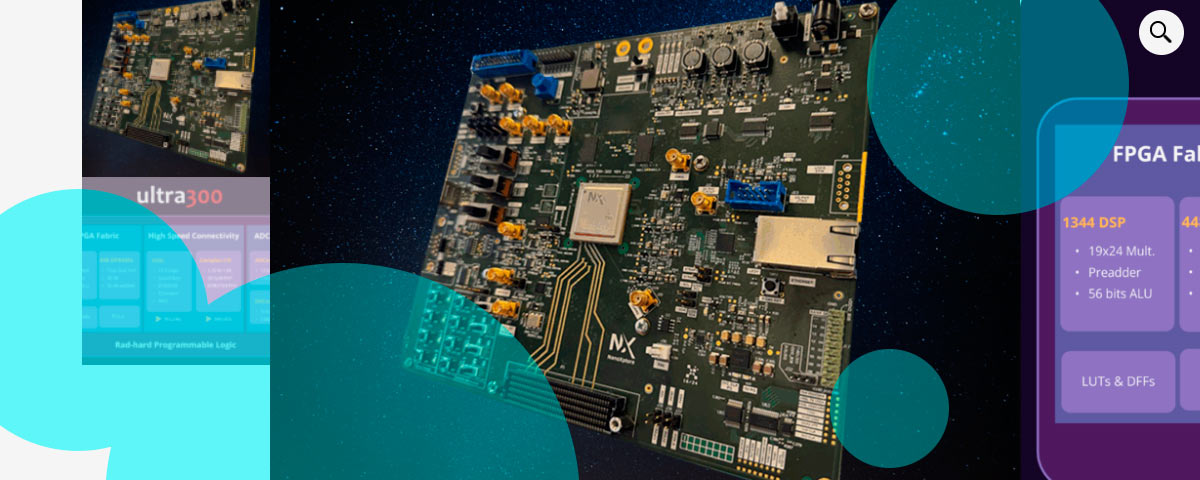
NanoXplore has raised €20 mn to accelerate its move into defence electronics and support external growth across Europe.
The funding targets product development for security-sensitive markets and selective acquisitions, as Europe sharpens its focus on technological autonomy.
The round brings together MBDA and the Defence Innovation Fund managed by Bpifrance. Strategic capital, not financial tourism. The intent is clear.
NanoXplore is a French fabless semiconductor company that designs and supplies radiation-hardened FPGAs, SoC FPGAs, and ASICs for high-reliability markets such as space, defense, avionics, and demanding industrial systems. It positions itself as a strategic European alternative to non-European FPGA vendors, emphasizing technological sovereignty and an ITAR-free supply chain.
NanoXplore’s CEO, Édouard Lepape, said the company has already shown that advanced electronic chips can be designed and produced in Europe.
As an independent French company, we have shown that it is possible to design and produce state-of-the-art advanced electronic chips in Europe.
Édouard Lepape, CEO of NanoXplore
The new funding, he said, pushes that effort further, expanding from space applications into defence-specific products while continuing a targeted acquisition strategy inside Europe. The stated goal is blunt: make NanoXplore a reference point for European electronic sovereignty.
“This funding round will allow us to go further: accelerate our diversification into defence with products specifically designed for these markets, while continuing a strategy of targeted acquisitions in Europe. Our ambition is clear: to make NanoXplore the reference player for European electronic sovereignty,” Édouard Lepape noted.
Founded in 2013, NanoXplore operates as an independent, family-owned fabless IC design house. Its focus sits firmly on radiation-hardened components, paired with a full software stack.
The company designs FPGAs, programmable and reconfigurable chips engineered to operate in extreme conditions, including space and defence environments where failure isn’t tolerated.
The company recently rolled out NG-ULTRA, which it describes as the most advanced rad-hard system-on-chip FPGA currently available. It’s positioned as a step-change product, aimed squarely at high-reliability missions.
Sovereignty sits at the centre of NanoXplore’s positioning. The company says its entire supply chain remains European, including manufacturing.
That makes its products ITAR-free, meaning they fall outside US export control rules tied to defence technologies. For European governments and primes, that detail often outweighs raw performance metrics.
NanoXplore’s chips already fly. The company says its circuits are embedded in major European space programmes, including Galileo and Copernicus, offering a homegrown alternative to non-European components in sensitive systems.
Nicolas Berdou, investment director at Bpifrance’s Defence Innovation Fund, said the deal fits squarely with the fund’s mandate. He pointed to NanoXplore’s control over critical technologies, its ITAR-free supply chain, and its role in strengthening the defence industrial base.
From the fund’s perspective, backing diversification from space into defence and supporting European expansion serves a strategic purpose, not just a financial one.
This equity investment fully aligns with the strategy of the Defence Innovation Fund. NanoXplore embodies exactly what we aim to support: an innovative French SME mastering technologies that are critical to our sovereignty.
Nicolas Berdou, Investment Director of the Defence Innovation Fund at Bpifrance
“Their ‘ITAR-free’ approach with a 100% European supply chain addresses the strategic priorities of our defence technological and industrial base. By supporting the growth of this technology champion we are helping strengthen Europe’s technological autonomy in a sector as sensitive as critical microelectronics,” commented Nicolas Berdou.
NanoXplore’s portfolio centers on SRAM-based FPGAs that are radiation-hardened-by-design (RHBD), meaning mitigation is largely built into the silicon rather than pushed onto the end-user design flow.
Flagship devices include:
- NG-Medium RH: First RHBD SRAM-based FPGA from the company, aimed at space missions.
- Ultra300 RH: Second-generation rad-hard FPGA family.
- NG-Ultra RH: SoC FPGA that combines a rad-hard FPGA fabric with embedded processing, positioned as a leading European rad-hard SoC FPGA.
NanoXplore also offers commercial (non-space-qualified) variants of these families plus embedded FPGA (eFPGA) IP and custom ASIC and SoC design services, especially after acquiring the ASIC activities of Dolphin Design in 2024.
NanoXplore said MBDA adds industrial scale and operational insight into the needs of European armed forces, while Bpifrance anchors the transaction within France’s broader defence and industrial policy. Together, they support a company viewed as a critical supplier in microelectronics.
The €20 mn will fund the development of a new generation of defence-oriented components, including secured FPGAs and ultra-low-power chips, while adapting existing platforms for land, air, and naval systems.
Part of the capital will also support acquisitions, aimed at broadening the product portfolio and tightening Europe’s grip on critical microelectronics capacity.
According to Beinsure analysts, the deal reflects a wider shift. Semiconductor capability is no longer treated as neutral infrastructure. It’s strategic terrain. NanoXplore is building accordingly.