The National Flood Insurance Program provides flood coverage to households and businesses across the United States. Yet the program continues to struggle with persistent debt and funding pressures.
New research co-authored by Upmanu Lall of Arizona State University suggests outdated flood mapping plays a major role in the program’s financial imbalance.
Flood risk maps developed by the Federal Emergency Management Agency rely largely on historical records of river and coastal flooding. Locations with a 1% annual probability of flooding receive a high-risk classification under the system.
According to Lall, the data underlying many of these models fails to capture how extreme weather systems spread across regions.
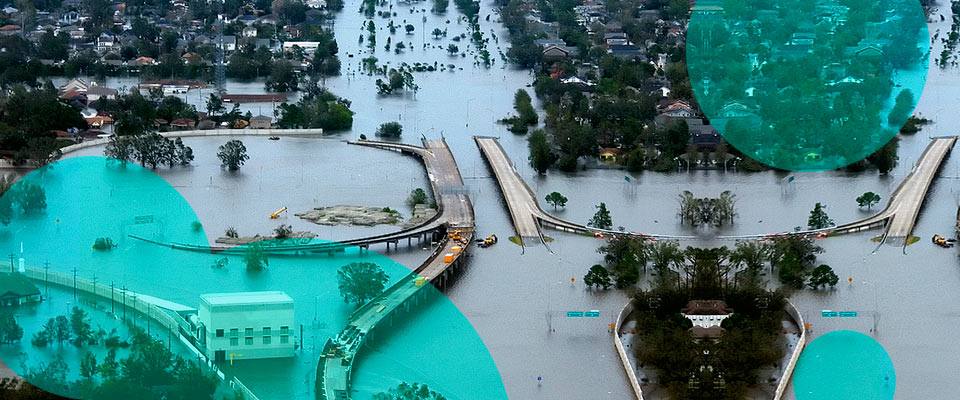
Flood events rarely occur in isolation. Large storm systems often trigger simultaneous flooding across multiple locations.
This pattern produces what researchers describe as hyperclustering. Instead of claims appearing independently across time and geography, multiple payouts occur during the same disaster period.
Such clustering places sudden pressure on the program’s insurance pool. A flood expected statistically once every hundred years in a single location may still follow that probability locally. Yet when many locations flood simultaneously, the financial impact becomes concentrated.
Much of the original infrastructure and modeling for flood protection and insurance systems emerged during the 1950s and 1960s. At that time, available climate and hydrological data remained limited.
According to Beinsure analysts, modern catastrophe modeling increasingly incorporates regional climate correlations and atmospheric dynamics that were absent from early flood mapping frameworks.
The research proposes several policy responses. Regions facing clustered flood risk could issue catastrophe bonds to cover extreme disaster payments.
Updated climate datasets should also inform revised flood maps to improve risk assessment across insurance programs.
Researchers argue that improved modeling would help reduce long-term financial stress on the National Flood Insurance Program while strengthening the accuracy of flood risk pricing.