Follow Beinsure
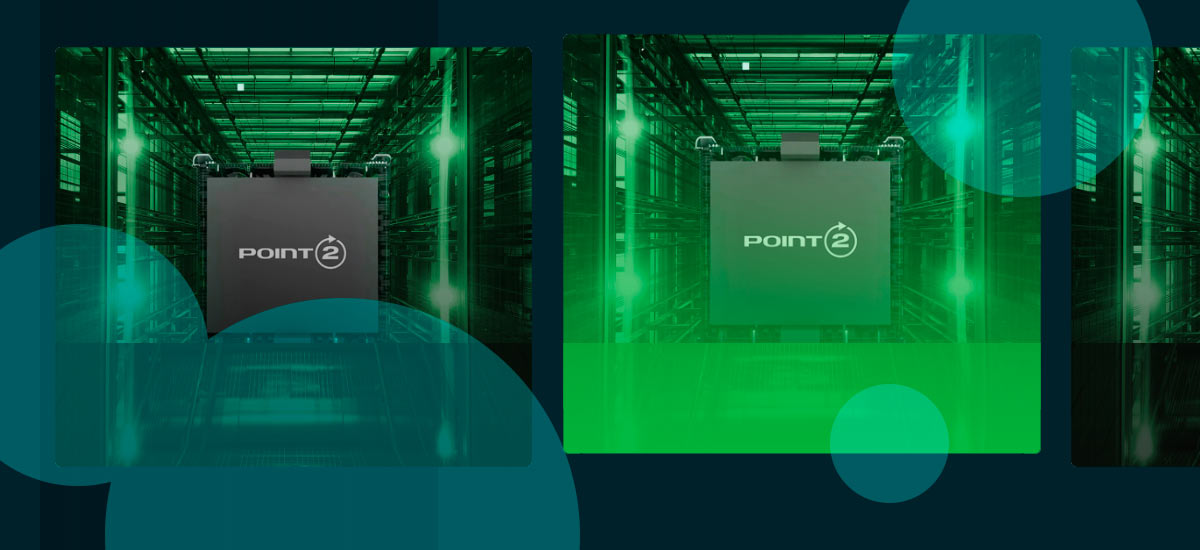
Point2 Technology, a developer of RF-based interconnect systems for AI data center infrastructure, expanded its Series B round to $76 mn. Maverick Silicon led the extension, with participation from NVentures, NVIDIA’s venture capital arm, and UMC Capital.
The company will use the new funding to move faster toward market launch. Its near-term focus sits on development and deployment of the Active RF Cable platform, known as ARC.
Point2 also plans to advance future near-package and co-packaged e-Tube solutions for next-generation rack-scale compute systems.
The company is also hiring across engineering and systems teams as it moves from development toward productization and deployment.
As hyperscalers build larger XPU clusters with tighter coupling, interconnect has started to challenge compute as a system constraint.
Conventional copper links are nearing practical limits at higher data rates. Optical interconnects bring different trade-offs, including power draw, cost, and added system complexity.
Hyperscalers and accelerator vendors now want alternatives with longer reach, higher bandwidth density, stronger energy efficiency, and workable economics at scale.
According to Beinsure analysts, this demand puts interconnect startups closer to the center of AI infrastructure spending, especially as rack-scale designs become more demanding.
Point2’s e-Tube platform uses RF techniques to address scale-up interconnect requirements. The company says the approach gives AI systems the reach, efficiency, and latency profile needed for next-generation architectures.
The investment also follows growing attention around Point2’s e-Tube platform.
The company was named a BloombergNEF Pioneers winner for technologies supporting sustainable, scalable data center infrastructure, adding external validation as it moves toward commercialization.
Sean Park, CEO and co-founder of Point2 Technology, said the company welcomes Maverick Silicon as lead investor and values support from NVentures and UMC Capital. He said interconnect increasingly limits AI system scaling, and Point2’s e-Tube platform uses RF techniques to deliver the reach, efficiency, and latency required for next-generation scale-up architectures.
Andrew Homan, managing partner at Maverick Silicon, said Point2’s RF-based interconnect addresses critical limitations in scaling AI infrastructure. He said the firm supports Point2 as the company moves toward commercialization and wider deployment.
Point2’s e-Tube Technology Platform relies on a patented RF signaling architecture that transmits data over plastic waveguides.
The company says this architecture creates a new category of Active RF Cables for AI and accelerated computing infrastructure.
Kris Peng, president at UMC Capital, said Point2’s approach improves bandwidth density and simplifies cable alignment, which creates new options in data center system design. He said UMC Capital supports the company as it moves toward commercialization and wider ecosystem adoption.
According to Point2, e-Tube offers 10 times the reach of copper, with five times lower weight and two times lower cable volume at comparable cost.
The company also says the platform delivers three times lower power, three times lower cost, and 1,000 times lower latency than optical systems, without reliability issues tied to failing lasers.
The platform targets scalable bandwidth density for accelerator-to-accelerator compute fabric and rack-scale interconnects. Point2 plans form factors across pluggable cables, near-package modules, and co-packaged module solutions.
Point2 develops ultra-low-power, ultra-low-latency RF and mixed-signal interconnect SoCs for high-bandwidth, multi-terabit cable interconnects. Its e-Tube platform aims to move AI data center architecture beyond the limits of copper and optics, especially as future systems require faster links between accelerators.