Follow Beinsure
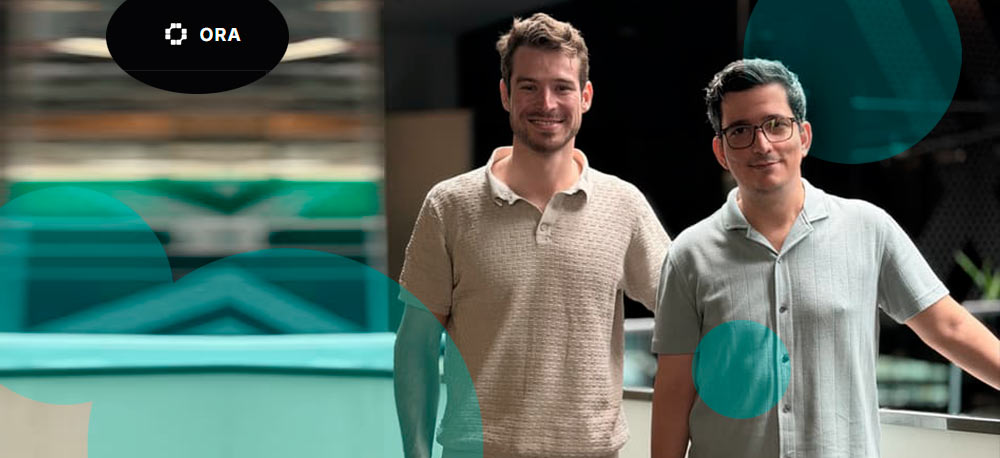
Vienna-based Ora Computing raised €3.5 mn in a Seed round led by Constructor Capital and Greencode Ventures. XISTA Science Ventures, which helped form and launch the company, retained its backing.
The funding will expand the team, bring compression to frontier-scale models, and support a commercial product launch. Ora will sell to cloud inference providers and businesses deploying AI systems.
CEO and co-founder Stefan Sack said massive models aren’t required for useful intelligence. He expects compact models, tuned to specific uses, to drive the next AI adoption cycle.
Ora is building software and algorithms intended to make this shift viable. The company compresses foundation models and aims to retain accuracy.
According to Beinsure, Ora’s €3.5 mn round sits among smaller 2026 European AI deployment financings. Larger raises have financed compute capacity and data-centre construction at companies such as Mistral AI and Nscale, with Verda also receiving capital.
Investment during 2026 has moved into compute construction and efficiency technology. Ora targets lower inference costs and less demanding AI deployments.
Greencode Ventures founder Terhi Vapola said AI power demand is rising faster than infrastructure supply. She said strong compression with limited accuracy loss reduces customer costs and energy use.
Founded in 2024, Ora came from the Serbyn group at the Institute of Science and Technology Austria. Sack and Raimel Medina, the company’s founders, both researched quantum computing there.
Ora says its platform reduces model memory footprints by up to 80%. It claims large AI models run up to four times faster after optimisation.
Smaller models let customers run AI locally on efficient edge equipment instead of cloud infrastructure. Cloud customers gain lower serving costs and higher throughput.
At scale, inference bills reach tens of mn of euros each month. For cars and industrial equipment, full models often exceed local memory capacities.
Lower compute needs also reduce energy use and CO2 emissions, according to Beinsure. Ora estimates annual savings above 50,000 tonnes of CO2 at 1% market penetration.
Existing compression tools often force fixed compression choices. Ora says its approach works across hardware types and fits standard inference frameworks.
It requires neither custom software layers nor capital-intensive retraining. The approach also leaves existing customer infrastructure unchanged during deployment.
Instead of fixed compression tiers, Ora’s algorithm maps model size against accuracy continuously. Companies choose settings according to hardware limits and cost targets.
Ora tested its approach on a 70 bn-parameter model, completing compression within hours. The company reported compute costs below $1,000 for that exercise. Comparable work carries industry costs in the hundreds of thousands of dollars, Ora said.