Follow Beinsure
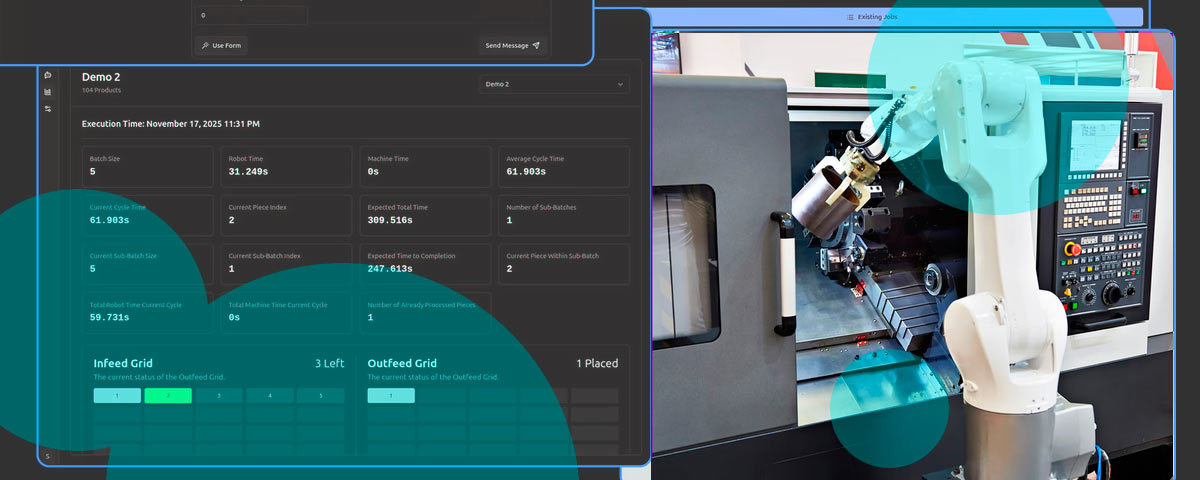
Trener Robotics, headquartered in Norway and the United States, has raised €26 mn in a Series A round to accelerate development of its AI-powered robot skills platform for manufacturing.
Trener Robotics, a private AI and robotics software company building a “physical AI” platform for industrial robots.
It focuses on turning existing factory robots into adaptable, self-learning teammates instead of rigidly programmed machines. The company operates at the intersection of industrial automation, robotics, and foundation-model-style AI.
The round was co-led by Engine Ventures and IAG Capital Partners, with participation from Cadence Design Systems and Geodesic Capital through Nikon’s NFocus Fund.
Additional investors include Shanda Ventures, Emergent Ventures, Fitz Gate Ventures, Techable VC, Radius Capital Ventures, and Raisewell Ventures. Total funding now exceeds €31 mn.
Chief executive and co-founder Asad Tirmizi said industrial robotics has long been constrained by rigid programming and single-purpose automation. The company’s objective is to replace procedural coding with a scalable control system built around reusable, production-ready robot skills.
For decades, industrial robotics has been limited by dynamic complexity, confining millions of robotic arms to repetitive, single-purpose tasks in highly controlled environments
Dr Asad Tirmizi, co-founder and CEO of Trener Robotics
“We’re fundamentally changing this – transforming robots into intelligent, adaptable teammates by replacing procedural programming with a control system that supports a growing library of production-ready skills,” Dr Asad Tirmizi said.
Founded in 2024 by Tirmizi and chief technology officer Lars Tingelstad, Trener Robotics develops Acteris, a robot-agnostic AI skills platform that enables conversational programming and adaptive automation across industrial settings.
Tirmizi previously worked at Vicarious, later acquired by Google, and contributed to robotics initiatives at ByteDance. Tingelstad served as Associate Professor of Robotic Production at Norwegian University of Science and Technology.
Acteris allows operators to describe tasks in natural language, converting conversational input into executable automation workflows.
The platform integrates visual, haptic, language, and action data to enable robots to adapt in real time to variable parts and unstructured environments.
The system integrates with major robotics brands including ABB, Universal Robots, and FANUC. In 2025, the company collaborated with more than 15 integration and solutions partners across Europe and the United States.
The flexible automation market is growing at 14.3% CAGR, driven by labour shortages, high-mix production requirements, and cost pressures pushing manufacturers toward adaptive systems with faster return profiles.
- Last Fall, Trener Robotics won the prestigious Machine Tool Innovation Award at the world’s largest Machining Tradeshow (EMO Hannover) in recognition of its groundbreaking approach to robotics. This award highlights the industry’s shift away from complex, code-heavy programming toward an AI-driven model like Trener Robotics platform, where robots can learn, adapt, and perform complex tasks with human-like intuition.
- In late 2024, Trener Robotics was selected as the winner in the ABB AI Startup Challenge, which accelerates the robotics and AI industries by seeking innovation across the three key areas of natural language programming, skill learning, and autonomous decision-making.
Trener Robotics positions Acteris as an intelligence layer for industrial automation, enabling manufacturers and system integrators to deploy adaptable AI skills across diverse production environments.
Investors said the company’s rapid scaling since its seed round demonstrates traction in a segment increasingly focused on adaptive control systems rather than fixed-function robotics.