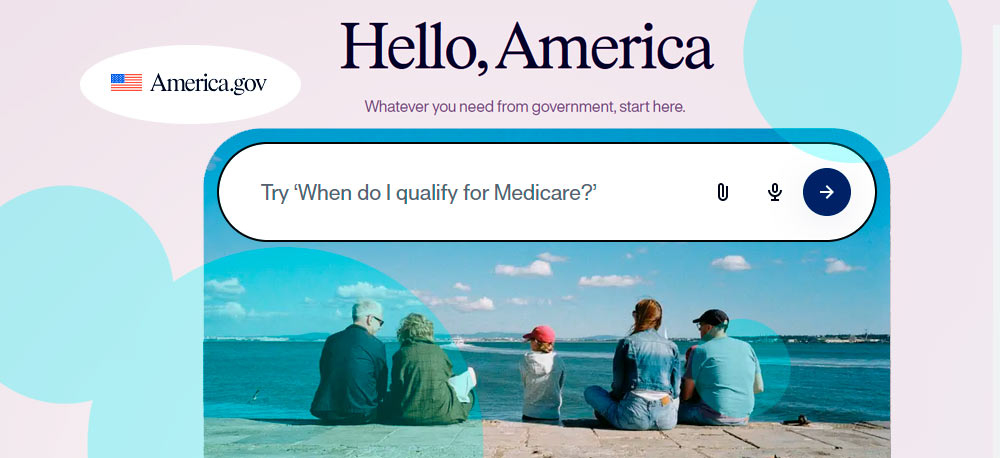
President Donald Trump launched America.gov on Sept. 29, introducing an AI-powered federal government website designed to help Americans access public information and services through a single online portal. Google is a technology partner in the initiative, contributing its Gemini AI technology to a platform intended to simplify interactions with federal agencies.
The website allows users to ask questions in natural language and receive answers drawn from official government sources.
Initial functionality focuses on finding information about services such as Medicare enrollment, passport renewals, federal employment and disaster assistance, while more advanced capabilities are planned for 2027.
Jim Kelly, vice president of Federal at Google Public Sector, said the company expects its involvement to help more than 100 mn people access public resources more efficiently. Google described America.gov as a centralized entry point intended to reduce the time Americans spend searching multiple government websites.
The platform also uses Grok technology from SpaceXAI. Joe Gebbia, Airbnb co-founder and head of the government’s National Design Studio, led the design effort and described the service as a digital assistant for navigating federal programs.
America.gov uses AI to search government services
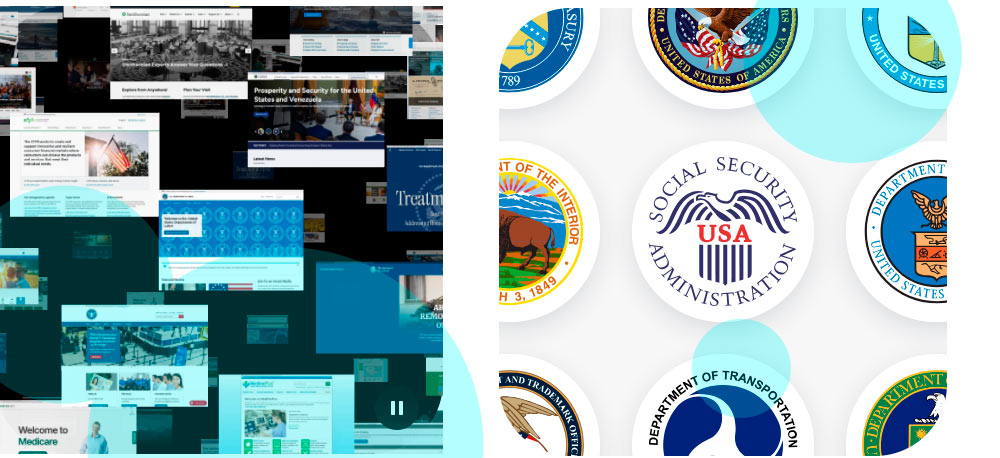
The initial version of America.gov operates primarily as a conversational search service. Users enter questions about federal programs, eligibility requirements or administrative procedures, and the system generates answers using information published by government agencies.
The platform provides links to the original government sources, allowing users to examine the information behind each response. Its design is intended to replace repeated searches across separate agency websites with a single interface.
For example, someone asking about Medicare enrollment receives information about the application process and the steps required. A person preparing to renew a passport receives instructions about documentation and procedures, although the website does not yet complete those transactions.
Federal job applications are another proposed use. Officials demonstrated how applicants would eventually upload resumes and complete employment-related steps through the platform instead of moving between separate government systems.
The administration says the broader objective is to connect services currently distributed across thousands of federal websites and online forms.
Trump described the initiative during its Washington launch as an attempt to give citizens one point of access for questions about government services.
Passport renewals and Medicare enrollment planned for 2027
The distinction between the current website and its planned capabilities is substantial. At launch, America.gov primarily provides answers and instructions rather than completing government transactions on behalf of users.
Officials outlined a second stage in which the platform would process forms, applications and renewals through conversational interactions. The administration’s presentations placed those more advanced services in early 2027, although a White House fact sheet referred to some transactional features becoming available later in 2026.
Secretary of State Marco Rubio demonstrated a proposed passport renewal process involving submission of personal information, uploading a photograph and tracking the application through approval and delivery.
The same approach is planned for Medicare enrollment and other federal services. Whether those functions become available across agencies on the proposed schedule will depend on the technical work required to connect existing systems.
The executive order establishing America.gov directs federal agencies to integrate qualifying digital services with the new platform. It assigns implementation responsibilities to the General Services Administration, the National Design Studio and the Office of Management and Budget.
Under the order, covered services generally include public-facing federal programs serving more than 100,000 users annually that already offer online access. IRS tax filing services and certain national security functions are excluded.
The order also requires integration with Login.gov for authentication and directs agencies to make existing digital interfaces and forms accessible through America.gov where appropriate.
Google Gemini supports federal digital modernization
Google’s participation extends its work with federal agencies through Google Public Sector. The company provides cloud infrastructure and AI technology to government organizations and has separately expanded access to Gemini through federal procurement agreements.
America.gov applies conversational AI to information retrieval across government services. Google said its involvement supports the administration’s objective of making routine public services easier to access.
SpaceXAI’s Grok is also involved in the project, giving the federal platform technology from more than one AI provider. The administration has not fully explained how individual requests are distributed between the models or how their outputs are evaluated before reaching users.
Privacy and security are part of the website’s stated design requirements. Trump said during the launch that conversations would disappear after users leave and that personal information would not be retained.
The White House order calls for data minimization, secure authentication and restrictions on access to government records. It also says agencies must retain control of their existing information systems and statutory responsibilities rather than transferring all federal records into one central database.
Those requirements will become more significant when the platform starts handling personal information for applications and renewals. Its current search functionality involves different data security considerations from processing authenticated government transactions.
Trump signs voluntary AI safety agreement with technology companies
The America.gov launch coincided with a separate White House meeting involving executives from several major AI companies.
Trump announced a voluntary agreement intended to establish safety practices for advanced AI systems. Executives associated with Google, OpenAI, Anthropic, Meta, Nvidia and xAI participated in the initiative.
The agreement calls for companies developing advanced AI models to maintain internal controls, conduct risk assessments and arrange external reviews of their systems. It also addresses preventing AI tools from accessing or interfering with technical systems in unintended ways.
Trump described the commitments as morally binding. The agreement reported by Reuters relies primarily on measures adopted by participating companies rather than a new federal enforcement framework.
Anthropic CEO Dario Amodei said the agreement was intended to give the public greater confidence in the behaviour of advanced systems. Nvidia CEO Jensen Huang discussed the need to develop safety technology alongside increasingly capable AI models.
Trump also raised the possibility of establishing a committee of approximately 10 people to examine AI safety and said he expected to appoint a federal official to coordinate the administration’s AI initiatives.
The voluntary approach has drawn criticism from lawmakers seeking stronger government oversight. Democratic Sen. Mark Warner questioned whether company-led commitments would adequately address risks associated with increasingly capable AI systems.
White House adopts super intelligence terminology
Alongside the portal launch and industry agreement, Trump signed an executive order introducing the term Super Intelligence for federal government use.
The order directs agencies to adopt the terminology and calls for proposed legislation establishing a federal definition of Super Intelligence, abbreviated SI. Officials must examine how the definition would relate to existing statutory references to artificial intelligence.
The terminology change does not itself introduce additional technical protections for AI systems. It is part of the administration’s broader approach to presenting the technology as a driver of economic growth and public-sector modernization.
America.gov provides an immediate example of that approach, although its most ambitious capabilities remain under development.
The current service answers questions using government information, while the planned expansion would allow citizens to complete administrative transactions without visiting multiple agency websites.
The next stage will depend on agency integration, authentication systems and the ability to process applications while preserving existing privacy requirements. Those operational changes will determine how much of the proposed government services platform becomes available during 2027.