Overview
Major U.S. investment banks reported mixed third-quarter 2026 earnings, with equity trading, fixed-income performance and investment banking activity driving differences in profitability.
- Goldman Sachs reported Q3 2026 net income of $5.29 bn, up 29%, as equities trading revenue surged 72% to $6.44 bn, offsetting weaker fixed-income performance.
- JPMorgan Chase earned $15.3 bn, up 6% but below the $16.3 bn analyst forecast, with fixed-income trading revenue declining 4%. Citigroup reported a 40% increase in quarterly profit.
- Citigroup delivered a different trading performance, reporting a 40% year-over-year increase in quarterly profit.
- Wall Street executives remain positive about U.S. consumer spending and business investment but warned that higher interest rates, inflation, geopolitical uncertainty and credit risks could affect future performance.
Goldman Sachs sees strong equity financing demand and AI infrastructure risks
Goldman Sachs chief financial officer Denis Coleman said demand for equity financing continues to exceed the banking industry’s available capacity. The imbalance has supported favorable pricing and allowed Goldman to remain selective when committing capital.
Coleman also described the bank’s investment banking backlog as substantial following another strong quarter of activity.
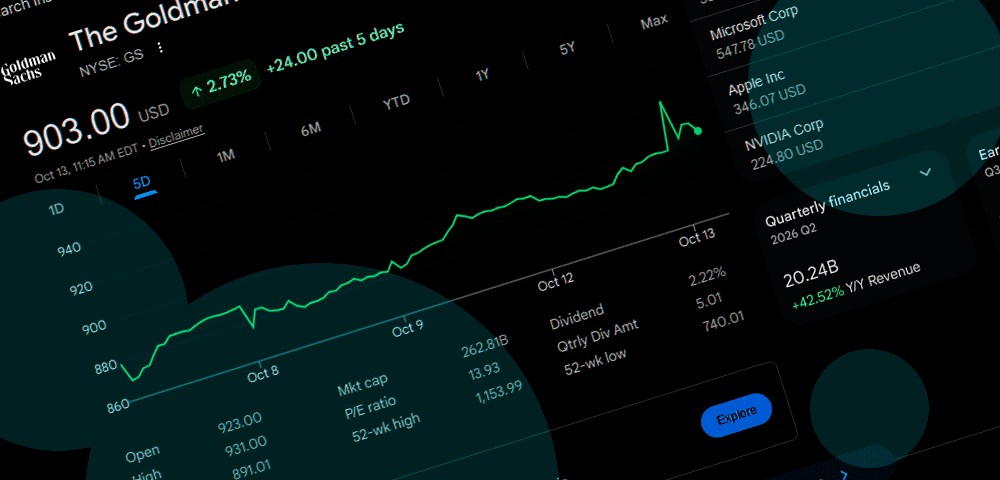
Goldman Sachs generated $5.29 bn in net income for the three months ended September 30, 2026, supported by a 72% year-over-year increase in equities trading revenue to $6.44 bn. The result exceeded analyst expectations and helped Goldman outperform several major competitors reporting earnings on October 13.
Chief executive David Solomon identified geopolitical uncertainty and political opposition to data center development as potential constraints on infrastructure investment (see TOP 50 Largest Banks by Assets and Deposits in the U.S.).
Greater volatility in interest rates could affect the economics of AI-related projects, while decisions by state and local authorities following the November elections may influence the pace of construction.
Solomon also addressed speculation over Goldman’s leadership succession following reports that chief operating officer John Waldron could eventually replace him. He said no formal leadership transition or succession timetable was underway.
Fixed-income, currencies and commodities (FICC) revenue fell 1% to $3.47 bn, missing forecasts as credit, mortgage and interest-rate trading weakened.
Equities revenue also declined from the record $7.42 bn reported in the second quarter, although the business remained a significant contributor to Goldman’s profitability.
The bank’s investment banking division generated $3.22 bn in fees, up 21% year over year, supported by advisory and underwriting activity. Total quarterly revenue increased 23% to $18.68 bn.
JPMorgan earnings miss forecasts as bond trading slows
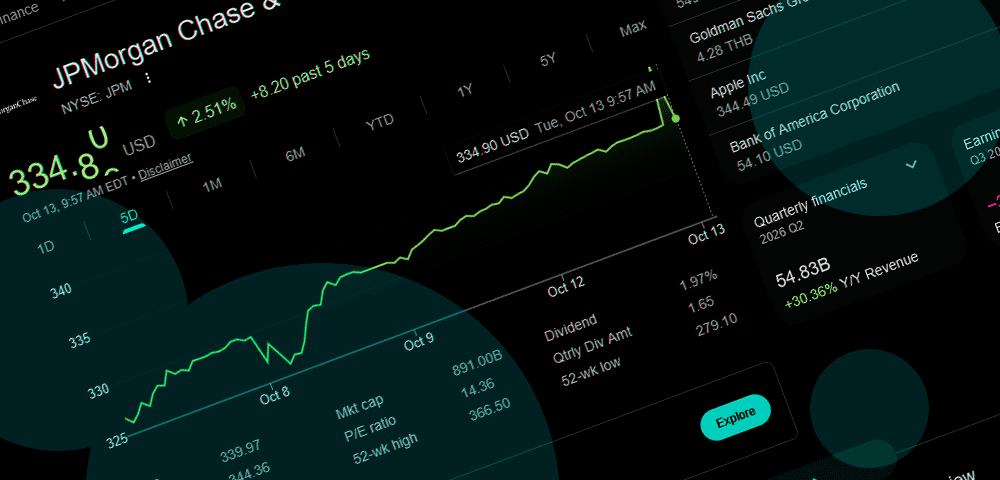
JPMorgan Chase reported third-quarter net income of $15.3 bn, compared with $14.4 bn a year earlier, representing growth of approximately 6%. The result fell short of analysts’ $16.3 bn forecast as fixed-income trading revenue declined 4% to $5.4 bn.
Equities trading provided some support, with revenue increasing 49% to approximately $5 bn, driven by prime brokerage and derivatives activity.
Chief executive Jamie Dimon expressed confidence in the current operating environment but warned that favorable conditions could change. He identified the possibility of further increases in interest rates as a significant risk, explaining that a rise from 5% to 6% would place greater pressure on borrowers than an increase from 4% to 5%.
Dimon also indicated that JPMorgan was tightening lending standards in response to weaker loan covenants, greater use of payment-in-kind interest and increasingly aggressive financing structures.
Higher refinancing costs and potentially wider credit spreads could create additional difficulties for companies and consumers.
The bank reduced share repurchases to $664 mn during the quarter, down from more than $6 bn in the preceding three months. Dimon said JPMorgan sees opportunities to deploy its approximately $30 bn in excess capital at attractive returns rather than prioritize buybacks.
Citigroup profit rises 40% as fixed-income revenue increases
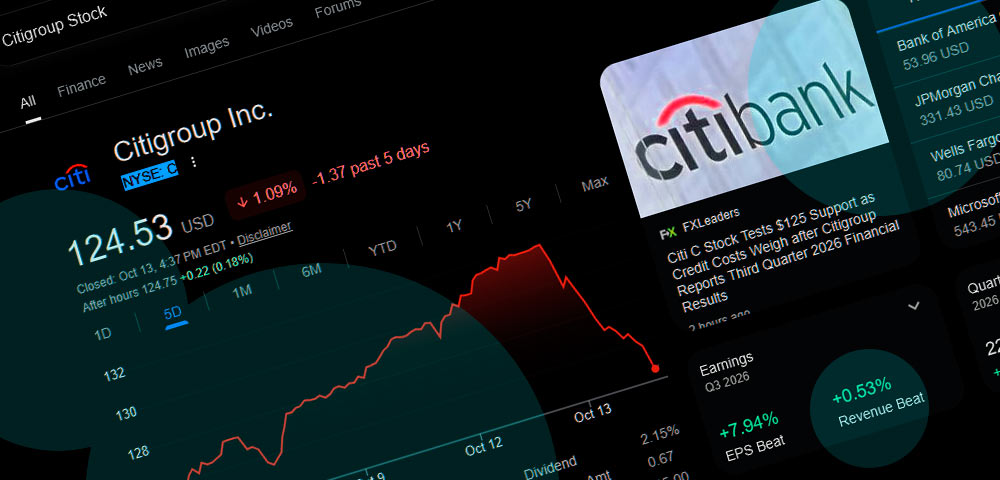
Citigroup delivered a different trading performance, reporting a 40% year-over-year increase in quarterly profit. Its fixed-income trading revenue rose 4% to $4.4 bn, contrasting with declines at Goldman Sachs and JPMorgan. Citigroup’s results also benefited from investment banking, services and wealth management activity.
Despite differences in trading performance, senior executives across the industry described U.S. consumer spending as relatively resilient.
JPMorgan chief financial officer Jeremy Barnum said underlying consumer spending remained strong, even after accounting for increased expenditure on gasoline. He also reported limited evidence of material deterioration in consumer credit quality.
Wells Fargo chief executive Charlie Scharf similarly pointed to continued consumer spending, high employment and wage growth.
He identified investment in AI infrastructure as another source of economic support, although persistent inflation, elevated oil prices and higher interest rates remain potential threats.
The quarterly results demonstrate how differently Wall Street banks are benefiting from current market conditions. Strong equity trading and financing demand supported Goldman Sachs, while JPMorgan’s fixed-income weakness contributed to an earnings miss and Citigroup benefited from stronger bond trading.
Bank of America and Morgan Stanley are scheduled to report third-quarter results on October 14, providing further evidence of whether the slowdown in fixed-income activity is affecting the broader investment banking industry.