Overview
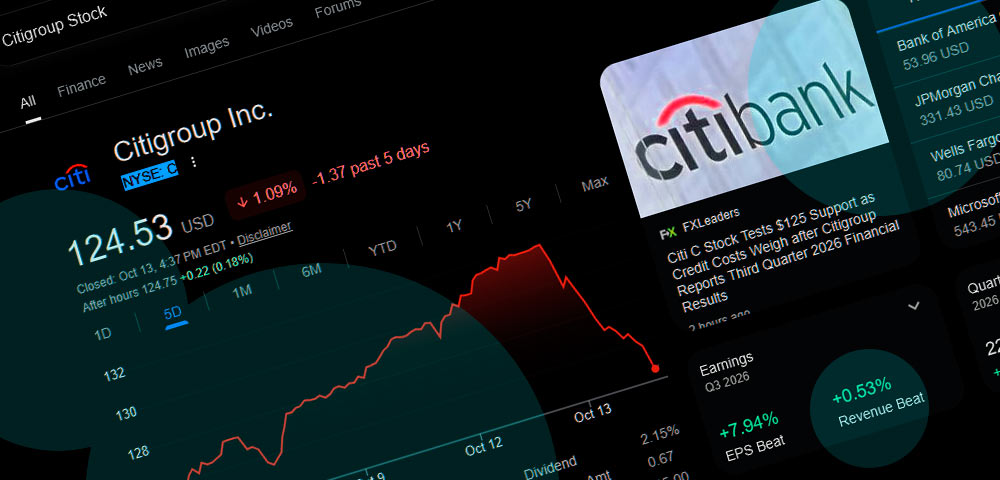
Citigroup (NYSE: C) shares declined sharply on October 13, 2026, despite the bank reporting better-than-expected third-quarter earnings, stronger revenue and continued progress toward its profitability targets.
The stock fell approximately 5.6% after closing the previous session at $131.92. Investors appeared more concerned about slowing trading activity, credit costs and the sustainability of earnings growth than the headline profit increase.
- Citigroup reported Q3 2026 net income of $5.2 bn, up 40%, with EPS of $2.85 beating Wall Street’s $2.66 forecast. Revenue increased 8% to $23.85 bn, its strongest third-quarter result in a decade.
- Citigroup shares fell approximately 5.6% on October 13 despite the earnings beat. The average 12-month analyst price target stands at $152.19, with individual forecasts ranging from $130 to $170.
- Return on tangible common equity reached 11.5%, while Citi returned $4.1 bn to shareholders. Regulatory remediation, operating expenses and weaker trading activity remain important risks to its valuation.
Citigroup reported Q3 revenue of $23.85 bn, up 8% year over year and above analysts’ expectations of approximately $23.7 bn. Net income increased 40% to $5.25 bn, while diluted earnings per share rose to $2.85, exceeding the $2.66 consensus forecast.
The year-over-year profit comparison benefited partly from a $714 mn after-tax goodwill impairment related to Banamex recorded in Q3 2025. Excluding that charge, earnings per share increased 27%.
Citigroup stock price targets and Wall Street forecasts
Analyst sentiment remains predominantly positive following Citi’s recent financial performance. According to S&P Global consensus data covering 23 analysts, Citigroup has an average 12-month price target of $152.19, with a median forecast of $154. Targets range from $130 to $170.
The average represents approximately 22% potential appreciation from the stock’s level following the October 13 decline, although the forecasts were not all revised after the earnings release.
Recent analyst assessments include JPMorgan’s $147 target, maintained with an Overweight rating in early October, and TD Cowen’s $150 target with a Buy recommendation.
UBS reduced its target to $139 on October 5 and retained a Neutral rating. HSBC initiated coverage in September with a Buy recommendation and a $164 target.
Earlier forecasts were more optimistic in some cases. Wells Fargo raised its target to $165 in June, while Truist increased its forecast to $158. Both firms maintained positive ratings, citing Citi’s improving profitability and prospects for stronger earnings.
These estimates reflect different expectations for the bank’s restructuring, capital efficiency and sustainable return on tangible common equity.
Q3 earnings show growth but also pressure on margins
Citi’s Services division remained a major earnings contributor, with revenue increasing 15% year over year. Wealth revenue also rose 15%, supported by growth across its businesses and higher client assets.
Markets revenue increased 6% to $6.1 bn, including 14% growth in equities and 4% in fixed income. Yet Markets revenue declined 13% from the second quarter, indicating that the exceptional trading conditions earlier in 2026 were moderating.
Investment banking revenue grew 9% year over year to approximately $1.35 bn but fell 13% sequentially as underwriting activity slowed.
Operating expenses declined 2% on a reported basis to $13.95 bn. Excluding the prior-year goodwill impairment, however, expenses increased 3%. That distinction matters because Citi’s long-term valuation depends partly on achieving lasting efficiency improvements.
The bank’s provision for credit losses rose 6% to $2.59 bn. Higher consumer credit costs and the possibility of further reserve increases remain concerns if interest rates and inflation continue to pressure borrowers.
Citi reported a return on tangible common equity (RoTCE) of 11.5%, compared with 13% in the preceding quarter. Management expects full-year returns to exceed 11% and is targeting 11%–13% in 2027–2028, followed by 14%–15% over the longer term.
Regulatory relief and buybacks could support Citi shares
Citigroup has continued spending on improvements to risk management, internal controls and data systems required under regulatory consent orders issued in 2020.
Management previously indicated that approximately 90% of remediation work had been completed, although regulatory termination of the orders has not been confirmed.
Removing those restrictions could eventually allow the bank to redirect resources toward growth and reduce transformation-related expenses. Regulatory approval and the timing of any potential relief remain uncertain.
Citi returned $4.1 bn to shareholders through dividends and repurchases during Q3, bringing cumulative share buybacks in 2026 to approximately $13.3 bn. Its Common Equity Tier 1 capital ratio remained at 12.8%, while tangible book value per share increased to $101.59.
At a share price around $124.50, Citigroup trades at approximately 1.23 times tangible book value. This valuation leaves scope for appreciation if profitability improves, although it also reflects expectations that restructuring will produce sustained returns.
The remaining divestment of Banamex is another factor. Citi expects to remove the Mexican banking business from its consolidated balance sheet in 2027, with the transaction potentially generating a substantial currency translation adjustment in reported earnings.
Citigroup stock outlook: Key levels and risks
The short-term technical picture weakened following the October 13 selloff.
Reuters technical analysis identified $124–$125.50 as an important support area. A sustained decline below that range could expose the stock to further selling toward approximately $120, with additional downside levels around $106.50.
A recovery above $135–$136 would provide stronger evidence that the recent correction is ending.
For longer-term investors, the main considerations are whether Citi can maintain RoTCE above 11%, reduce recurring operating costs and sustain earnings growth across Services, Wealth and Banking without relying excessively on trading revenue.
The analyst consensus target of $152.19 suggests potential upside over the next 12 months, but achieving it will require further improvement in profitability and confidence that the bank’s regulatory and restructuring expenses are declining.
Citigroup’s third-quarter results demonstrate progress in revenue growth and capital returns. The share price reaction shows that investors are demanding clearer evidence of sustainable earnings improvement before assigning the stock a higher valuation.