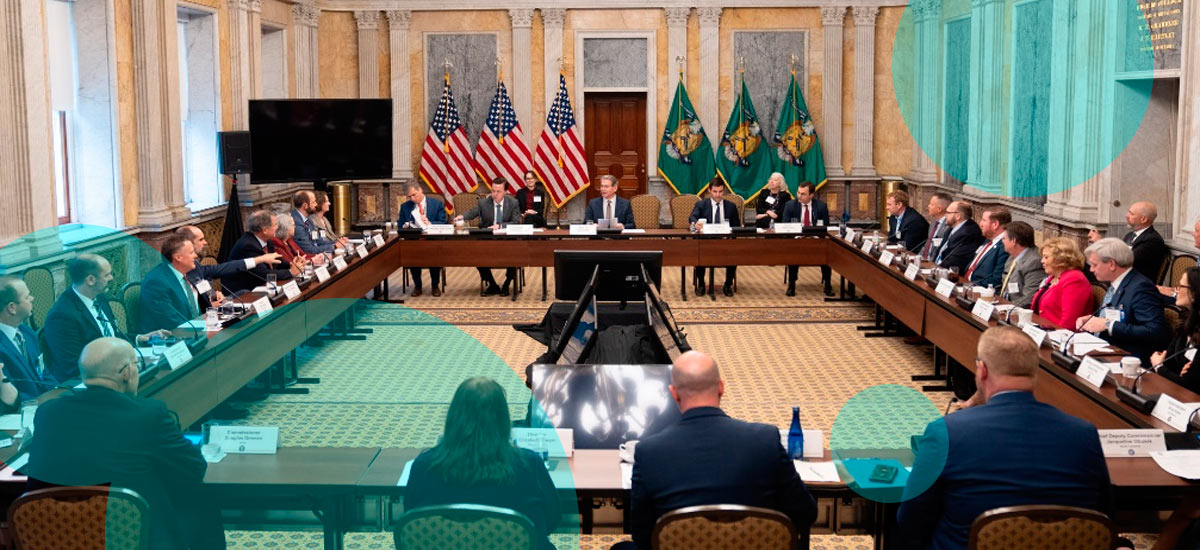
US Treasury Secretary Scott Bessent met with state insurance commissioners and the National Association of Insurance Commissioners on May 7, 2026, to discuss private credit and its growing role in the insurance sector.
The meeting focused on the US life insurance market, where private credit has become a larger part of asset management and capital strategy.
Regulators also discussed the movement of US life and annuity reserves to offshore jurisdictions, a topic drawing more scrutiny as insurers use reinsurance structures to manage capital and returns.
The Treasury said Bessent called for regulation that fits the market, supports innovation, and manages risk. That balance sits at the centre of the private credit debate. Insurers want access to higher-yielding assets, while regulators want clearer visibility into asset quality, valuation, liquidity, and counterparty exposure.
State insurance commissioners and the NAIC discussed their regulatory responses, including work tied to risk-based capital, private letter ratings, offshore reinsurance jurisdictions, and oversight of changing insurer business models.
According to Beinsure analysts, the meeting signals deeper federal attention to a market still regulated mainly at the state level. Private credit isn’t new, but its scale inside life and annuity balance sheets has changed the risk conversation.
The NAIC’s work on risk-based capital matters because capital rules help determine how much cushion insurers must hold against different assets.
Private letter ratings have also become a concern because they influence capital treatment but often give regulators and investors less public information than broadly published credit ratings.
Offshore reinsurance adds another layer. Life insurers have increasingly shifted blocks of annuity and life reserves to offshore jurisdictions, often as part of capital-management or asset-management arrangements.
Regulators want to know whether those structures keep policyholder protections intact. No one wants a hidden risk loop sitting behind retirement products.
Treasury and state insurance regulators agreed to keep staff-level and senior-level talks going. The next phase will likely centre on how regulators assess private credit exposure, offshore reinsurance counterparties, and new life insurer operating models without cutting off capital sources insurers now rely on.