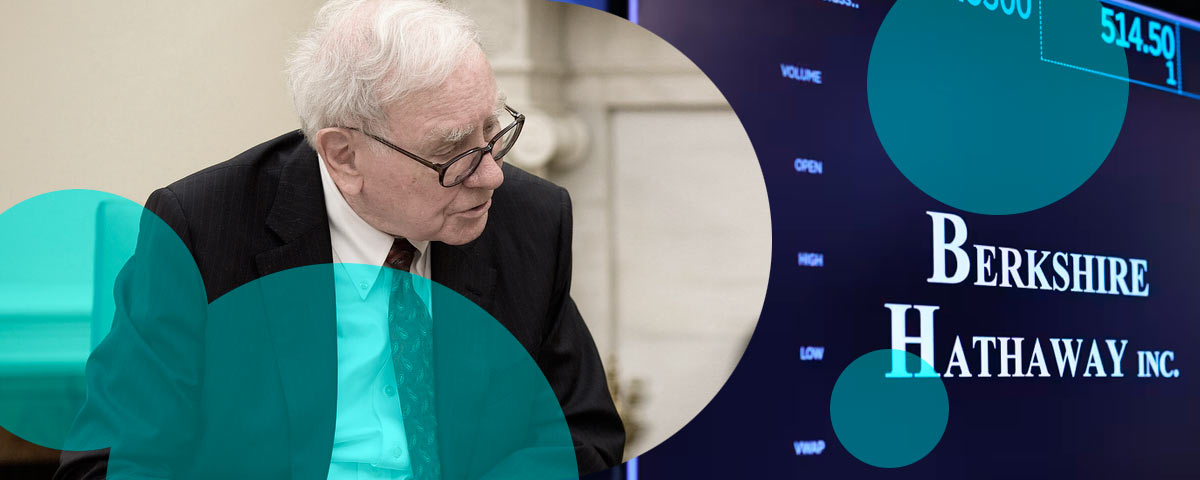
Warren Buffett, an American investor, the “Oracle of Omaha” – business leader, and philanthropist, best known as chairman, officially stepped down as CEO of Berkshire Hathaway, ending a run that reshaped modern insurance economics, and handing the reins of the multinational conglomerate to his hand-picked successor, Greg Abel.
Abel, 63, is taking the helm of Berkshire after Buffett, 95, spent six decades transforming a struggling textile manufacturer into one of the world’s most successful companies.
As the new CEO, Abel will be tasked with upholding Berkshire’s decentralized model while guiding it into a new era of growth.
In recent years, that growth has slowed as the company has ballooned in size, making it harder to find large, meaningful acquisition targets.
What began with an $8.6 mn insurance acquisition in 1967 now sits inside a conglomerate holding more than $1 tn in net non-banking assets.
His influence across insurance has been hard to miss. Berkshire controls roughly 90 insurers, including GEICO, Alleghany, General Re, National Indemnity and Berkshire Hathaway Guard, along with Specialty and Life Insurance of Nebraska. Outside homeowners, it’s difficult to find a major insurance line where Berkshire doesn’t matter.
Buffett’s imprint isn’t limited to balance sheets. Half a century ago, he introduced the term social inflation, describing it as society’s expanding view of what insurance should cover.
He blamed that shift for rising claims costs as early as 1978. The phrase stuck. It still rattles underwriters today.
He’s also been blunt about climate risk. After the 2025 Los Angeles wildfires generated an estimated $1.3 bn loss for Berkshire, Buffett said the company wasn’t fazed by growing loss payments.
Pricing, he argued, must absorb reality, surprises included. Climate change, in his words, may already have announced itself. Worse losses will come. Maybe more than one in a year.
In what became his final annual shareholder letter in February 2025, Buffett returned to a familiar theme. Pricing P&C insurance, he said, blends art with science.
Berkshire, he argued earlier, built insurance operations capable of handling catastrophes in ways others can’t easily copy. Replicating the structure would be almost impossible. He said that years ago. He hasn’t softened since.
The company still carries a cost advantage that Buffett calls material and enduring. A big reason sits in reinsurance independence.
Financially and psychologically, Berkshire can absorb extreme losses without blinking, at least in his telling. Operating insurance units today hold Best’s Financial Strength Ratings between A++ and A-.
Insurance float always fascinated him. Premiums collected upfront, paid later, invested in between. Buffett talked about it endlessly and taught generations of investors why it mattered. He also dispensed business and life advice with self-deprecation and jokes that usually landed.
He isn’t leaving entirely. Buffett remains chairman, stepping aside as CEO after decades spent building Berkshire alongside his late friend and vice chairman, Charlie Munger. The new CEO will be Greg Abel, currently vice chairman overseeing non-insurance operations.
Buffett often called GEICO his first business love. It wasn’t Berkshire’s first insurer. That distinction belongs to National Indemnity and sister company National Fire and Marine Insurance, bought in 1967 for about $8.6 mn.
That first year, they wrote $22 mn in premiums. By the late 1970s, premiums reached $151 mn, driven largely by reinsurance, liability lines, aggressive marketing, five new company launches, and three cash acquisitions.
He never pretended the ride was smooth. During Berkshire’s first decade in insurance, Buffett admitted to serious errors in products and people.
Missteps cropped up in surety, urban auto marketing in Miami, aviation fronting, and California workers’ compensation. Still, he found comfort in a business where mistakes didn’t always doom overall performance.
Another reckoning came later. In 2010, General Re agreed to pay $92.2 mn and dissolve a Dublin subsidiary to settle federal charges tied to sham finite reinsurance contracts with American International Group and Prudential’s former P&C unit.
AIG paid $800 mn to settle related securities fraud and accounting charges. Its former chairman, Maurice “Hank” Greenberg, and former CFO Howard Smith also paid penalties.
Greenberg, now 100, entered insurance in 1952 and remains honorary chairman of C.V. Starr & Co., now led by his son Jeff Greenberg. Another long-running insurance lineage sits at Mercury General, founded in 1961 by George Joseph, still chairman at 104, with his son Victor serving as president and COO.
Buffett’s first brush with insurance came even earlier, in 1951. As a Columbia student, he grew curious about Government Employees Insurance, chaired by his professor Ben Graham. He took a train to Washington, knocked on the door, and talked his way inside. A custodian let him in.
Lorimer Davidson, then assistant to the president, gave him a half-day tutorial Buffett later called unmatched. GEICO’s direct marketing model, Davidson explained, delivered a massive cost edge over agent-based rivals who couldn’t abandon their distribution model even if they wanted to.
Last month, Buffett said he’ll stop writing Berkshire’s annual report and won’t hold court at shareholder meetings anymore.
Greg Abel, he said, becomes the boss at year-end. Abel has met, maybe exceeded, expectations. He knows the businesses and people better than Buffett does now. And he learns fast, even about things most CEOs never consider.
Who is Greg Abel?
Abel, a former amateur hockey player and avid golfer, joined Berkshire in 2000 after serving as CEO of MidAmerican, an Iowa-based utility company. Once at Berkshire, he helped transform the recently acquired MidAmerican into Berkshire Hathaway Energy, the largest producer of wind energy in the country.
Before taking on his new role as CEO, the Canadian executive served as vice chairman of Berkshire Hathaway and oversaw Berkshire’s non-insurance companies.
What sort of changes might Abel make?
CFRA Research analyst Cathy Seifert said it would be natural for Abel to make some changes in the way Berkshire is run. Taking a more traditional approach to leadership with nearly 400,000 employees spread across dozens of subsidiaries makes a lot of sense, she said.
The new CEO has already announced some leadership changes, including the appointment of NetJets CEO Adam Johnson as manager of all of Berkshire’s consumer, service and retail businesses.
He will also eventually face more pressure to start paying a dividend. Historically, Berkshire has favored reinvesting profits over making quarterly or annual payouts to shareholders.
While Abel is viewed as more hands-on than Buffett, experts say he’s not expected to initiate any major shake-ups at the decades-old company. He’s exhibited a commitment to Berkshire’s decentralized structure, which gives acquired companies a large degree of autonomy to run their operations.