Follow Beinsure
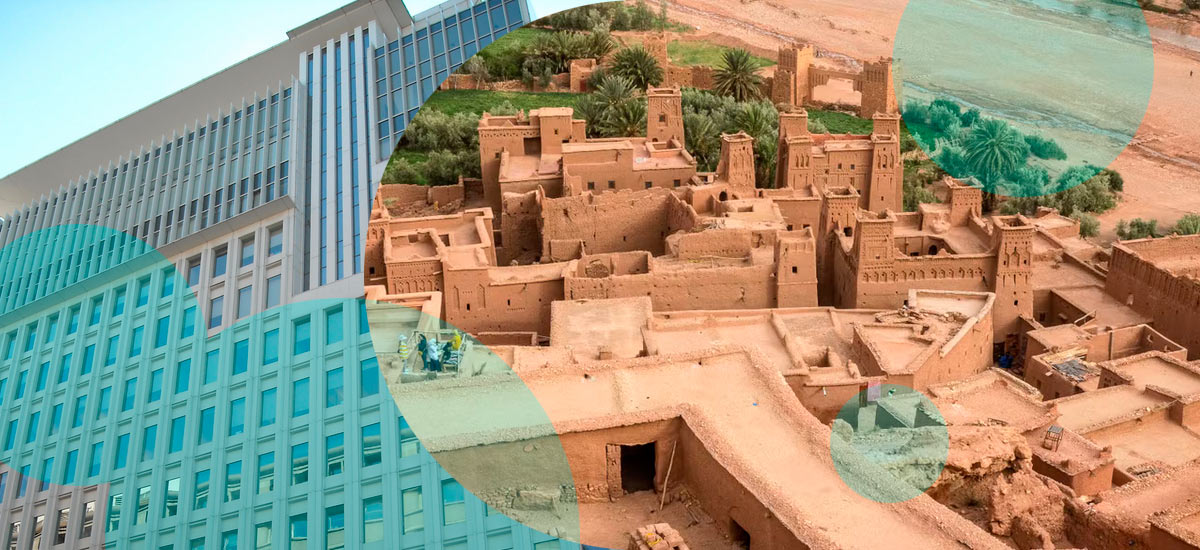
The World Bank’s Board of Directors has approved two programs worth $650 mn to accelerate Morocco’s digital transformation and strengthen financial protection against climate, disaster, and cyber risks.
The financing package includes the $250 mn Morocco Digital Transformation Acceleration Program and the $400 mn Morocco Climate & Risk Finance Program.
Together, the programs support Morocco’s long-term economic priorities, including public digital services, startup financing, climate infrastructure, cyber risk protection, and disaster financing.
The digital transformation program will provide catalytic financing for the national Digital Morocco 2030 strategy. It will accelerate the rollout and adoption of user-focused public digital services for citizens and businesses, while helping the government move more systems to cloud-based infrastructure.
The program will also strengthen financing and capacity-building for Morocco’s startup ecosystem. It will advance AI innovation, support the digital transformation of micro, small, and medium enterprises, create jobs in the offshoring sector, and expand the country’s digital talent pool.
The World Bank developed the program in close collaboration with the Moroccan government, with measurable results targeted by 2031. The initiative places strong attention on youth and women’s participation in the digital economy, especially through jobs, skills development, and better access to digital tools.
A major goal is to deliver end-to-end digital access to priority public services through a unified national portal. That should reduce the need for in-person administrative visits and improve service adoption among citizens and businesses.
The program will also support a National Sovereign Wallet anchored to Morocco’s national identity card. The wallet will let citizens securely store and share official documents in digital form, reducing paperwork and improving access to government services.
Public administrations will receive support to adopt cloud-based solutions for new IT investments. The program will also strengthen AI-based innovation capacity through centers of excellence and help mobilize venture capital for startups.
The initiative will channel financing toward the digitalization of small and medium enterprises. Through government-backed risk-sharing mechanisms, it is expected to mobilize nearly $200 mn in private capital for startup financing and MSME digital transformation.
The second program, the $400 mn Morocco Climate & Risk Finance Program, focuses on financial resilience. It will help Morocco manage rising climate, disaster, and cyber risks while attracting private capital for climate infrastructure development.
The program will develop cyber and disaster insurance instruments to expand Morocco’s risk transfer capacity. It will also strengthen institutional frameworks, reinforce digital payments infrastructure, and accelerate post-shock finance flows to households, companies, and public institutions.
Financial regulators will receive support to oversee climate and cyber risks affecting banks and insurers. That supervisory work matters as financial institutions face more exposure to extreme weather, digital disruption, and operational shocks.
The climate and risk finance program will also create a Project Preparation Facility. The facility will develop commercially viable projects across renewable energy, energy efficiency, sustainable transport, and water infrastructure.
Morocco will also use blended finance structures and capital market tools to reduce investment risk for private investors. The World Bank said those tools should accelerate private capital flows into climate-aligned infrastructure at scale.
Over the next five years, the program aims to mobilize up to $400 mn in private capital. It also seeks to establish $1 bn in pre-arranged disaster financing and extend cyber risk coverage to at least 20 financial entities.
The World Bank said the program will help bring a new generation of climate infrastructure projects to market. The broader structure links disaster protection, cyber insurance, regulatory capacity, digital payments, and investment readiness in one financing framework.
Ahmadou Moustapha Ndiaye, division director for the Maghreb and Malta at the World Bank, said the programs address critical pillars of Morocco’s transformation priorities. He pointed to a digitally empowered economy, a stronger innovation ecosystem, and a financially resilient country better equipped to manage climate, disaster, and cyber risks.
Together, these programs will support an integrated architecture for Morocco’s next decade – one that mobilizes private capital, creates jobs for youth and women, and advances the country’s climate commitments.
Ahmadou Moustapha Ndiaye, division director for the Maghreb and Malta at the World Bank
According to Beinsure analysts, the package links digital government, climate finance, insurance, and private capital in a practical development model.
Morocco gets funding for faster public-sector digital delivery, while the financial sector receives tools to absorb shocks and finance climate infrastructure with less balance-sheet strain.