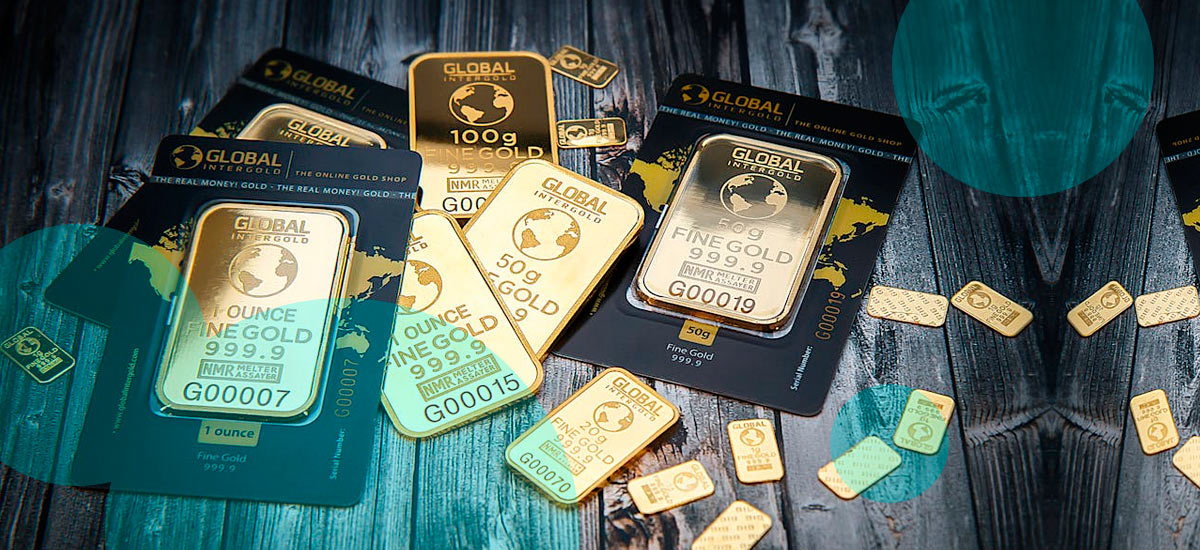
Gold demand has stayed strong despite turmoil from the Iran conflict, according to James Steel, Chief Precious Metals Analyst at HSBC. Oil prices have jumped, gold prices have slipped, and Steel said the metal has behaved as expected under market stress.
The Shanghai Gold Exchange premium, which measures the gap between China’s domestic gold price and the global price, sits near $20, pointing to firm domestic demand.
That demand has shifted away from jewellery, coins, and small bars. Steel said more buying now comes through large bars and institutional channels after regulatory changes in China and India.
China’s largest insurance companies are now allowed to accumulate bullion. Asset managers in India also have approval to hold gold, widening the institutional buyer base.
Steel also pointed to fresh central bank buying. The People’s Bank of China bought 8.1 tonnes of gold in the latest monthly data, a stronger number than expected.
Asked about gold’s rise to about $5,400 an ounce in late January and its later decline during the Middle East conflict, Steel said the earlier rally looked aggressive.
A lot of money had entered gold after years outside the market, and some investors had never traded the metal before.
He said positioning looked stretched, including in CFTC data. That left gold vulnerable when broader markets needed liquidity.
Steel rejected claims that gold failed as a safe haven after strikes on Iran and higher oil prices. He said rising oil brought back inflation fears, pushed bond yields higher, strengthened the dollar, and pressured equities.
Steel said the market saw liquidation, but mainly as a response to broader financial stress. In his view, gold acted like an insurance policy, and investors cashed in part of that policy when they needed liquidity.
He also discussed gold’s historical relationship with oil. In the 1970s, gold moved positively with oil, with both rising during the decade’s inflation shock.
The same relationship largely held in the 1980s, when oil fell and gold also weakened. Steel said the link started breaking down in the 1990s as oil became a smaller share of the global economy.
That correlation now sits near 0.15, and at times turns negative. Steel said it is negative at the moment.
Asked whether gold belongs among alternative assets or should be treated as a standalone asset, Steel said it qualifies as an alternative. He described gold as unusual because it is both a hard asset and highly liquid.
Gold does not tend to correlate with large technology stocks such as Apple or Nvidia over long periods. Other hard assets, such as Canadian farmland, lack the same ability to sell quickly.
That liquidity remains one of gold’s main advantages. It trades deeply, moves globally, and works as a liquid hard asset in stressed markets.
Steel said more asset managers that had never held gold are starting to include it in portfolios. They are looking for alternatives as cross-asset correlations rise.
HSBC commodity strategists Willem Sels and Lucia Ku said on April 2 that gold’s recent underperformance does not weaken its longer-term case. They said higher cross-asset correlations make gold more useful as a portfolio diversifier.
The strategists said gold and alternative assets help improve diversification as cross-asset correlations rise.
Despite the recent pullback, they remain bullish on gold over the medium to long term because of diversification benefits and safe-haven demand.
They also said recent headwinds should be short-lived. Supportive fundamentals include geopolitical uncertainty and central bank buying.
HSBC has kept a positive view on gold through the pullback. On March 30, HSBC Asset Management analysts said gold has behaved more like a risk asset in 2026, selling off during geopolitical stress and a stronger dollar.
The analysts said gold’s move since the Iran conflict began defied expectations.
The usual playbook would have suggested that geopolitical tension and economic uncertainty should support the metal, as seen during last year’s Liberation Day episode.
Instead, gold lost 15% in March to date. A stronger U.S. dollar became a headwind for non-U.S. buyers, while higher expected interest rates increased the opportunity cost of holding a non-yielding asset.
HSBC noted that gold withstood similar pressure from the dollar and rates in 2022, which weakens a simple dollar-and-yields explanation. The bank said ownership has shifted toward retail and other leveraged buyers, many of whom sell during market stress.
That investor mix helps explain why gold traded more like a risk asset in 2026. The longer-term case, according to HSBC, still rests on de-dollarisation, central bank demand, and the metal’s role as a liquid diversifier.