Australian attitudes towards electric vehicles are shifting as buyers weigh household economics more heavily alongside environmental factors. New research suggests ownership decisions increasingly centre on running costs, vehicle choice and day-to-day practicality.
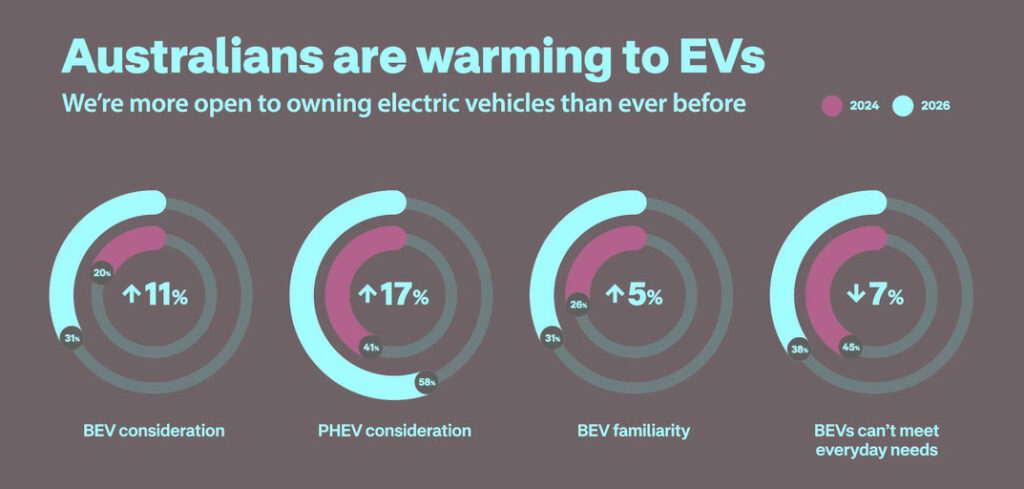
Almost one-third of Australians, 31%, now say they would consider buying a battery electric vehicle, according to the 2026 Changing Gears: Closing the Confidence Gap report. That compares with 20% in 2024.
Interest in plug-in hybrid vehicles has also increased. Consideration rose from 41% in 2024 to 58% in 2026, while the share of Australians describing themselves as familiar with EVs increased from 26% to 31%.
Concerns about whether electric vehicles suit everyday needs have eased at the same time. In 2024, 45% of respondents worried EVs would not meet their regular driving requirements. By 2026, the figure had fallen to 38%.
As electric vehicles (EVs) gain popularity, the insurance industry is also adapting to meet the unique requirements of eco-conscious drivers.
Standard auto insurance policies do not adequately address the unique risks and opportunities of EVs, from advanced battery systems to cutting-edge software.
Insurers are developing new types of EV insurance coverage for high-tech electric vehicles, with policies that also encourage environmentally conscious driving. These changes aim to give drivers more control while helping advance sustainable transportation.
Considering the growing demand for EVs, all major insurance providers have already launched their EV-specific insurance products. As a result, the EV insurance market is expected to grow ten-fold from $50 bn in 2024 to $507 bn by 2033
The market is expected to grow at a CAGR of more than 19% during the forecast period. Falling EV prices, greater battery ranges, and sufficient charging infrastructure will contribute to the worldwide proliferation of EVs, growing the market for EV insurance in parallel.
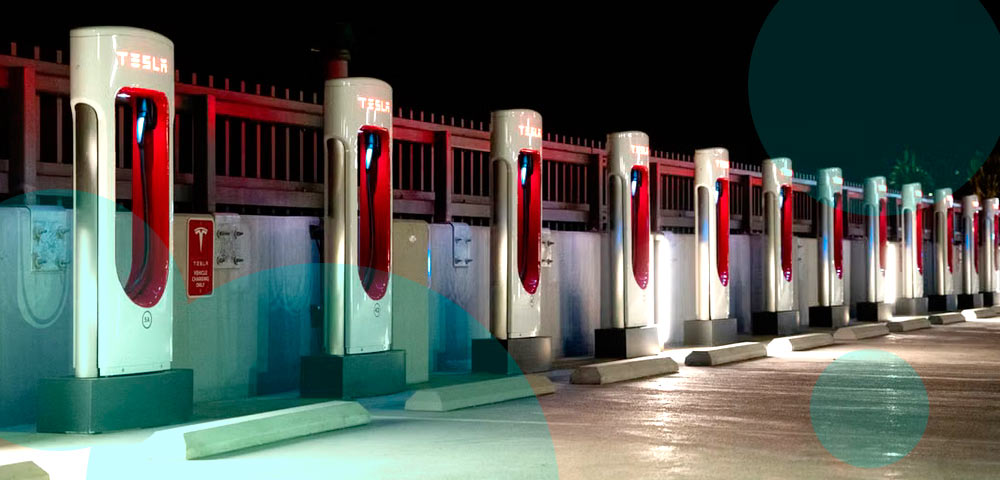
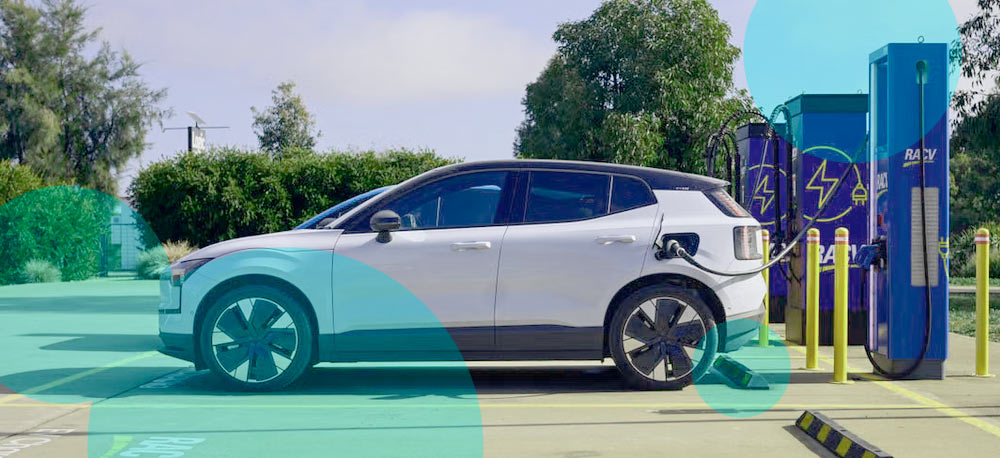
Several practical changes are influencing those attitudes. More brands and models have entered the Australian market, prices have become more competitive, battery technology has improved and public charging infrastructure has expanded.
Fuel costs and energy security are adding another consideration for households. EV ownership is increasingly being assessed as a financial decision rather than mainly an environmental one.
Australia now has close to 500,000 electric vehicles on the road, representing almost 3% of the national vehicle fleet, according to EV data platform CarLoop.
The market has also become more crowded. New manufacturers, vehicle categories and lower-priced models have given Australian buyers a wider set of options than they had only a few years ago.
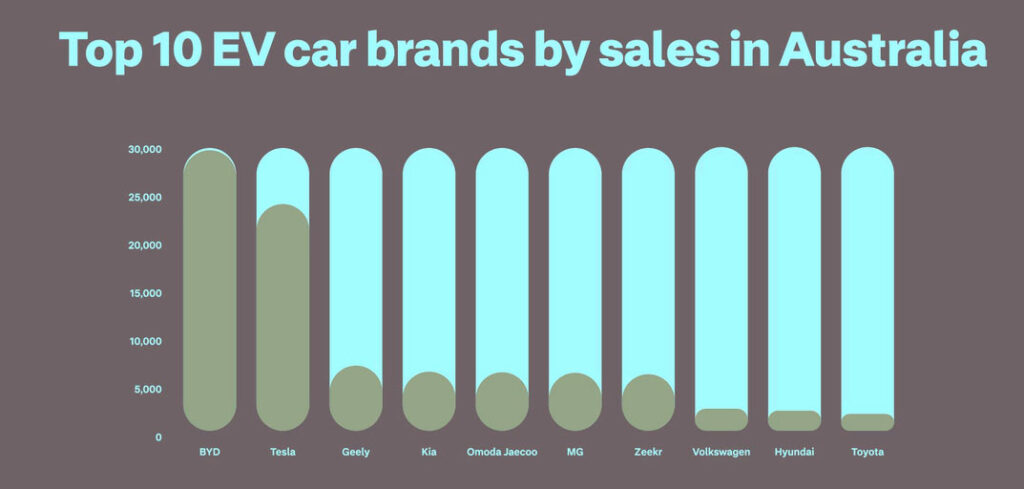
Sales data from June 2026 show how quickly the competitive structure has changed. BYD recorded about 28,000 EV sales, followed by Tesla with roughly 24,000.
Geely, Kia, Omoda Jaecoo, MG and Zeekr each recorded about 6,000 to 7,000 sales during the period. Volkswagen, Hyundai and Toyota reported roughly 2,000 to 3,000 each, leaving BYD and Tesla well ahead of the rest of the group.
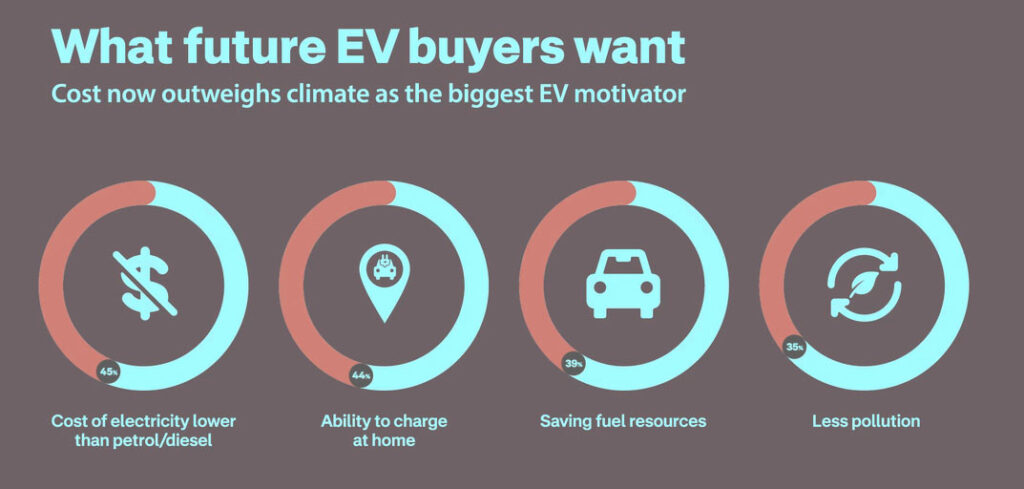
Lower running costs have overtaken environmental concerns as the leading reason Australians consider electric vehicles, according to the 2026 findings. Cost and convenience now carry more weight in the purchase decision.
Lower electricity costs compared with petrol or diesel ranked first among prospective buyers, cited by 45% of respondents. Home charging followed at 44%, while 39% pointed to lower fuel use and 35% cited reduced pollution.
The findings suggest sustainability still matters, though household budgets now influence more purchase decisions. Greater familiarity with EV ownership costs is also making the financial case easier for consumers to assess.
For buyers comparing petrol, diesel and electric vehicles, the calculation increasingly includes electricity prices, home charging access, servicing costs and expected vehicle use. These factors sit alongside the purchase price when households judge whether an EV suits their budget.
Australia’s EV market has reached a stage where familiarity is rising and scepticism is easing. Interest alone, though, doesn’t automatically translate into a purchase.
The next phase depends heavily on whether households see an electric vehicle fitting their normal routines. Charging availability, battery condition, repair costs and resale values remain major considerations for prospective buyers.
Confidence in those areas will shape how many consumers move from considering an EV to buying one. As model choice expands and ownership costs become easier to compare, the decision is becoming less about technology itself and more about whether the numbers work for the household.